Vibe (2026): Kunal Khemu’s Spy Comedy Is a Blast Until It Forgets the Mission
Somewhere in the second hour of Vibe, a terrorist plot is unfolding, a national security crisis is escalating, and I could not have cared less, because the film had already spent ninety minutes teaching me that Hardik and Bugs are at their best when nothing important is at stake. That is the central paradox of Kunal Khemu’s sophomore directorial effort: a buddy comedy so disarmingly charming in its opening act that its eventual pivot to espionage feels less like a third-act escalation and more like a bait-and-switch.
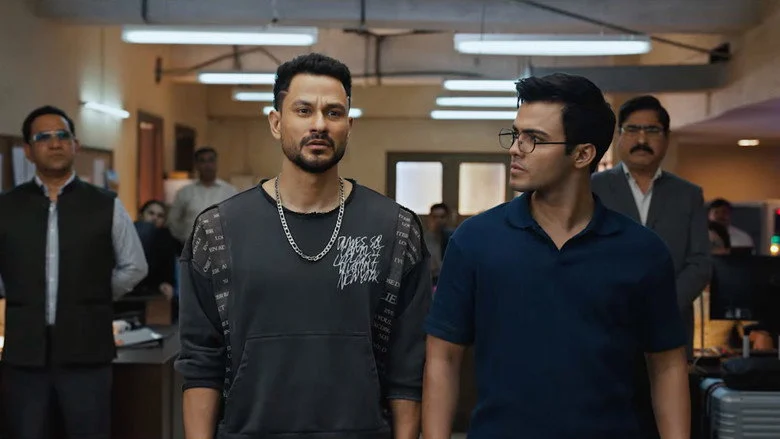
Two Idiots, One Mission, and a Screenplay That Can’t Decide
The premise is deceptively simple. Hardik (Khemu) is an impulsive slacker fresh off a rehab arc; Bugs (Sparsh Shrivastava) is his by-the-book foil, a man who treats jaywalking like a war crime. When Preity Zinta’s mysterious Madam H recruits them for a mission against a terrorist threat, the film positions itself as a desi answer to the unqualified-agent trope, think Spy meets Rush Hour, filtered through the specific cultural texture of Hindi buddy comedy.
For roughly the first half, it works. Khemu and Shrivastava have a lived-in chemistry that sells the friendship without over-explaining it. The recruitment scene with Zinta is a particular highlight, she plays Madam H with a steely authority that makes the absurdity of her hiring decisions funnier by contrast. Her line delivery when assigning the mission carries the weight of someone who has genuinely run out of better options, and the scene lands because it refuses to wink at the audience.
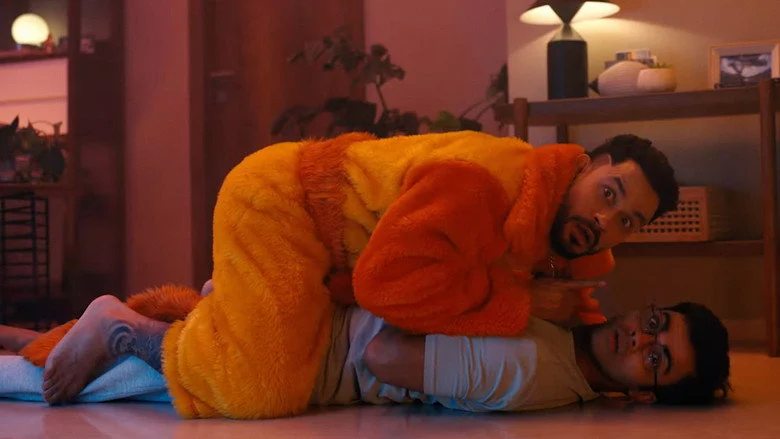
The Art of the Blunted Stake
Here is where Vibe stumbles. The film’s most praised element, the bromance-driven chaos of the first half, is also its undoing. By the time the espionage elements take over, the screenplay has accumulated so much tonal debt that it cannot pay it back. The action set pieces are competently staged but emotionally inert; we are asked to care about a terrorist threat that the film itself has treated as a punchline for an hour.
Consider the sequence where Hardik and Bugs blunder into their first real confrontation with the antagonists. The staging leans heavily on slapstick, Bugs protesting protocol while Hardik improvises disastrously, but the scene’s tension is undercut by the film’s refusal to let any consequence stick. It is a microcosm of the larger problem: Vibe wants the stakes of a thriller and the safety net of a comedy, and it never figures out how to reconcile the two.
The editing tells the story. The first half moves with a breezy confidence, cutting on jokes and letting scenes breathe when the chemistry is working. The second half feels compressed, as if the filmmakers realised they had too much plot and too little time. Characters like Yashpal Sharma’s Rawal and Dinesh Lal Yadav’s Bansi appear and disappear without leaving much impression, their presence serving plot mechanics rather than narrative weight.
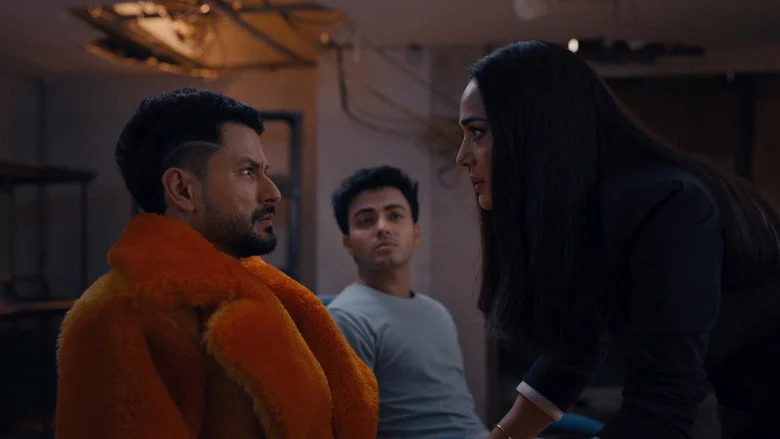
Khemu the Director vs. Khemu the Star
There is a tension in Vibe between Khemu the filmmaker and Khemu the performer. As Hardik, he is genuinely funny, his comic timing is sharp, and he understands how to play cluelessness without making the character insufferable. But as a director, he seems reluctant to let the film be the pure comedy it clearly wants to be. The espionage elements feel like obligations rather than inspirations, as if the film is afraid of being dismissed as “just” a buddy comedy.
Compare this to his debut, Madgaon Express, which understood that its strength lay in sustained comic escalation rather than genre-blending ambition. That film had a tighter grip on its own identity. Vibe, by contrast, keeps reaching for something bigger and losing its footing in the process.
Sparsh Shrivastava deserves credit for grounding the chaos. His Bugs is the film’s secret weapon, a straight man who is funny because he refuses to acknowledge how absurd his situation is. The scenes where he protests their involvement while clearly being the only competent person in the room are the film’s most reliable laughs. Preity Zinta, meanwhile, brings a welcome gravitas to Madam H, though the role is underwritten. Sharmila Tagore’s Home Minister is a cameo that promises more than it delivers.
The Desi Espionage Dilemma
What makes Vibe frustrating is that its failures are not failures of ambition. The film wants to be a desi spy comedy with heart, and there are moments, particularly in the first half, where that vision coheres beautifully. The humour is unapologetically local, the references land, and the friendship at the centre feels genuine.
But the second half loses the thread. The terrorist plot, personified by antagonists like Abu Al Sayeed and Badshah Al Sayeed, is too generic to generate real tension, and the film’s insistence on treating every situation as an opportunity for a gag undermines whatever stakes it tries to establish. By the climax, I was not rooting for the mission to succeed; I was rooting for the film to remember what made it work in the first place.
For a more successful recent example of balancing genre thrills with character-driven storytelling, see our take on Daayra review, which understands that tension and humour can coexist without one cannibalising the other. Similarly, our review of Enna Vilai verdict explores how a filmmaker’s voice can remain distinct even within familiar genre frameworks, a lesson Vibe could have benefited from.
Technical Craft and the Amit Trivedi Question
Amit Trivedi’s soundtrack, including the track “Sipahi Ek, ” is serviceable but unmemorable, the kind of music that supports scenes without ever defining them. The cinematography, while stylish in the poster and teaser, settles into a functional visual language that rarely surprises. The CBFC’s A certificate, granted with an anti-drug disclaimer and expletive modifications, suggests a film that wants to be edgy without fully committing to the consequences of that edge.
The production values are solid, and the film looks more expensive than its reported opening day of ₹0.06 crore India net (Bollywood Hungama) would suggest. But a low opening day is telling: Vibe is a film without a clear audience. It is too chaotic for thriller fans, too plot-heavy for pure comedy lovers, and too uneven for anyone seeking a tight, well-oiled entertainer.
Verdict: A Bromance in Search of a Better Second Half
Vibe is not a bad film. It is a deeply uneven one, a film with a genuinely funny first half, a charismatic lead pairing, and a second half that squanders both. Khemu’s comic instincts remain sharp, and there is enough here to suggest that his next outing could be something special. But Vibe itself is a case study in the dangers of overloading a screenplay when simplicity would have served it better.
Who should watch it: Fans of Kunal Khemu, buddy comedies, and anyone who appreciates unapologetically desi humour will find plenty to enjoy in the first half. Those seeking a taut espionage thriller or a consistently paced comedy should look elsewhere.
Best format: Regular theatrical. This is not a film that benefits from premium formats; it benefits from a forgiving audience.
Rating: ★★½ (2.5/5)
For more of our film coverage, including reviews of the latest releases and industry analysis, visit Hindi Thriller reviews.

Ankit Jaiswal is the Chief Author, covering Indian cinema and OTT releases with honest, no-filler criticism. An SEO strategist by background, he brings a research-driven approach to film writing, cutting through hype to tell you exactly what's worth your time.