Jailer 2 (2026): Rajinikanth’s Tiger Returns In A Sequel That Mistakes Scale For Stakes
The lights dim on a Sun Pictures logo, and within minutes Nelson Dilipkumar asks his audience to accept a retired jailer pottering around his household like any other grandfather. Then the phone rings, the son vanishes, and the film remembers it has a ₹350 crore budget to justify.
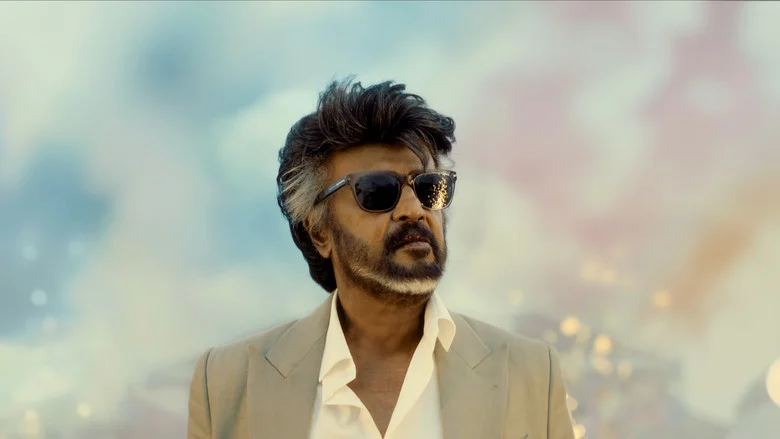
A Domestic Cold Open That Never Quite Thaws
The first act belongs to the quietest Rajinikanth we have seen in years. Muthuvel Pandian folds himself into armchairs, speaks in a lowered register, and lets his shoulders slump in a way that reads as genuine exhaustion rather than performed humility.
Nelson stages this domesticity with an almost stubborn patience, holding wide frames on family dinners and letting silence do the work. The problem is that the film treats this restraint as a secret it is keeping from us rather than a character we are meeting.
When Arjun disappears and is presumed dead, the pivot arrives with a thud rather than a crack. The “Tiger” identity is resurrected through a montage of old associates receiving word, and the film never earns the transition because it never let us feel the father before it needed the enforcer.

When A Villain’s Empire Is Built From Temple Dust
Varman’s operation, an idol-smuggling network that strips heritage from stone, gives the sequel a criminal economy with actual texture. The theft of ancient temple idols carries a cultural weight that a generic drug cartel never could, and Nelson understands that desecration reads as violation on camera.
Yet the antagonist himself remains a rumor for most of the runtime. Vinayakan is deployed as a presence rather than a person, his power communicated through corrupted officials and the sheer volume of men Muthuvel must recruit to oppose him.
This indirect approach worked in the first film because the villain was a personal wound. Here, the empire is abstract, and abstraction is the enemy of tension. The screenplay keeps cutting away to alliance-building, and the sequel starts to feel like a reunion special with a body count.
The returning allies arrive with fanfare, and the audience I sat with erupted for each one. But the applause was for the actor, not the character, and that distinction matters. A cameo can be a gift or a crutch, and this film leans on the crutch more often than it should.
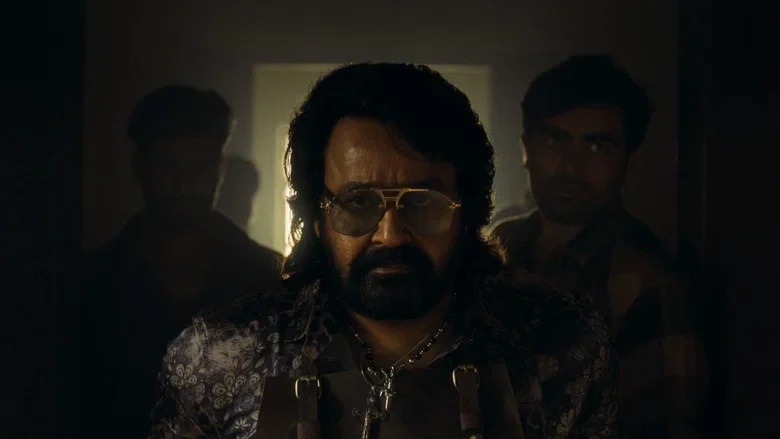
The Father-Son Confrontation That Almost Saves Everything
Then comes the reveal: Arjun was never a victim. He collaborated with Varman, and the film’s moral center collapses into a single room where a father must decide whether blood outweighs duty.
Rajinikanth plays this scene with a stillness that borders on terrifying. He does not rage. He does not weep. He asks his son to surrender, and when the answer comes back as a threat, he does what the film has been promising for two hours.
The killing of Arjun is the only moment in the sequel that feels genuinely dangerous. It is also the only moment where the film’s themes of paternal attachment and public justice collide rather than sit politely beside each other.
What makes it work is the physical staging. Nelson keeps the camera at a distance, refuses to cut away, and lets the act play out in a single unbroken take. The violence is not choreographed. It is simply inevitable.
Compare this with the film’s earlier set pieces, which are cut to ribbons in the editing room and scored within an inch of their lives. The contrast is damning. When the film trusts its actors, it soars. When it trusts its budget, it sinks.
The Cameo Economy And The Cost Of Star Saturation
A reported roster of Vijay Sethupathi, Hrithik Roshan and Jackie Shroff in unnamed cameo appearances tells you everything about the sequel’s priorities. These are not characters. They are event bookings, and the film treats them accordingly.
Mohanlal and Shiva Rajkumar return as Mathew and Narasimha, and their scenes carry the easy authority of actors who know exactly how much screen time they have. But their presence also exposes the screenplay’s structural weakness: it needs allies because it never made the villain strong enough to stand alone.
Vidya Balan, SJ Suryah, Suraj Venjaramoodu and Mithun Chakraborty are all announced as key players, yet the material gives them almost nothing to do that a lesser performer could not have managed. That is not a casting failure. It is a writing failure.
The sequel’s casting philosophy seems to be that more familiar faces equal more audience investment. The opposite is true. Every new star who walks into frame steals focus from Muthuvel, and by the third act, the film is juggling so many entrances that it forgets to stage a proper climax.
Nelson Dilipkumar’s Structural Ambition And Its Limits
There is a real filmmaker buried inside this sequel. Nelson’s escalation from domestic disruption to organized crime to intimate family tragedy is a legitimate structural idea, and it shows a director who wants to do more than repeat the first film’s beats.
But the execution betrays the ambition. The middle section sags under the weight of exposition, and the idol-smuggling investigation never generates the momentum it needs. Where Toxic collapsed under a similar tonal mismatch, Jailer 2 simply loses its footing.
The film’s visual language is equally inconsistent. Domestic scenes are shot with warm, naturalistic light that flatters the actors, while action sequences are bathed in the usual orange-and-teal grading that makes every location look like the same abandoned warehouse.
The score is relentless. Every entrance, every reveal, every punchline is underlined by a musical cue that tells the audience exactly how to feel. By the time the father-son confrontation arrives, the silence that precedes it feels like a relief rather than a build.
Rajinikanth’s performance deserves better than this. His work here recalls the psychological weight he brought to Hum Mein Shahenshah Koun, where he played a man negotiating the gap between his public myth and private frailty.
That film understood that Rajinikanth’s greatest asset is not his swagger but his weariness. Jailer 2 understands this too, but only in flashes. The rest of the time, it asks him to be the Superstar rather than the actor.
Where The Sequel’s Ambition Outpaces Its Discipline
The reported runtime of two hours and fifty-five minutes is not a problem in itself. The problem is that the film does not know which of its many threads is the main one, and so it treats all of them as equally important.
The idol-smuggling plot, the alliance-building, the cameo entrances and the family tragedy all compete for oxygen. The result is a film that feels simultaneously overstuffed and undernourished, with no single thread receiving the development it deserves.
This is the same trap that swallowed Magudam, another Tamil action drama that mistook scale for substance. Ambition is not the same thing as coherence, and a big canvas does not excuse a blurry picture.
What saves Jailer 2 from total collapse is its willingness to go dark in the final act. The decision to have Muthuvel kill his own son is genuinely bold, and it suggests that Nelson is more interested in moral consequences than the first film ever let on.
But boldness in the final act cannot retroactively fix the two hours that preceded it. The sequel earns its ending, but it does not earn the journey that leads there.
The Box Office Gamble On Superstar Nostalgia
Sun Pictures and Kalanithi Maran have made a calculated bet that Rajinikanth’s return as Tiger Muthuvel Pandian is enough to sustain a ₹350 crore production and a reported ₹150 crore worldwide opening day projection.
That bet will likely pay off in the short term. The advance bookings are substantial, the festival release window is favorable, and the Superstar’s theatrical leverage remains unmatched in the Tamil market.
The longer-term question is whether the sequel’s reliance on cameos and scale represents a sustainable creative model. The first Jailer worked because it was lean, mean and focused on a single relationship. This one works only in fits and starts.
The rise of event-cinema booking across contemporary Tamil actions has created an environment where opening weekends matter more than word of mouth. Jailer 2 is built for that environment, but it is not built to last.
If the film succeeds, it will be because audiences want to see Rajinikanth be Rajinikanth. If it fails, it will be because they wanted to see him be something more.
The Verdict: A Sequel That Earns Its Ending But Not Its Runtime
Jailer 2 is a frustrating film because it contains a genuinely great movie somewhere inside its bloated runtime. The father-son confrontation is the best work Nelson Dilipkumar has ever directed, and Rajinikanth’s performance in that scene is a reminder of why he remains the most interesting actor in Tamil cinema.
But the film around that scene is a mess of competing priorities, underdeveloped characters and action sequences that mistake volume for intensity. It is a sequel that wants to be bigger than its predecessor without understanding what made the predecessor work.
The final image of Muthuvel Pandian, alone with the consequences of his choices, is the film’s most honest moment. It suggests that Nelson knows the real story here is not about idol smuggling or criminal empires. It is about a father who chose justice over blood and will spend the rest of his life wondering if he was right.
That is a film worth making. Jailer 2 is not that film, but it contains enough of it to make the sequel’s failures feel like a genuine loss. The Superstar deserves a movie that trusts him as much as that final scene does.

Ankit Jaiswal is the Chief Author, covering Indian cinema and OTT releases with honest, no-filler criticism. An SEO strategist by background, he brings a research-driven approach to film writing, cutting through hype to tell you exactly what's worth your time.