Pyre (2026): Padam Singh Kapri Anchors a Quiet, Devastating Study of Rural Abandonment
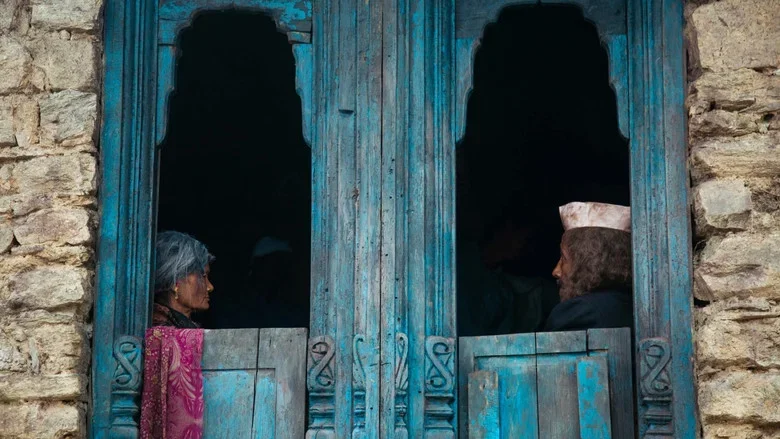
Vinod Kapri opens on a hillside so emptied of people that the goats have become the village’s loudest citizens. Padam Singh and Tulsi are the last two standing in a Kumaon settlement that has quietly voted with its feet.
The Postman Arrives and the Dead Village Starts Breathing Again
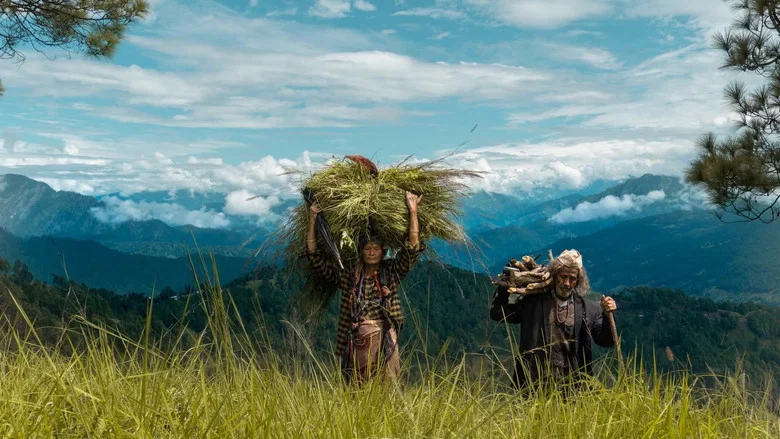
For its first hour, Pyre refuses to be a plot. It is a ledger of small survivals: fodder gathered, medicines rationed, a wife’s cough measured against the distance to the nearest road.
Then a postman climbs the hill with a letter from Hariya, absent in Mumbai for twenty-eight years, announcing he will come home in a few weeks. The couple’s posture changes before a single line of dialogue lands.
Kapri stages this turn with almost no music, letting the paper do the work. The letter becomes the film’s only antagonist and its only god.
Migration Is the Villain, and It Never Shows Its Face
There is no scheming landlord here, no corrupt official twirling a pen. The opposing force is arithmetic: fewer neighbours each season, doctors downhill, last rites with no one left to perform them.
Tulsi’s descent for medical help makes that arithmetic physical. Her body on uneven ground is the film’s most persuasive argument, and the local helpers who steady her are the community’s last flicker.
The screenplay resists the kinetic sensationalism that overtook Doosra, opting instead for a deliberate, suffocating dread. It is a choice that costs momentum and buys authenticity in the same transaction.
Two Non-Professional Performers Rewrite the Rules of Screen Grief
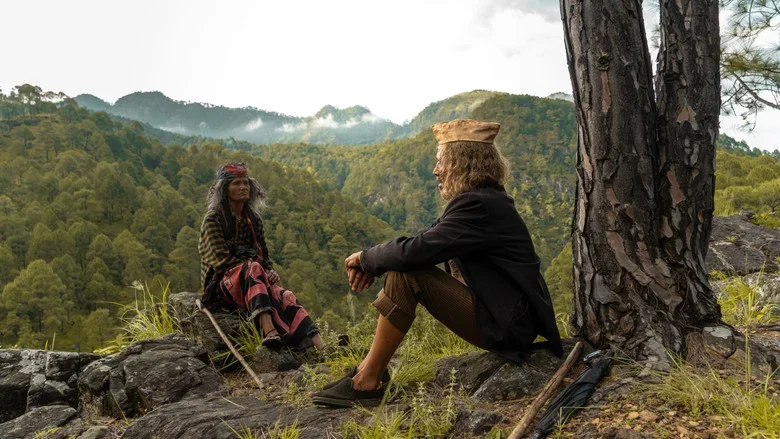
Padam Singh Kapri does not act sadness; he carries firewood. His affection lives in the way he checks Tulsi’s blanket before speaking, in a hand that hovers rather than clutches.
Hira Devi gives Tulsi an ailing body with an active will, refusing to let illness become sainthood. When she waves off help, the gesture is stubborn, specific, and entirely her own.
The restrained physical exhaustion both performers bring to the final stretch recalls the psychological weight of Little Thomas, though Kapri’s camera is far less forgiving of sentiment.
Supporting figures exist as function, not character: the postman who delivers hope, the neighbours who carry a stretcher. That thinness is deliberate, and it is also the film’s quietest limitation.
Kapri’s Camera Refuses to Look Away, Even When It Should Cut
The Himalayan framing treats the landscape as an accomplice to abandonment, with the couple repeatedly shot small against ridges that swallow them. Sound design leans on wind and goat bells until silence itself feels populated.
Just as he demonstrated a tighter spatial discipline in Meethe Mein Kya Hai, Kapri strips away decorative movement here to prioritise raw behavioural friction.
The editorial rhythm is the problem. The middle stretch stacks chores without condensing them, and observation begins to curdle into stasis. A film about endurance should not ask the audience to endure quite so literally.
A Small Release Carrying a Large Question for Hindi Drama
This is the kind of modest, regionally rooted production that distributors now slot carefully rather than widely, betting on word of mouth over opening-weekend muscle. The theatrical window matters here; the mountain scale and hushed sound mix lose something on a laptop.
Kapri’s box-office leverage rests on critical goodwill rather than star draw, which makes the film’s reception a referendum on whether patient character studies can still hold a screen. That question is being asked across contemporary hindi dramas with increasing urgency.
The Ending Offers Hope, and Hope Is the Cruelest Option
What lingers is not whether Hariya arrives but what the waiting has already cost. The couple’s revived anticipation is more painful than their earlier despair, because expectation demands a future the village may not permit.
Pyre is a film built on the terrifying arithmetic of being the last two people on a hill. It asks whether a promise shouted from a city can survive the distance, and it declines to answer with anything as cheap as comfort.

Ankit Jaiswal is the Chief Author, covering Indian cinema and OTT releases with honest, no-filler criticism. An SEO strategist by background, he brings a research-driven approach to film writing, cutting through hype to tell you exactly what's worth your time.