Little Thomas (2026): Hridansh Parekh Anchors a Gentle, Single-Track Goa Memory
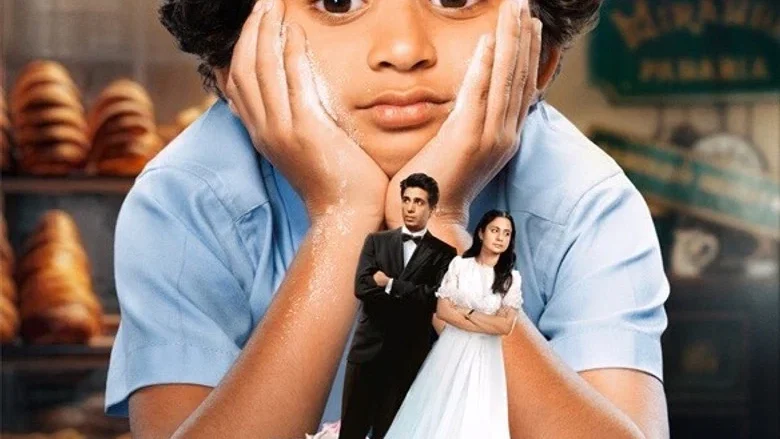
Kaushal Oza opens on a seven-year-old’s face in Fontainhas, and the entire film’s gamble is written there: a child solving adult sorrow with a kiss.
In 1990s Goa, Thomas Miranda decides a baby brother will stitch his quarrelling parents back together. The premise is lovely. The execution stays stubbornly, sometimes maddeningly, on that one track.
A Child’s Theory of Repair, Built on a Kiss and a Prayer
Thomas is an only child in a neighbourhood loud with siblings. He watches his baker father and piano-teacher mother trade silences over bills, and he translates their exhaustion into a problem he can fix.
The logic is gloriously wrong: parents must kiss, a baby arrives, the household heals. Oza commits to that misreading with real conviction, and for a while the film’s innocence is its engine.
What grounds it is the period. No smartphone can correct Thomas’s theory, so he must build his own cosmology of family from half-heard arguments and kitchen-table arithmetic.
That choice echoes the disciplined small-scale portraiture of Doosra, another recent release that trusts a narrow frame over narrative sprawl. Both films risk monotony for intimacy. Only one of them earns the trade.
When a Single Mission Becomes the Whole Movie, Momentum Leaks
Here is where the screenplay’s patience curdles into repetition. Thomas schemes, the parents bicker, Thomas schemes again, and the escalation never quite arrives to justify the rhythm.
The adult conflict stays deliberately underdeveloped because we only see it through a child’s eyes. That is a defensible artistic choice, but it leaves Jessie and Desmond as pressure sources rather than people.
By the second hour, the same objective carries too much weight. A film this gentle needs either a sharper comic variation or one genuine detour into the parents’ world to breathe.
The restraint that makes the first act charming becomes the very thing that flattens the middle. Gentleness, unvaried, reads as stasis.
Rasika Dugal’s Exhausted Stillness and Gulshan Devaiah’s Baker’s Weariness
Dugal plays Jessie as a woman physically economising, the tightened mouth before a reply, the hands that keep working while her son asks impossible questions. Her affection is real but rationed by fatigue.
Devaiah’s Desmond carries flour-dusted forearms and a slump that suggests a man doing sums behind his eyes mid-conversation. His quietest moments with Thomas are the film’s most affecting.
The actor’s capacity for weary domesticity recalls the grounded texture of his work in Maa Inti Bangaram, where family pressure also arrived through the body before the dialogue.
Young Hridansh Parekh anchors everything with sincerity rather than cuteness. His Thomas treats the kissing problem as engineering, and that earnestness, never mugging for the camera, keeps the film honest.
Fontainhas Light, Period Texture, and the Cost of Under-Staging
Oza shoots the neighbourhood in warm, unhurried wide frames that let colonial balconies and wet lanes do the period work. The camera rarely pushes in, respecting the child’s eye-level view of a world he cannot fully read.
That visual restraint is coherent, but it also means the film has few images that linger after the credits. Atmosphere substitutes for dramatic architecture.
The domestic pressure-cooker dynamic here is gentler than the desert claustrophobia of Dhood (Sandstorm), yet both films share a refusal to let external crisis do the emotional labour.
Where Oza’s film falters is in trusting that a single, sweetly absurd mission can sustain two hours without the occasional jolt of surprise.
Luminoso and Civic Studios Bet on Small Cinema in a Loud Market
The producing banners, Luminoso Pictures, Civic Studios, Good Bad Films and Flip Films, have backed a modest, dialogue-led family film with no franchise scaffolding and no star-driven opening weekend.
That is a real financial gamble. Theatrical visibility for a gentle Goa-set period piece in a crowded October slate is punishing, and the trade has already signalled a thin opening.
For Devaiah and Dugal, this is the kind of character work that builds critical capital even when it does not build box-office leverage. For the exhibitors, it is another reminder that mid-budget Hindi family drama needs a marketing hook it simply does not have here.
Across contemporary Hindi family films, the tension between intimate storytelling and commercial survival has rarely been sharper.
The Uncomfortable Lesson in a Child’s Small Victory
The ending refuses to grant Thomas the miracle he engineered. He arrives instead at the harder knowledge that closeness cannot be manufactured by ritual, and the film lets him keep his wonder anyway.
That is the right emotional destination. It is also the only place this story could honestly go, which is precisely why the journey there needed more friction.
Little Thomas is a tender, well-performed, beautifully located film that mistakes consistency for momentum. It will move patient viewers and frustrate restless ones, and it will be remembered more for what it attempts than what it achieves.
A child’s faith in a kiss can carry a scene. Carrying a whole film requires a second idea, and Oza’s gentle memory never quite finds one.

Ankit Jaiswal is the Chief Author, covering Indian cinema and OTT releases with honest, no-filler criticism. An SEO strategist by background, he brings a research-driven approach to film writing, cutting through hype to tell you exactly what's worth your time.