Doosra (2026): Plabita Borthakur Anchors a Bold but Uneven Docu-Fiction Experiment
Abhinay Deo opens on a grainy 1990s montage, liberalisation, depleted coffers, cricket on a boxy television, and stakes his entire film on a single wager: that a nation learning to shout and a girl learning to speak are the same story.
At seventy-eight minutes, Doosra is less a sports drama than a thesis with a stopwatch, and the stopwatch is both its discipline and its undoing.
When a Shirt Comes Off, a Household Holds Its Breath
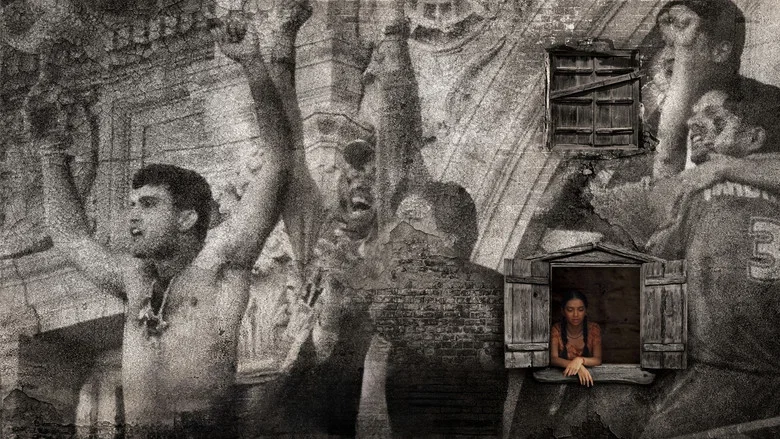
The film’s central image arrives via broadcast: Sourav Ganguly, shirtless on the Lord’s balcony after the 2002 NatWest final, refusing the decorum that defeat and dignity are supposed to demand.
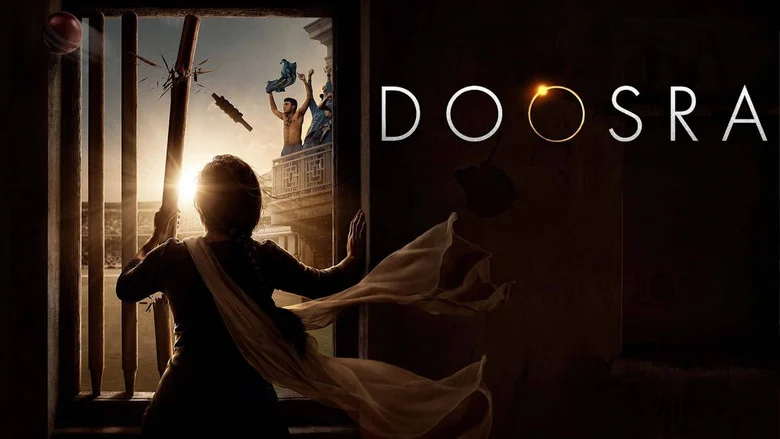
Plabita Borthakur’s Tara watches it from inside a Rajasthani living room that functions as a surveillance box, and the cut between her face and the screen is the entire argument of the movie.
What Deo understands, and what the screenplay only intermittently earns, is that defiance is a visual vocabulary before it is a political one. Tara doesn’t need a slogan; she needs to have seen someone else break a rule in public.
The parallel is intellectually elegant. It is also, in the film’s middle stretch, more discussed than dramatised, we are told the shirt matters to her, and Borthakur’s stillness sells it, but the family confrontation that should give the gesture weight keeps getting interrupted by archival cricket montage.
A Patriarch Who Never Raises His Voice, and Never Has To
Ankur Vikal plays Tara’s father as a man whose authority lives entirely in the architecture of the house: who sits where, who speaks first, who is permitted to want.
His menace is procedural in the domestic sense, a glance across a dinner table, a decision made for Tara before she’s consulted, and Vikal keeps his register flat, which is far more frightening than volume.
Samidha Guru’s mother is the film’s quietest tragedy, a woman whose compliance is a survival strategy, and the generational contrast between her accommodation and her daughter’s refusal is the emotional spine the cricket material keeps elbowing aside.
Borthakur carries the film through restraint, and the performance works in accumulations: a held breath, a redirected gaze, a body that has learned to occupy as little space as possible.
The final assertion of her sexuality and identity arrives as the sum of those suppressed reactions rather than a sudden conversion, and that is the right instinct.
It recalls the tonal patience she brought to Pehla Pyaar Doosri Baar, though here the material demands more interiority and she delivers it without a single showboating beat.
The Editing Betrays the Premise It Built
Ram Sampath’s score does the connective labour the screenplay sometimes skips, threading period texture and cricketing momentum into Tara’s awakening with a restraint that keeps the film from becoming a jukebox of nostalgia.
The cinematography’s smartest move is spatial: the Rajasthan household is shot tight, doorframes and corridors compressing the frame, while Lord’s opens up into a wide public arena Tara can only access through a screen.
Television becomes the bridge between those two worlds, and it’s the film’s best formal idea, a girl physically confined but visually transported.
Where the construction falters is in the edit’s loyalties. The first half sprints across a decade, establishing context efficiently but denying the domestic detail that would make the climax land harder; the second half hands the emotional climax to a cricket match that already has its own ending.
Deo, who once built a far more cohesive ensemble engine in Dhood (Sandstorm), here lets the historical material outmuscle his fictional protagonist in exactly the scenes that needed her most.
The docu-fiction hybrid is a genuine experiment, and it deserves credit for refusing the conventional underdog arc, but experimentation and underdevelopment are not the same virtue, and the film occasionally confuses the two.
A Cricket Memory Doing Double Duty as a Coming-of-Out Story
What Doosra gets right is the recognition that a national sporting image can function as private permission, that a marginalised teenager in a conservative home might find her first model of public refusal in a cricketer’s petty, joyous defiance.
What it gets wrong is trusting that recognition to do the dramatic work on its own. The NatWest final is an efficient emotional shorthand, but shorthand is not the same as earned catharsis, and the family confrontation that should mirror Ganguly’s gesture is over before it fully begins.
The film’s ambitions sit comfortably alongside the identity-driven social dramas reshaping contemporary Hindi dramas, even as its execution falls short of the ground it’s trying to claim.
Comparisons to Sumo Didi are instructive: that film also used sport as scaffolding for a personal journey, but it gave its protagonist the screen time to earn her own climax rather than borrowing one from a highlight reel.
The Commercial Arithmetic of a Seventy-Eight-Minute Gamble
Produced by Masha and Rohan Sajdeh with Neeta Shah co-producing, Doosra arrives as a deliberately small, festival-adjacent proposition in a market that rewards scale and star wattage.
Its theatrical ceiling is narrow: cricket nostalgia draws the early-2000s faithful, but the hybrid structure will alienate viewers expecting a match-driven sports film, and the absence of a marquee name limits opening-weekend urgency.
For Borthakur, this is a credibility-building showcase rather than a box-office lever; for Deo, it’s a formal experiment that trades the commercial safety of his broader entertainers for critical conversation.
Whether that trade pays off depends less on the film’s quality than on whether the theatrical ecosystem still has room for a seventy-eight-minute idea-driven drama in a crowded October slate.
The Uncomfortable Question the Film Leaves Behind
Doosra ends on a connection it asserts rather than fully convinces: that a nation finding its voice and a girl finding hers are the same liberation, achieved in the same moment.
It’s a beautiful thesis, and Borthakur makes you believe it in flashes, but a film that keeps cutting away from its own protagonist to replay a cricket match is quietly admitting where its heart really lives.
The experiment is worth the ticket for anyone who remembers what that shirt meant, and worth the argument for anyone who wonders why the girl watching it never quite got her own balcony.

Ankit Jaiswal is the Chief Author, covering Indian cinema and OTT releases with honest, no-filler criticism. An SEO strategist by background, he brings a research-driven approach to film writing, cutting through hype to tell you exactly what's worth your time.