Ranabaali (2026): Vijay Deverakonda’s Famine Epic Bites Off More Grain Than It Can Chew
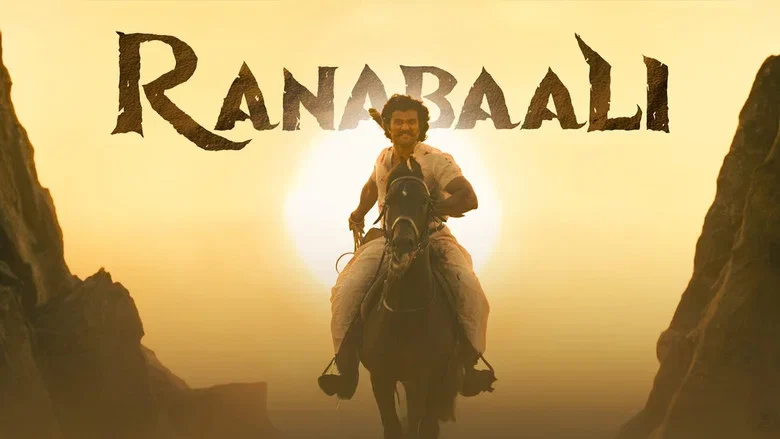
The horseman arrives before the hunger does. Rahul Sankrityan opens on Rayalaseema scrubland in 1876, a prophecy humming over the hills and a young rider who will spend the next stretch of screen time learning that a man cannot outrun a famine.
What follows is a period action drama with genuine historical teeth and a screenplay that keeps misplacing its own bite.
A Prophecy, A Marriage, And A Granary Nobody Guards Properly
The first act does the unglamorous work of building a household before it builds a hero. Ranabaali courts Jayamma, settles into village rhythm, and the film lets us sit in that ordinary warmth long enough to feel the floor drop when drought and colonial grain control arrive.
It is the correct instinct. Sankrityan understands that starvation only lands as tragedy if we have watched these people eat, marry, and plan futures first.
Less convincing is the prophecy. It hovers over the narrative like a decorative lampshade, present in every frame, illuminating nothing. The film never decides whether it wants myth or history, so it keeps both, and the legend-making softens what should be the hardest edges of the story.

When The Villain Is A Policy Instead Of A Person
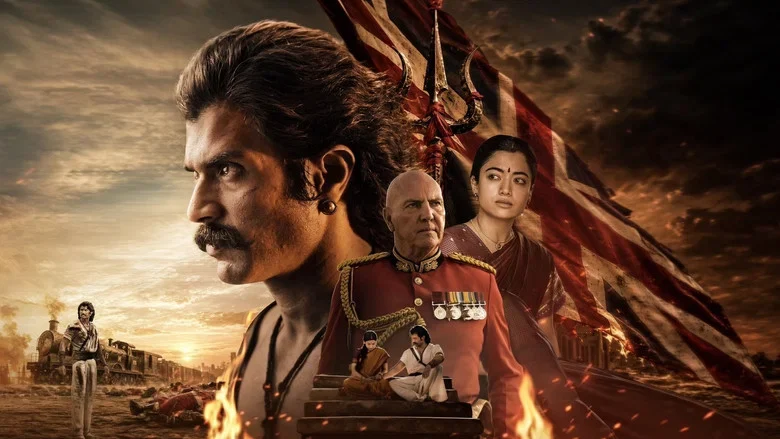
Arnold Vosloo’s Sir Theodore Hector is the film’s most interesting structural gamble, and its most frustrating execution. He represents administrative extraction rather than personal malice, which is historically honest, the Madras Famine was a ledger problem before it was a sword problem.
But cinema needs a face to hate, and Hector’s is kept at a bureaucratic distance. He signs, he surveys, he threatens land through intermediaries. Vosloo plays the restraint well, jaw set, voice pitched at a colonial officer’s flat register, but the screenplay never lets him share a room with Ranabaali long enough for the contempt to curdle into something operatic.
Compare that to the territorial friction that gave Jailer 2 its pulpy momentum, a film that understood proximity breeds menace. Here the antagonist stays a memo, not a monster.
Deverakonda’s Body Does The Arguing His Dialogue Cannot
The lead performance is built on a physical transition, and Deverakonda commits to it with real discipline. Early scenes find him loose-limbed in the saddle, hands easy on the reins, a man who trusts his own body. Post-famine, that same body tightens, shoulders drawn up, walk shortened, eyes doing the arithmetic of every room before he enters it.
It is the most controlled work of his career. The stillness he finds in the grain-raid sequences, crouched behind carts with breath held, recalls the coiled patience he located in Cocktail 2, though here the charm is stripped clean and replaced with hunger.
Rashmika Mandanna’s Jayamma is the film’s quiet engine. She is not decoration, she carries water, hides grain, and in one standout moment stands between a colonial patrol and a village elder with nothing but her own stillness as a weapon. The partnership reads as genuine labour shared, not romance staged.
The supporting ranks, meanwhile, are largely a blur of colonial officers and village elders. They function as texture, not characters, and the film never gives them a single scene worth remembering.
Raids That Land, A Score That Doesn’t
Sankrityan shoots the grain raids with a documentary plainness that works. Handheld frames, dust in the lens, no slow-motion heroics, just bodies moving through fields with the desperation of people who have not eaten. When Ranabaali’s crew overturns a supply cart, the camera stays low and close, and the violence feels like labour rather than spectacle.
Ajay-Atul’s score is the weakest element. It arrives on cue, swelling under every emotional beat like a nervous host filling silence. The famine sequences need air, need the sound of wind and empty stomachs, and instead they get strings telling us how to feel.
The film’s structural ambition, a survival drama wearing action clothes, echoes the tension-without-release approach that made KJQ such an uneven but fascinating watch. Both films trust atmosphere over incident. Only one of them earns the trust.
Mythri’s Gamble On Period Drama And The Rayalaseema Box Office
Mythri Movie Makers are betting heavily here, and the arithmetic is not friendly. Period action dramas carry inflated budgets, horses, sets, colonial-era production design, and Telugu audiences have shown inconsistent appetite for historical material that isn’t built around a superstar’s established persona.
Deverakonda’s theatrical leverage is the real variable. His contemporary films have a defined fanbase; a Rayalaseema horseman is a different proposition entirely. The reported advance bookings suggest curiosity, not conviction, and curiosity evaporates by Monday.
The broader question is whether the regional period-action pipeline can sustain itself without leaning on mythology or franchise familiarity. Contemporary Telugu action has trained audiences for kinetic, present-tense spectacle. Ranabaali asks them to sit with drought and slow-burn resistance instead, and that is a genuine commercial risk.
What The Ending Refuses To Say
The climax delivers the confrontation the trailer promised, but Sankrityan withholds the catharsis we were conditioned to expect. There is no triumphant tableau, no rousing final line. Just a man, a field, and the quiet suggestion that liberation is a longer project than any single rebellion.
It is the film’s most honest gesture. It is also the moment where the prophecy finally pays off, not as mystical destiny, but as the story a community tells itself to survive what it cannot yet change.
Ranabaali is a film of real conviction and uneven execution, a famine epic that understands hunger better than it understands how to feed an audience. It will find its believers among those who want their period drama to hurt a little. Everyone else will be checking the runtime.

Ankit Jaiswal is the Chief Author, covering Indian cinema and OTT releases with honest, no-filler criticism. An SEO strategist by background, he brings a research-driven approach to film writing, cutting through hype to tell you exactly what's worth your time.