Tera Yaar Hoon Main (2026): A Craft-Led Romance Burdened by Its Own Ambitions
A young man from Nagpur arrives in Mumbai, moves in with his friend’s father, and finds himself drawn to the daughter of the house. The opening stretch of Tera Yaar Hoon Main has a warmth that feels genuinely lived-in, thanks to a relaxed performance from debutant Aman Indra Kumar and the understated presence of Paresh Rawal as Vishwanath.
But the film’s comfortable domestic rhythms are soon fractured by a screenplay that keeps reaching for conflict points it hasn’t earned. The premise promises intimate drama, yet Milap Zaveri’s direction often defaults to louder notes when quieter ones would have resonated deeper.
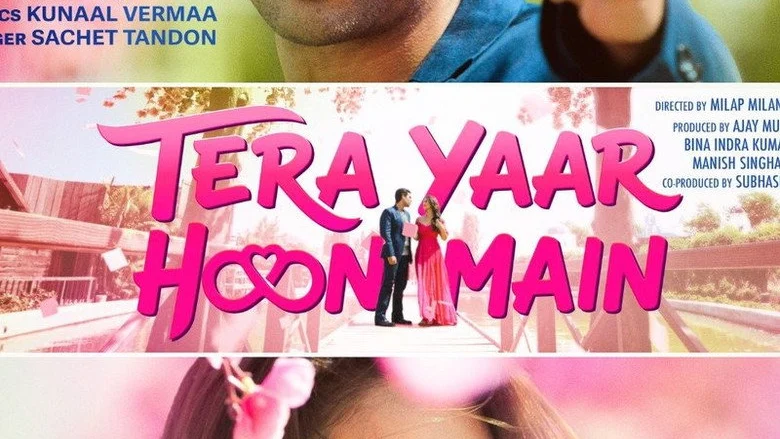
Aman Indra Kumar’s Debut: Earnest but Unpolished
Aman Indra Kumar plays Sanju Deshmukh with a wide-eyed sincerity that matches his character’s journey from Nagpur to the chaos of Mumbai. His scenes with Paresh Rawal land best, there’s a hesitant chemistry between the two actors that suggests a mentorship the script never fully explores.
Where Kumar struggles is in the romantic beats with Akanksha Sharma’s Annu. The emotional turning points feel rushed, and his reactions in key moments lack the micro-expressions that seasoned actors bring to vulnerability. He’s watchable, but not yet commanding.

Direction and Screenplay: Warm Intentions, Patchy Execution
Milap Zaveri’s strength has always been in crafting broad, crowd-pleasing moments, and that shows in the film’s better comic sequences. Johny Lever’s cameo as a sardar taxi driver provides a welcome burst of energy in an otherwise subdued first half.
The screenplay by Zaveri and Rajan Agarwal, however, suffers from a structural confusion, it cannot decide if it wants to be a lighthearted romance or a drama about emotional debt. The central conflict, Sanju torn between his feelings for Annu and his loyalty to Vishwanath, is compelling in concept but communicated through clunky dialogue rather than organic scenes.
Romance as Genre Core: Chemistry That Clicks, Then Falters
The emotional arc of Tera Yaar Hoon Main rests on Sanju falling for Annu while living under her father’s roof. The early courtship scenes are charming in their simplicity, a shared moment on a Mumbai local train, a conversation about dreams over chai.
But the film struggles to sustain this tenderness into its second hour. The romantic beats slip into montage-driven shorthand, relying on the title track (released June 2026 on Zee Music) to carry feelings the writing should have built. By the time the arranged marriage plot kicks in, the emotional stakes feel more procedural than poignant.
The genre demands a careful push-and-pull of desire and restraint, but Zaveri’s direction pushes too hard toward dramatic confrontation too soon. The result is a romance that peaks in its first half and then becomes a noisy drama about promises and obligations.
Paresh Rawal: The Anchor This Film Needs, and Deserves Better
Paresh Rawal as Vishwanath Purohit is, unsurprisingly, the film’s most calibrated performance. He plays a man caught between a promise made to a friend and his responsibility as a father with the kind of layered restraint that younger cast members cannot yet match.
His single best moment comes in a quiet scene where he watches Sanju and Annua talk from across the room. Rawal says nothing, but his eyes convey the entire weight of the conflict. It is the kind of acting that makes you wish the rest of the film were written at this frequency.
Supporting Cast: Flashes of Life Amid the Noise
Supriya Pilgaonkar as Nadani and Mrinal Kulkarni as Saroo bring texture to the household, though both are underserved by the script. Neha Khan’s Tanisha, as the spurned ex, registers mostly as a plot device rather than a character. The casting signals a film trying to build an ensemble, but the screenplay gives these actors little more than functional beats.
Johnny Lever’s taxi driver and Darshan Jariwala as Tanisha’s father provide the comic relief the film’s tonal shifts demand, but their scenes feel like detours rather than integral pieces. The supporting cast collectively deserved a more cohesive screenplay to inhabit.
A Genre-Bending Attempt That Never Finds Its Rhythm
The film tries to juggle romance, comedy, drama, and even action, but the tonal whiplash becomes exhausting by the second hour. The action sequences, when they arrive, feel grafted on, competently shot but emotionally irrelevant to the central love story.
The editing shows a first half that breathes and a second half that gasps. The climax rushes through resolutions that should have been built over multiple scenes, leaving character arcs dangling. What starts as a slice-of-life romance ends as a conventional Bollywood drama, and the seams show.
For a film released on July 24, 2026, carrying a UA16+ certificate, Tera Yaar Hoon Main feels caught between wanting to be safe and wanting to be bold. It ends up being neither.
If you enjoy thoughtful explorations of romantic dilemmas and nuanced family dynamics in Indian cinema, browse our curated selection of Hindi Action reviews for more such analyses.
Audience Reception: Who Is This Film Actually For?
With no substantial audience score data from BookMyShow, IMDb, or social media sentiment available, it is difficult to gauge public reaction beyond critical response. The film’s target audience, likely family audiences and fans of the lead cast, may find its emotional core recognizable.
But those seeking a tighter screenplay or a romance that trusts its own intelligence will likely find Tera Yaar Hoon Main underdeveloped. The film is best suited for viewers who prioritize emotional sincerity over narrative rigor, and who don’t mind tonal inconsistency as long as the heart is in the right place. Watch it on OTT to manage expectations around pacing.
For a debut vehicle, Tera Yaar Hoon Main shows promise in its casting and its central premise, but the execution lacks the craft discipline that could have turned a decent idea into a memorable film. It is a watch for Paresh Rawal’s performance and a skip for anyone hoping for a coherent genre piece. I’m giving this a generous 2.5 out of 5, earnest but incomplete.
If this film’s struggle with mixing romance and drama reminded you of something that worked better, read our review of Jana Nayagan review for a masterclass in focused execution.
For a tighter, more inventive blend of genres in a shorter runtime, check out Sweet Rogue verdict.

Ankit Jaiswal is the Chief Author, covering Indian cinema and OTT releases with honest, no-filler criticism. An SEO strategist by background, he brings a research-driven approach to film writing, cutting through hype to tell you exactly what's worth your time.