The India Story (2026): A drama-thriller built on righteous anger, not craft
Talpade plays a man whose anger feels earned, not rehearsed. In the few quiet moments the film allows, his restraint suggests a deeper exhaustion with a system that keeps failing. He holds the frame with the weary authority of someone who has seen this fight before.
That he manages to command attention without a single standout scene speaks to an actor who understands the genre’s demands: anchor the chaos.
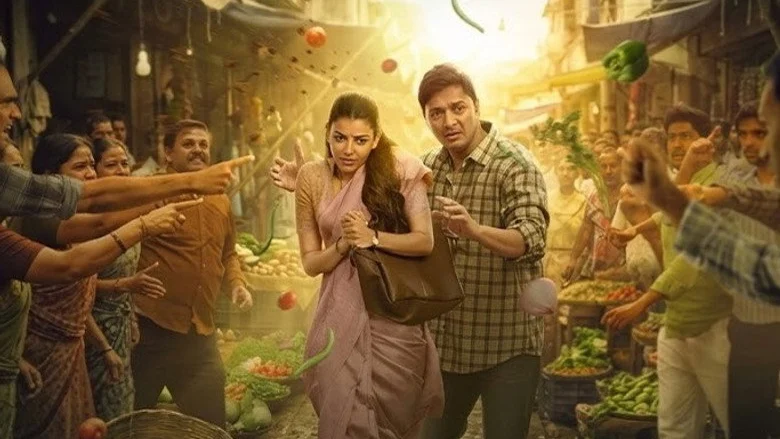
Chettan DK’s Direction: Clear Intent, Blunt Execution
Chettan DK knows the story he wants to tell: a community crushed by industrial negligence. The problem is he tells it with the same bluntness as a government notice, hitting the same note repeatedly. The pacing feels flat, a common trap when righteous fury replaces dramatic rhythm in a drama-thriller.
The screenplay lacks the twists a thriller demands. The conflict is clear, accountability for pesticide poisoning, but the path there has no surprises, leaving the second half feeling like a procedural checklist rather than rising tension.
A Drama-Thriller That Chooses Sermon Over Suspense
As a drama, *The India Story* works best when it stays small: faces, kitchens, local hospitals. The threat is systemic and invisible, which should be terrifying. But the film rarely translates that horror into visual or narrative momentum, defaulting to dialogue-heavy explanations that kill pace.
As a thriller, it barely registers. There is no ticking clock, no cat-and-mouse chase between the affected and the powerful. The corporate villain, played by Manish Wadhwa, remains a vague silhouette of greed rather than a menacing presence. The script trusts its subject matter too much, forgetting that a film needs scenes, not just themes.
The result is a film that feels educational when it should feel urgent. The craft needed to turn a public health crisis into edge-of-seat cinema is simply absent here.
Kajal Aggarwal and Manish Wadhwa: Missed Opportunities
Kajal Aggarwal is given little more than reactive sympathy. Her casting signals a desire for star presence, but the role lacks the dimensions needed to make an impact. You sense she could do more, but the screenplay never asks her to.
Manish Wadhwa, as the antagonist, gets the opposite problem: too little screen time. A single scene of corporate indifference could have defined him. Instead, he remains a function, a stand-in for a system, rather than a character whose choices we understand or despise. For fans of Telugu action reviews looking for sharper villain arcs, this will feel thin.
If you are looking for more films that treat their craft with precision, we invite you to browse our extensive library of Hindi thriller reviews.
No Controversy: A Film’s Quietest Betrayal
The research contains no record of political backlash or censorship battles, which is itself a disappointment. A film about pesticide contamination and corporate negligence should make someone uncomfortable. The absence of controversy suggests the film pulled its punches in the editing room, aiming for a broad audience rather than a sharp argument.
In an age where corporate accountability is a daily headline, *The India Story* settles for being safe. That is its greatest failure.
Here is a film that wanted to scream but chose to speak politely. You can watch it on OTT if the subject compels you, but don’t expect the cinematic craft to match the weight of the issue. It is a well-intentioned lecture, not a piece of art that lingers.
I walked away with respect for the subject, but frustration with the film. *The India Story* earns a 2 out of 5 for its ambition, not its execution.
If you want a political drama that understands rhythm and consequence, check out our deep-dive on the Tera Yaar review that similarly struggled with pacing.
For a recent Jana Nayagan verdict that nails its craft, *Jana Nayagan* is the proper antidote.

Ankit Jaiswal is the Chief Author, covering Indian cinema and OTT releases with honest, no-filler criticism. An SEO strategist by background, he brings a research-driven approach to film writing, cutting through hype to tell you exactly what's worth your time.