Pehla Pyaar Doosri Baar (2026): Sparsh Walia Leads a Reunion Rom-Com That Fumbles Its Own Nostalgia
The hills of Mussoorie have rarely carried so much romantic baggage. Three Delhi office workers drive toward a school reunion convinced that unfinished crushes are a rescue mission.
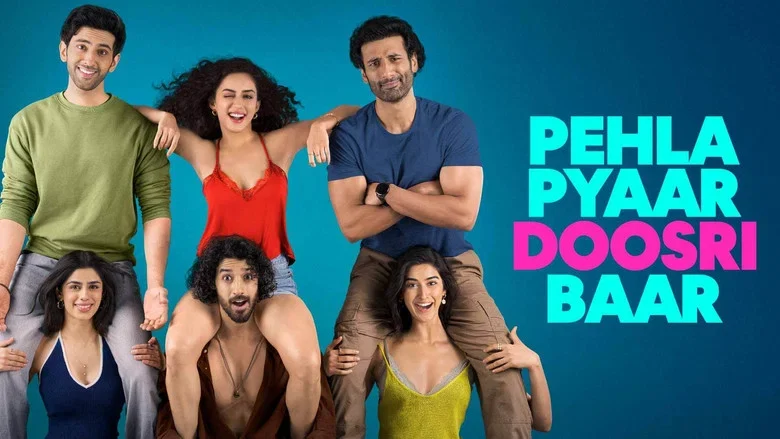
An Impulsive Road Trip That Mistakes Nostalgia For A Plan
Anuj Saini opens on fluorescent corporate corridors and the quiet humiliation of watching colleagues marry while you chase a promotion target.
Gautam, Vedant and Shivi are single, lonely, and primed for a bad decision. The film makes that decision feel inevitable rather than stupid.
Their drunken departure for the hills is the film’s cleanest comic engine. It converts workplace stagnation into a collective romantic quest with genuine momentum.
The premise carries a sharp idea: first love is a fantasy you never filed away, and adulthood is the paperwork catching up.
What follows is three parallel pursuits running on the same track. Gautam wants Gehna, Vedant wants Simran, Shivi wants Karan, and the film wants us to care about all three at once.
That ambition is also the film’s structural wound. The script spreads its emotional investment thin, and no single pairing is allowed the sustained intimacy needed to ignite.
Where The Chemistry Refuses To Catch Fire
Romantic comedy lives or dies in the held look, the accidental brush of hands, the pause before a confession. This film keeps arriving at those moments and then stepping around them.
Sparsh Walia plays Gautam with a soft, bashful stillness that reads as sincerity. His posture shrinks when Gehna leans in, and that retreat is the most honest thing in the movie.
But the script hands him a familiar commitment-anxiety beat. Intimacy arrives, permanence is requested, and the man bolts. Familiarity isn’t the sin; the sin is that we never see what he’s actually afraid of losing.
Kunal Vaid’s Vedant carries the most conventional arc, a late confession and a wedding deadline. He plays the pursuit with nervous energy, but the film never lets him sit still long enough to register pain.
Sargun Kaur Luthra gives Shivi the sharpest comic register, all blunt gaalis and refusal of a “cute” identity. When Karan calls her cute, her demand to be seen as “sexy” lands as both a joke and a quiet plea.
That plea is the film’s best-written thread. It’s also the one it treats most carelessly, letting a makeover montage stand in for an emotional reckoning.
Alicia Chopra’s Gehna Is The Film’s Most Complicated Woman
Gehna arrives confident, outspoken, and freshly heartbroken. Alisha Chopra plays her with an easy physical looseness that makes her the most adult presence on screen.
Her line about being hot also being a huge problem is the film’s wittiest observation, and Chopra delivers it with a shrug that suggests she’s tired of being reduced to it.
When she asks Gautam for permanence after intimacy, the film briefly becomes something sharper. Then it retreats into the safe geometry of the hesitant man and the demanding woman.
Sakshi Vaidya’s Simran carries the film’s central deadline, and she has a warmth that briefly makes Vedant’s schoolboy longing feel reciprocal. Her engagement to Vikesh turns that warmth into a ticking clock.
Gobind Singh Mehta’s Vikesh is not a villain, which is precisely the problem. He’s a decent man with a wedding date, and the film never gives him enough texture to make his presence feel like a genuine obstacle.
Tushar Chhibber’s Karan is a serial womaniser who destabilises Shivi’s romantic expectations. He exists as a plot function rather than a person, and the film’s treatment of his encounter with Shivi flirts with the very shallowness it wants to critique.
The Second Half Loses The Rhythm It Earned
The first half moves with purpose: corporate frustration, the drunken decision, the travel, the reunion introductions. It’s familiar but it breathes.
The second half fragments. Gautam’s commitment anxiety, Vedant’s wedding deadline, and Shivi’s heartbreak all compete for screen time, and none gets the sustained attention it deserves.
The film then narrows toward a collective mission to help Vedant win Simran back. That’s a smart structural pivot, turning private disappointments into a shared objective.
But the pivot arrives too late to unify what came before. The emotional hangover the trio shares never quite coheres into the reckoning the film seems to want.
Saini’s direction is clean and unfussy, with a decent eye for the contrast between Delhi’s grey routine and the hills’ nostalgic light. He knows how to stage a conversation.
What he doesn’t yet know is how to hold a moment past its comfort. The film keeps cutting away from the silences that would have made these people real.
The Music Carries Weight The Screenplay Can’t
The songs do a lot of emotional labor here, and they do it well. The music is soulful in a way that compensates for stretches where the writing simply isn’t doing the work.
That’s a compliment and an indictment. A romantic comedy that needs its soundtrack to explain how you should feel is telling you something about its own confidence.
The editing has a similar issue. The first half builds with patience; the second half clips along, as if afraid that lingering would expose the thinness of the emotional stakes.
The hill setting is used well as atmosphere but rarely as meaning. Mussoorie becomes a backdrop rather than a character, which is a missed opportunity for a film about returning to places that no longer fit you.
A Newcomer Ensemble That Deserves A Sharper Vehicle
The three leads carry the film without the safety net of established stardom, and that’s genuinely worth noting. Walia, Vaid, and Luthra have a natural ease with each other that makes the friendship believable.
That friendship is the film’s real love story, and it’s the one thread that consistently works. The way they regroup after each romantic failure has a warmth the actual romances never earn.
Just as he demonstrated a softer, more patient approach in Sumo Didi, Saini shows an instinct for character over spectacle. But here the gentleness becomes a refusal to push.
The tonal reference points sit squarely in the Luv Ranjan-produced friendship-comedy tradition, and the film never quite escapes that shadow. It borrows the structure without the bite.
The comparison to sharper contemporary work is unavoidable. The screenplay resists the anarchic comic energy that powered Udta Teer, opting instead for a gentler, more conventional romantic rhythm that never quite finds its own pulse.
Walia’s Gautam, in his quiet retreat from intimacy, recalls the same kind of internalized hesitation that anchored Gajab Raat. Both performances understand that the most interesting thing a man can do in a romantic scene is hesitate.
But hesitation needs a payoff, and this film keeps deferring it. The result is a romantic comedy that feels like it’s perpetually clearing its throat.
What Luv Ranjan’s Banner Is Betting On
The film arrives under Luv Ranjan’s production umbrella, which has built a cottage industry of friendship-led romantic comedies with a specific tonal signature.
That signature is both an asset and a constraint. It gives the film a recognizable identity and an audience, but it also sets expectations the film struggles to meet.
The newcomer-led casting is a deliberate bet on freshness over star power, and it’s the film’s most interesting commercial choice. It also means the film has no built-in opening-weekend cushion.
The early theatrical numbers are modest, and the film will need strong word-of-mouth to sustain any kind of run. Whether the newcomer ensemble becomes a franchise asset depends entirely on how this one performs.
The broader landscape of contemporary hindi comedys is crowded with sharper, more confident entries. This one will need to find its audience quickly or risk being buried by the competition.
The Uncomfortable Truth About First Love
The film’s real subject is the gap between the person you idealized at seventeen and the adult standing in front of you. That’s a rich, uncomfortable idea.
But the film keeps softening it. Every time a character gets close to a genuine reckoning, the screenplay offers a joke, a song, or a convenient plot turn to ease the pressure.
The result is a romantic comedy that wants to be about emotional maturity but keeps retreating into adolescent fantasy. The three friends learn something, but the film never quite lets them sit with what they’ve learned.
There’s a version of this movie that’s sharper, sadder, and funnier. You can feel it in the margins, in Chopra’s weary shrug, in Luthra’s blunt demand to be seen.
What we get instead is a pleasant, uneven ride through the hills, carried by a cast that deserves a better map. The nostalgia is real; the spark isn’t.
Pehla Pyaar Doosri Baar understands that first love never really ends. It just never quite figures out what to do with that knowledge.

Ankit Jaiswal is the Chief Author, covering Indian cinema and OTT releases with honest, no-filler criticism. An SEO strategist by background, he brings a research-driven approach to film writing, cutting through hype to tell you exactly what's worth your time.