Maa Inti Bangaram (2026): Samantha’s Hidden-Past Gamble Between Hearth and Havoc
A woman steps into a traditional household as a new bride, her composure intact, her history buried. Within days, the family senses something fractured beneath her domestic obedience, a past violent enough to threaten everything she’s now protecting. This is the central wager of Maa Inti Bangaram, a Telugu action-drama that asks whether a protagonist can earn belonging through concealment or whether her old life will demolish the new one before she can choose.
Director B.V. Nandini Reddy constructs the film as a deliberate collision between intimate family vulnerability and the kinetic language of action cinema. The gamble is audacious: can domestic warmth and physical danger occupy the same emotional space without one canceling out the other? The trailer suggests yes. Whether the full narrative sustains that balance remains the film’s central test.

Samantha Ruth Prabhu’s Restrained Dual Register
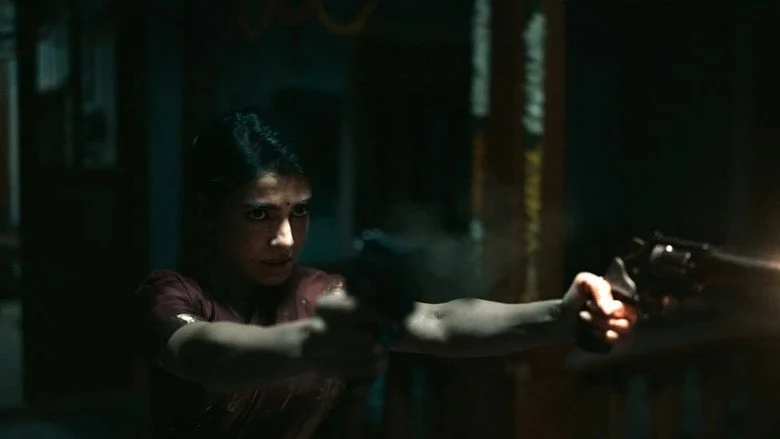
Samantha carries the entire film through a performance architecture built on restraint. In the household sequences, she projects the careful composure of someone learning to fit into a mold that was never built for her. Then the trailer pivots: she declares, “I can risk anything to save my family, ” and the register shifts entirely.
This is where the role lives, in the space between these two registers. The dialogue work in the available material suggests she’s been tasked with making vulnerability and latent threat coexist in single moments. Whether the completed film allows her full range to breathe across 120-odd minutes will determine if this is a career-recalibrating performance or a charismatic vehicle that underuses its lead.
Direction That Attempts Tonal Alchemy Without Full Proof
Nandini Reddy’s stated strength here is the blend itself, the attempt to make family-drama warmth and action-thriller velocity share the same frame. The trailer editing confirms this intent: emotional beats cut against punchy action rhythms, suggesting a director confident in genre hybridity.
The weakness, unverifiable until the full film surfaces, is whether the screenplay actually holds this tonal structure together. The available material doesn’t confirm whether character arcs sustain emotional logic when danger erupts, or whether the action sequences feel organic to the domestic stakes rather than grafted onto them. This is the film’s largest unresolved risk.
Genre Execution: Domesticity as Action Battleground
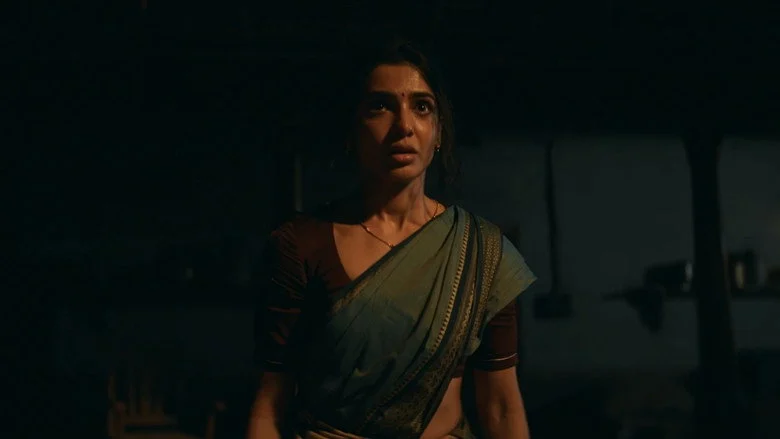
The film positions the family home not as sanctuary but as contested space. The protagonist’s hidden past becomes the external threat that forces the household itself to become a combat zone. This is smartly conceived, action stakes rooted in character vulnerability rather than abstract villainy.
What emerges from the available material is a thriller that borrows the patience of family drama and the velocity of action cinema. The protagonist must manage both registers simultaneously: she cannot simply fight; she must fight while maintaining the domestic facade that keeps her accepted. That’s a layered structural idea.
The dialogue, particularly the line “Whether you are a hero or a housewife, if the dialogue is right, it can scare anyone, ” signals that Nandini Reddy understands genre fusion isn’t about matching action beats to emotional moments. It’s about making ordinary language carry extraordinary weight. Whether the screenplay executes this across 150+ minutes remains unconfirmed.
For anyone tracking how Telugu cinema is experimenting with female-led action narratives, Telugu Thriller reviews continue to document these formal risks and whether they land.
Gulshan Devaiah, Diganth, and Gautami in Undefined Opposition
Gulshan Devaiah and Diganth are listed as important roles, but the available material provides no scene-level evidence of what they actually do or how they function within the family dynamics or the external threat. This is a casting choice that signals intent, both actors carry weight, but intent without execution details is still a question mark.
Gautami’s presence suggests the film understands that family hierarchies matter to emotional stakes. A mother figure (or mother-in-law figure) carries different narrative weight than a generic supporting player. Her role likely mediates the protagonist’s integration or rejection, but the research doesn’t confirm where her allegiance lands when danger surfaces.
Female Action Gamble Without Cultural Pushback Data
The most striking absence in available critical response is any documented controversy around the film’s positioning of a woman as the action protagonist of a family drama. This could mean either the film isn’t controversial (straightforward female agency), or the critical conversation simply hasn’t emerged yet because the film hasn’t released.
What’s clear from coverage is that Samantha’s return to Telugu cinema in a lead action role is itself framed as a cultural event. The audience anticipation documented in available reports treats her casting as significant, not just commercially, but as a statement about what Telugu cinema is willing to build around a female star at this moment.
Watch this film if you’re invested in how Telugu cinema balances domestic intimacy with action spectacle, and whether Samantha’s performance can justify the tonal ambition the trailer promises. The bet is real: the execution unproven. This is a film that either discovers something new in the space between family drama and action thriller, or collapses under the weight of its own structural contradiction.
Samantha Ruth Prabhu’s comeback vehicle Naina review shared similar tonal complexity and hidden-identity plotting across darker genre terrain.
Maa Inti Bangaram is a calculated risk that could land at 3.5/5, a genuinely interesting formal experiment in genre fusion, but one whose screenplay and tonal balance remain unverified by completed critical assessment.
The thematic marriage of domestic vulnerability and high-stakes action echoes the conceptual gamble attempted in Double Occupancy verdict, where genre boundary-blending becomes the narrative itself.

Ankit Jaiswal is the Chief Author, covering Indian cinema and OTT releases with honest, no-filler criticism. An SEO strategist by background, he brings a research-driven approach to film writing, cutting through hype to tell you exactly what's worth your time.