Crazy Kalyanam (2026): Anupama Parameswaran Anchors A Familiar Rural Drama That Preaches Better Than It Persuades
Badrappa Gajula opens Crazy Kalyanam on a village courtyard where reputation is currency and a daughter is an asset to be positioned. By the time the wedding negotiations begin, the film has already told you exactly where it stands, and exactly where it will end.
Anupama Parameswaran plays Keerthi, a young woman who wants a degree before a mangalsutra, while V. K. Naresh’s Parvathalu wants a prestigious alliance before anything else. The collision is real; the road to it is worn smooth.
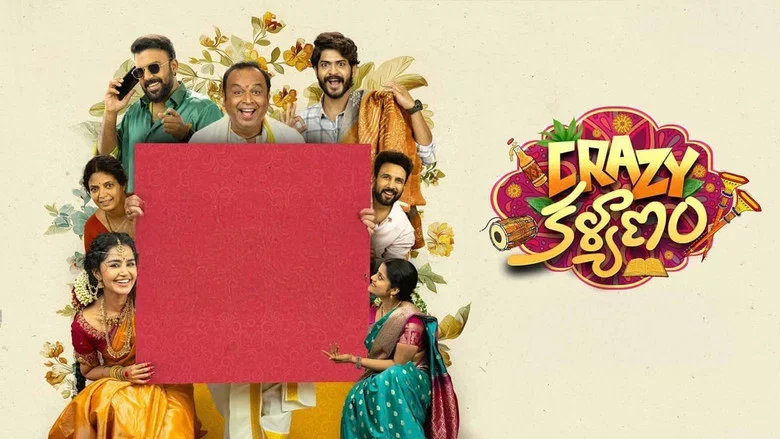
A Slow Courtyard Prologue That Mistakes Warmth For Momentum
The first half hour is devoted to introducing Parvathalu’s household and his fixation on public respect. Telugu360’s note that “the first 30 minutes pass very slowly” is not unkind, it is accurate. Gajula lingers on family banter, village texture and the romantic track long before the marriage engine engages.
Much of that early energy comes from Tharun Bhascker’s Balraju, the drinking son-in-law whose nightly returns turn the courtyard into a stage. Bhascker plays the drunkenness with a loose-limbed shamble and a slurred, over-familiar grin, and the arguments he provokes with Naresh have the sweaty, overlapping realism of a household that has rehearsed this fight many times.
It is the film’s most alive comic texture. It is also a crutch, because whenever the screenplay needs a spark, it simply pours Balraju another drink.
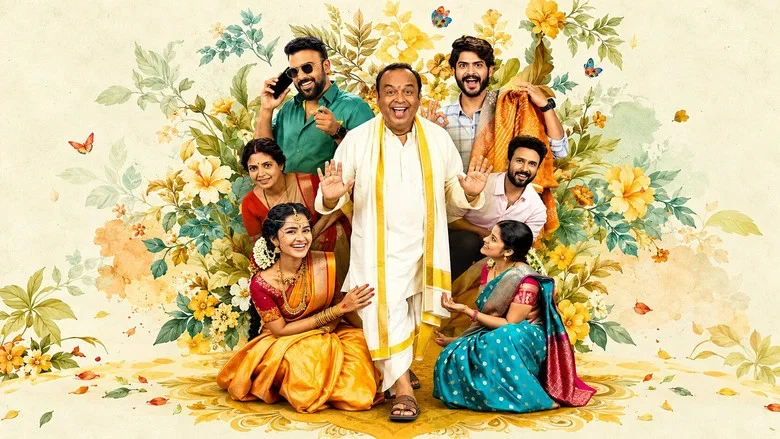
When The Proposal Becomes A Plot Device, The Drama Sharpens
The film’s structural hinge arrives when Parvathalu diverts a marriage proposal intended for his elder brother’s daughter and pulls it into his own home. That single act of vanity-driven opportunism is the best idea in the screenplay. It converts a generic arranged-marriage premise into an indictment of a man who treats his own family as a bargaining table.
From there, Keerthi’s desire to finish her studies and stand on her own feet becomes the axis of every argument. Parameswaran plays the resistance quietly, a tightened jaw across the dinner table, a refusal to lower her eyes when the elders talk over her, and those small refusals carry more weight than any speech the script hands her.
What surrounds her is thinner. Akhil Raj Uddemari’s Uday is a pleasant, under-written presence, and the romance between them runs on the standard beats of a love track that exists chiefly so the marriage conflict has someone to obstruct.
V. K. Naresh Builds A Villain Out Of Respectability, Not Malice
The film’s most compelling figure is not a villain at all. Parvathalu is a father who genuinely believes an advantageous alliance is the safest form of love he can offer, and Naresh plays him with a stiff-backed dignity that cracks only at the corners, a hand raised to silence dissent, a voice that drops into wounded authority whenever his judgment is questioned.
One lengthy confrontation between father and daughter was singled out as “clapworthy” in its intensity, and the praise is earned. Naresh holds the frame with stillness rather than volume, letting the room feel the weight of a man discovering that his authority has limits.
It is the only stretch of the film where the ideological argument feels like a lived conflict rather than a thesis being recited. Just as the filmmaker behind Drones found comedy inside collision, Gajula finds his best drama inside a stalemate.
An Uneven Handoff From Comedy To Consequence
The second half wants to be a serious meditation on daughters, education and parental investment, and the tonal handoff is clumsy. The film lurches from Balraju’s pratfalls into tearful confrontation without the intermediate emotional gradations that would make the shift feel earned.
Some of that unevenness recalls the tonal confusion that undermined Comrade Kalyan, a film with a clear social conscience that never quite found the register to carry it. Here the message is stated plainly and often, but the drama around it rarely rises to meet it.
Shyam Dupati’s camera keeps the village close and humid, favouring mid-shot compositions that place family members in tight, uncomfortable proximity across doorways and verandas. It is unshowy work that understands the setting; it simply does not find a visual idea as strong as the social one.
The Climax Arrives With Its Conclusion Already Printed
When Parvathalu finally accepts that Keerthi must study and earn before she marries, the reversal lands as a concession to the film’s thesis rather than a development of its character. The arc is predictable, and the final realization feels forced rather than prepared by everything that preceded it.
Parameswaran’s work in these closing scenes remains the film’s steadiest asset. She plays the daughter’s quiet vindication without triumph, and there are moments where her composure suggests something the screenplay never fully investigates. The restraint she brings to that final stretch is of a piece with the grounded emotional register she found in Sathi Leelavathi, though here she is given far less room to complicate the material.
A One-Crore Gamble In A Crowded Release Window
Produced by Boosam Jagan Mohan Reddy on a reported budget in the region of ₹1 crore, Crazy Kalyanam is a modestly scaled proposition placed in a punishing corridor, arriving alongside far larger regional titles and asking family audiences to choose a message drama over spectacle.
At that budget, the economics are forgiving. The film does not need to win the weekend; it needs to hold screens long enough for word-of-mouth among Telugu family viewers to do its work. Whether that happens depends less on the thesis than on whether Balraju’s comic disorder and the father-daughter thread can carry the slower stretches.
For the producing banner, the calculation is simpler still: a low-cost rural drama with a recognizable lead and a clear social proposition is a defensible bet, and the theatrical afterlife of such titles increasingly extends into streaming. The broader appetite for grounded family narratives across contemporary Telugu dramas gives this one a plausible path, though not a guaranteed one.
A Message Worth Hearing, Delivered Without Surprise
The film’s closing argument, that parents should invest in a daughter’s education rather than in the wedding’s spectacle, is worth making, and Gajula makes it without hedging. What he does not do is earn it dramatically. The idea arrives fully formed in the final act, and the audience is asked to applaud a conclusion the story has not argued its way toward.
That is the central frustration of Crazy Kalyanam: a film with the right subject and the wrong architecture, carried by Naresh’s wounded dignity and Parameswaran’s quiet resolve, and let down by a screenplay that treats conviction as a substitute for construction.
It ends on a father’s change of heart, and the change feels like a curtain rather than a reckoning. The wedding may be crazy; the film around it is merely reasonable.

Ankit Jaiswal is the Chief Author, covering Indian cinema and OTT releases with honest, no-filler criticism. An SEO strategist by background, he brings a research-driven approach to film writing, cutting through hype to tell you exactly what's worth your time.