Cocktail 2 (2026): Shahid Kapoor’s Charm Meets Homi Adajania’s Restraint
Kunal (Shahid Kapoor) stands at a crossroads, caught between the free-spirited Ally (Kriti Sanon) and the grounded Diya (Rashmika Mandanna), in Homi Adajania’s long-awaited return to the romance genre. The opening frames of *Cocktail 2* suggest a filmmaker aware that the 2012 original’s legacy rests on chemistry, not just plot mechanics.
This sequel, arriving fourteen years after the original, is a curious beast, an A-certificate romantic drama that wants to be both a crowd-pleaser and a mature meditation on modern love. It is a watch for those invested in the actors, but a skip for anyone expecting the breezy chaos of its predecessor.

Shahid Kapoor’s Kunal Anchors a Film That Often Drifts
Kapoor carries the film’s emotional weight with a performance that understands the character’s confusion. His Kunal is no longer the impulsive charmer of the original; he is a man worn down by choice, and Kapoor plays that fatigue with subtle restraint.
The actor’s best moments come in silence, a glance at Ally across a crowded room, a hesitation before answering Diya’s question. It is a mature turn that signals Kapoor’s evolution from romantic lead to character actor.
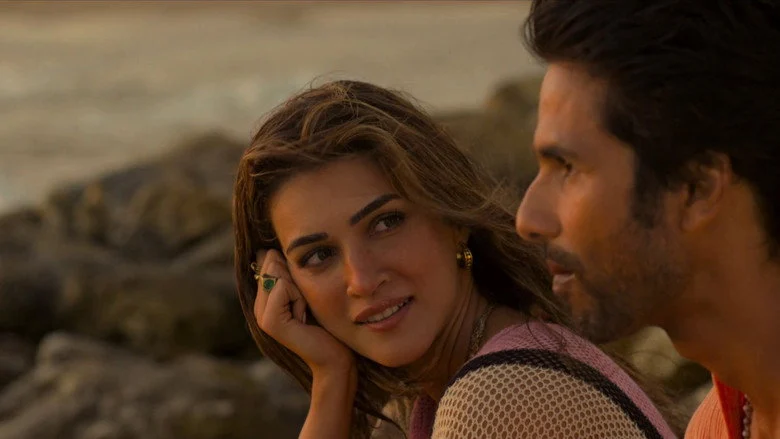
Kriti Sanon and Rashmika Mandanna Define Two Poles of Desire
Sanon’s Ally is a reimagining of Deepika Padukone’s iconic role, and she brings a brittle vulnerability beneath the wild-girl exterior. Her Ally is less about chaos and more about quiet desperation, making the character feel contemporary rather than nostalgic.
Mandanna’s Diya is the film’s moral compass, and she plays it with a grounded warmth that contrasts sharply with Ally’s volatility. The two actresses never share a scene of direct confrontation, yet their presence defines Kunal’s dilemma, Sanon representing passion, Mandanna representing peace.

Adajania’s Direction Balances Tone but Stumbles on Pacing
Adajania, returning to the genre he helped define, shows a firmer hand with character nuance than with narrative momentum. The first half moves with a languid confidence, allowing relationships to breathe, but the second half loses steam as subplots involving parents (Tiku Talsania and Neelu Kohli) feel underwritten.
The director’s strength remains his ability to extract naturalistic performances from his cast. Yet the screenplay lacks the sharp dialogue that made *Cocktail* (2012) quotable, settling instead for situational humour that rarely lands with force.
Adajania’s visual language has matured, the London locales are shot with a colder palette than the original’s sunny warmth, but this aesthetic shift mirrors a tonal inconsistency. The film cannot decide if it is a comedy with dramatic undertones or a drama with comic relief.
The Romance Genre Demands Chemistry, and the Film Delivers in Parts
Romantic films live or die on the believability of their central pairings, and *Cocktail 2* offers two distinct dynamics. The Ally-Kunal track crackles with the familiarity of old wounds, their reunions carrying an ache that suggests shared history.
The Diya-Kunal track is gentler, built on mutual respect rather than passion, and Mandanna’s earnestness makes this the more adult relationship. Adajania wisely avoids pitting the women against each other, instead letting Kapoor’s indecision drive the conflict.
The film’s best romantic beat comes in a quiet kitchen scene where Kunal and Ally cook together, their banter revealing more than any grand gesture could. It is in these small moments that *Cocktail 2* justifies its existence as a romance rather than a plot vehicle.
The A-Certificate Controversy and Its Box Office Rebound
The CBFC’s decision to hand the film an A certificate sparked predictable debate, with trade analysts questioning whether the content warranted restricting younger audiences. The controversy likely boosted curiosity, with opening day collections of 13.50 crore nett reported by Sacnilk, a solid start for a non-franchise romance.
The film’s first-week numbers of 95.50 crore nett in India and 147.73 crore worldwide, as tracked by Sacnilk, suggest the controversy did little to dent its commercial appeal. The audience score of 7.9/10 on BookMyShow indicates that those who did watch it largely appreciated the mature handling of its themes.
I found the A certificate puzzling given the film’s restrained approach to intimacy, but it does signal Adajania’s refusal to sanitise adult relationships for mass consumption.
Browse more Hindi Romance reviews for similar takes on modern love stories.
Supporting players Talsania and Kohli bring warmth as Kunal’s concerned parents, though their screen time is frustratingly brief. Mark Bennington’s Eduardo serves as a convenient plot device rather than a fully realised character, a wasted opportunity given the actor’s comic timing.
*Cocktail 2* works best as a showcase for Kapoor’s range and Adajania’s directorial maturity. The film’s refusal to offer easy answers about love is admirable, even if the meandering middle section tests patience. Watch it for the performances and the film’s honest questions about commitment.
Those who loved the original’s carefree energy will find this sequel a more sombre affair, closer in spirit to Adajania’s *Finding Fanny* than to *Cocktail*. It is a film that asks its audience to grow up with its characters, which is both its greatest strength and its most significant risk.
Catch *Cocktail 2* in theatres if you value actor-driven drama over narrative efficiency, but temper expectations for the comedy promised in its marketing. The film is best experienced on a regular screen where its intimate performances can land without distraction.
This sequel earns a respectable 3 out of 5 for its performances, but Adajania’s uneven screenplay keeps it from matching the original’s cult status.
For a deeper dive into a similar romantic dilemma, explore VENDETTA BEAST review.
Shahid Kapoor’s double-duty in both films shows his range; read our Makaran verdict for another take on modern relationships.

Ankit Jaiswal is the Chief Author, covering Indian cinema and OTT releases with honest, no-filler criticism. An SEO strategist by background, he brings a research-driven approach to film writing, cutting through hype to tell you exactly what's worth your time.