Anbe Diana (2026): A Familiar Romance Wrapped in Breezy Optimism
From the opening frames in Perambur, where a high-energy athlete coach named Chirumamilla Sita Krishna, CSK to his friends, collides with the churchgoing Anglo-Indian IT professional Magic Diana D’Souza, you sense exactly what kind of film this will be. The cultural mismatch is immediate, the flirtation is quick, and the caste-conscious Telugu household lurking in the background signals the storm ahead. This is a romantic comedy that knows its lane, even if it rarely ventures beyond it.
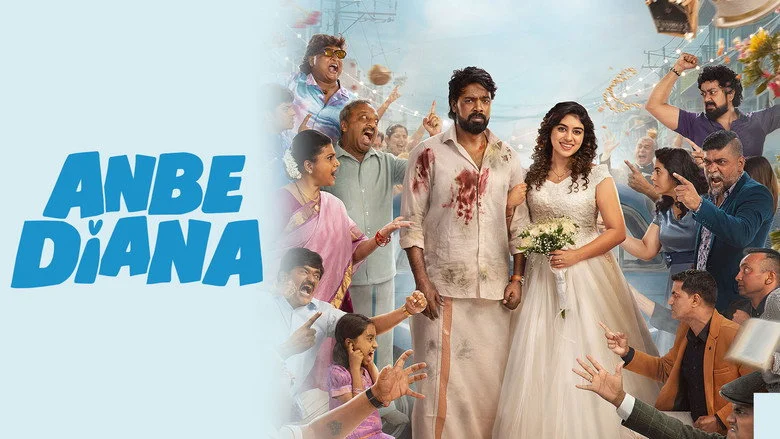
Pari Elavazhagan Anchors the Romance With Breezy Charm
As both director and lead, Pari Elavazhagan carries a double burden, and he manages the acting half with reasonable ease. His CSK is written as a bundle of comic energy, and the early scenes where he pursues Diana have a lightness that the film desperately needs.
The chemistry between Elavazhagan and Ramya Ranganathan forms the film’s emotional backbone, and when the script wobbles in its second half, their rapport keeps things afloat. He is serviceable in the romantic stretches but struggles slightly when the screenplay demands genuine dramatic weight from him.
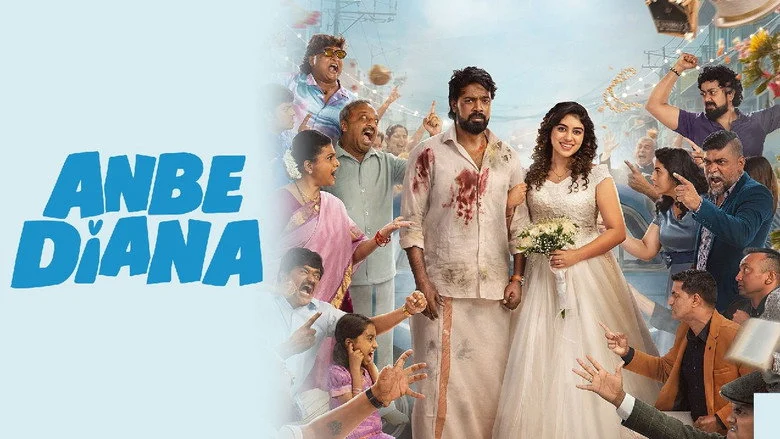
Ramya Ranganathan’s Diana Brings the Film Its Warmth
Ramya Ranganathan’s Magic Diana is the film’s secret weapon, a character whose faith and cultural identity create the central contrast that drives the narrative. Her scenes around the church and her home life provide some of the most effective visual storytelling in the film, grounding the romance in a specific social world.
She plays the role with an understated sincerity that makes the relationship feel believable. The casting signals a deliberate attempt to create genuine cultural friction, and Ranganathan delivers enough to make you wish the writing around her was sharper.
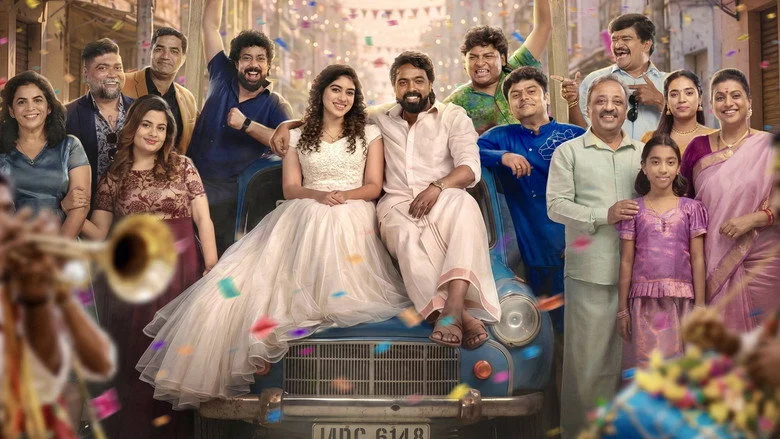
The Rom-Com Engine Runs on Culture Clash
The film’s primary genre execution relies on a culture-clash setup that works better in theory than in practice. The early lead-pair interactions establish attraction quickly and cleanly, giving the first half a breezy rhythm that several reviews noted as the film’s strongest stretch. The humor emerges from the family contrast and the lead pair’s mismatched backgrounds, which keeps the premise approachable even when the social commentary gets heavy-handed.
Household confrontation scenes transform the romance into a social-comedy conflict, and these moments represent the film’s clearest dramatization of its caste-based obstacle. However, the screenplay leans heavily on stereotypes and familiar stock characters, which diminishes the impact of what could have been a more incisive critique. The social-conflict treatment feels thin and convenient in places, as though the film is afraid to fully commit to the darkness of its subject matter.
Critics have noted this tension. Cinema Express called it a “familiar romance with fairytale-like optimism, ” while The Times of India observed that “laughs paper over a stereotypical” approach to the material. The Hollywood Reporter India described it as “a flippant romance with its breezy moments, ” which captures the film’s central contradiction, it wants to address prejudice without ever making the audience uncomfortable.
Supporting Cast Fills the Opposition Ranks
Roja Selvamani appears in the family-conflict track, lending credibility to the household-side tension that drives the central obstacle. Her presence in these scenes gives the caste-conscious objections a human face, even when the writing around her relies on predictable beats.
Chetan plays a household authority figure in the caste-opposition network, contributing to the pressure that mounts on the lead romance. The film treats these characters as representatives of inherited prejudice rather than individual villains, which is an interesting choice even if their execution remains one-dimensional. Ismath Banu rounds out the supporting ensemble, though specific performance details remain thin in the available coverage.
The Predictable Path to a Familiar Resolution
Rediff’s assessment of the film as a “breezy romcom, decent watch” captures the general critical consensus, which averages around 2.75/5 across major outlets. The film opened modestly with an India net of ₹30 lakh on day one, according to Cinema Express, before improving over the weekend to reach ₹2.43 crore in India and ₹2.78 crore worldwide by day three, as reported by Baap of Movies.
The second half loses momentum as the conflict becomes repetitive, and the emotional beats land with predictable thuds. The direction keeps the tone light enough for the rom-com structure but never escapes the familiar genre beats that constrain it. I found myself wishing the film trusted its leads enough to push deeper into the social friction it keeps circling.
The Perambur setting grounds the cross-cultural relationship in a specific neighborhood environment, and the straightforward visual storytelling serves the material adequately. But the breezy first half gives way to a second half that feels like it is running in place, repeating the same family objections without adding new dimension.
If you want a light Tamil romantic comedy that touches on social prejudice without ever really digging in, this is a decent weekend watch. For those seeking more Tamil romantic comedies with similar themes, browse our Tamil Comedy reviews for more options.
For those who appreciated how Elavazhagan balances humor with social friction, Arjunan Per review offers a similar tonal balancing act with a different lead energy.
Anbe Diana is a film that knows its formula and executes it without embarrassment, but never pushes beyond it. The leads deserve better material, the social critique deserves sharper writing, and the audience deserves a second half that matches the first. A modest 2.5/5 for a romance that charms in flashes but settles for the familiar.
For another take on familiar family conflict wrapped in commercial packaging, Ikka verdict explores similar thematic territory with a different cultural lens.

Ankit Jaiswal is the Chief Author, covering Indian cinema and OTT releases with honest, no-filler criticism. An SEO strategist by background, he brings a research-driven approach to film writing, cutting through hype to tell you exactly what's worth your time.