A TOY GUN (2026): A 15-Minute Meitei Drama That Cuts Deeper Than Most Features
The frame holds on Leishangthem Tonthoi’s face as her son plays with a toy gun, its plastic click echoing against the weight of a world that has already taken her husband. In 15 minutes, Thingnam Parshuram’s Meitei short film maps the psychological wreckage of political unrest through the narrowed eyes of a widowed mother and her young boy.
This is not a film about conflict; it is about what conflict leaves behind, and it leaves you winded.
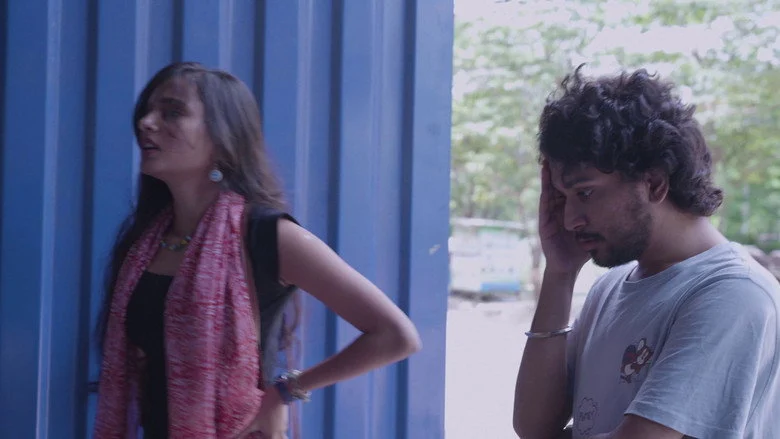
Tonthoi’s Quiet Devastation Is the Film’s Beating Heart
Tonthoi does not get the luxury of a monologue. Her performance is built on the architecture of a stiff spine and the way she glances at a door that will never open again. She makes grief feel like a physical weight she carries from room to room.
Thingnam Parihanba, as the son, matches her restraint with a child’s unsettling naivety. When he aims his toy at the world, the irony is not lost, the innocence is already corroded.
Parshuram’s Direction Turns a Small Stage Into a War Zone
Parshuram’s screenplay understands that trauma does not need explosions to be heard. The tension is built in the mundane, a meal prepared, a game played, with the specter of violence hovering just outside the frame. It is a confident, controlled piece of storytelling that trusts its audience to connect dots without hand-holding.
The one flaw is its brevity. The film’s power relies on implication, and while that works for the festival circuit, one wishes for just a few more minutes to sit with the aftermath. The psychological scope is vast, but the runtime occasionally makes the emotional beats feel like they are rushing toward a conclusion.
The Genre of Trauma: A Study in Restraint
As a psychological drama, the film refuses the melodrama that typically plagues such narratives. There is no weeping score or theatrical breakdown; instead, the tension is built through the stillness of the frame and the silence between characters. The toy gun itself becomes a chilling prop, a symbol of inherited violence that the child does not yet understand.
The craft here is in the editing. The film cuts between the mother’s watchful eyes and the boy’s play with a rhythm that mimics anxiety, quick, sharp, unsettling. It creates a geography of fear within a single household, proving that a home can feel like a battlefield without a single shot fired.
The world premiere at the inaugural Hyderabad International Short Film Festival in December 2025 set the stage, but it was the Special Jury Mention at the Drishyam National Documentary & Short Film Festival that cemented its pedigree. It is a film that understands that the most terrifying monsters are the ones we raise in our own minds.
Festival Darling, Audience Essential
The film’s trajectory, from Hyderabad to Drishyam to the closing slot at the 3rd North East India Film Festival, speaks to its resonance with juries. It won Best Non-Feature Film at the North East India Film Festival, a nod to its ability to translate a specific regional trauma into a universal language of loss.
For audiences, this is not a film to watch; it is a film to experience. It demands patience and rewards attention, offering a perspective on political unrest that mainstream cinema often misses, the view from the kitchen, not the barricade.
For those who want to see how regional Indian cinema is tackling complex socio-political themes with nuance, this is a starting point. Hindi Crime reviews offer a window into this growing space.
The Verdict on a Tiny Film With a Big Impact
If you have 15 minutes, spend them with Tonthoi and her son. This short film does what most features fail to do, it makes you feel the cost of conflict in your bones, without a single bullet fired on screen.
It is a sharp, necessary piece of cinema that deserves a wider audience than the festival circuit can offer. Toy Gun is a precise, haunting study of grief that earns its place in the conversation, a solid 4 out of 5 for its sheer emotional economy and directorial confidence.
For those who appreciated the quiet tension here, Modha Rathri review offers a different kind of narrative discipline worth exploring.
And if you are drawn to films that favor subtle performance over spectacle, Musafir Cafe verdict operates in a similar register of restrained storytelling.

Ankit Jaiswal is the Chief Author, covering Indian cinema and OTT releases with honest, no-filler criticism. An SEO strategist by background, he brings a research-driven approach to film writing, cutting through hype to tell you exactly what's worth your time.