Kaali Kheti (2026): Jackie Shroff and Sharad Kelkar in a Horror-Thriller That Leaves the Field Fallow
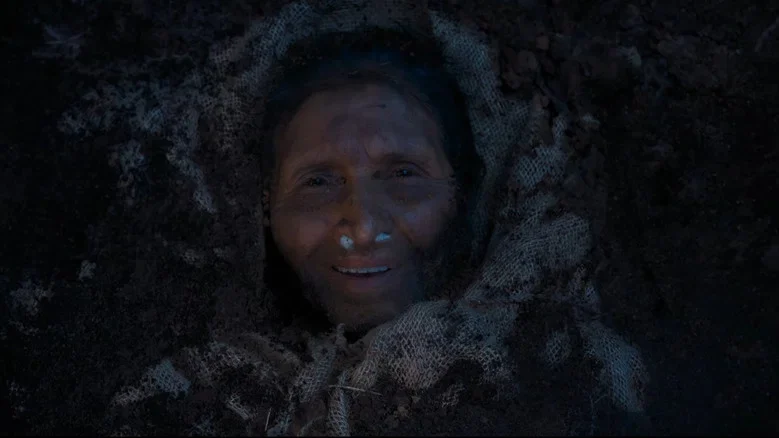
The lights go down on a blackened field and a figure we cannot quite place, and Kaali Kheti announces a rural dread it never fully harvests. For 109 minutes, Haris Imtiyaz Khan keeps the soil ominous and the scares rationed.
A Rural Horror That Plants Fear Without a Root System
The film opens in the register of agricultural unease: soil that refuses to yield, a community that knows more than it says, and two marquee names walking through a landscape shot with an eye for rot and shadow. It is a proposition built on mood, not plot mechanics.
The trouble is that mood alone cannot carry a feature. The screenplay circles a central threat without ever defining its rules, so the audience is asked to be afraid of something the film refuses to name.
Where a leaner genre entry such as Indian Institute of Zombies at least committed to a creature logic, this one hedges, and the hedging reads as indecision rather than mystery.
Jackie Shroff Anchors the Dread, Sharad Kelkar Supplies the Weight
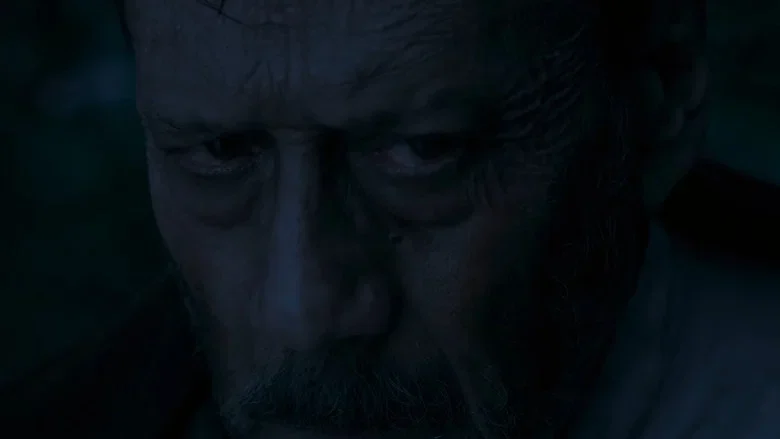
Jackie Shroff is the film’s gravitational center, and he plays it with a stillness that is genuinely unnerving. He does not raise his voice; he lowers his chin, holds a beat of eye contact a fraction too long, and lets the silence do the threatening.
It is a restrained turn that recalls the weary authority he brought to The Great Grand Superhero, though here the spectacle is stripped to a single held gaze across a darkened room.
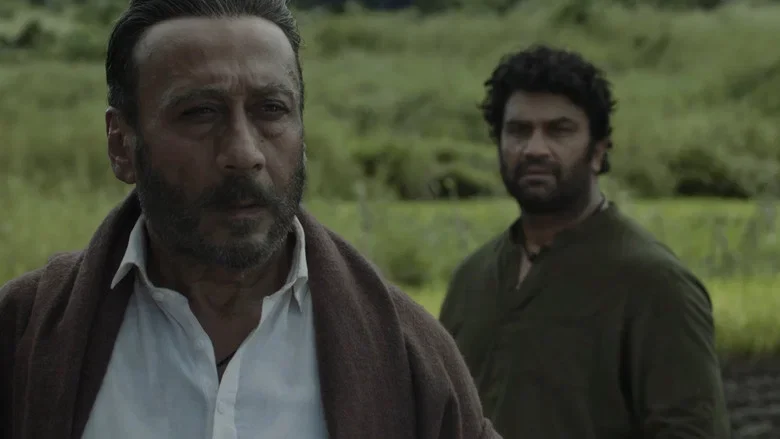
Sharad Kelkar carries the procedural spine with a clenched-jaw gravity, his shoulders set against a threat he cannot articulate. The two men share a handful of scenes built on physical distance, and the spatial tension between them is the best thing in the film.
The supporting ensemble of village elders and relatives functions as texture rather than character, drifting through frames without a single decision that alters the plot. Their presence thickens the atmosphere and thins the drama.
The Camera Knows the Land Better Than the Script Knows Its People
Khan’s direction is strongest when it trusts the frame: wide shots of a blackened field at dusk, a lantern held low, a doorway that stays open a second too long. The film understands that rural horror lives in the negative space between what is seen and what is implied.
But the editing betrays that patience. Scares arrive on cue rather than out of consequence, and the second half accelerates into a series of confrontations that feel assembled rather than escalated.
Just as he demonstrated a tighter spatial discipline in Kidney, Khan shows flashes of a filmmaker who knows how to hold a shot. The problem is that he does not yet know when to cut one.
An A Certificate and a Compact Runtime That Cannot Hide the Emptiness
The adult certificate signals a willingness to go dark, and the film does flirt with genuine unpleasantness. But the darker register never earns its keep because the threat remains abstract, and abstraction in horror is a loan the film never repays.
The 109-minute runtime is a mercy; a longer cut would have exposed the thinness of the central mystery. As it stands, the film feels simultaneously rushed and underdeveloped, a contradiction that points to a script that needed another draft.
The Box-Office Math for a Rural Horror With Two Familiar Faces
The producing banners have placed their chips on the recognizability of Shroff and Kelkar rather than on a franchise hook, and that is a gamble in a market where horror sells on concept more than cast.
Shroff retains a loyal theatrical draw among audiences who grew up on his swagger, but that goodwill does not automatically translate into a horror audience. The film’s commercial ceiling is modest, and its word-of-mouth will hinge on whether the scares land for viewers who came for atmosphere rather than plot.
For the studio, this is a low-risk, low-reward entry in a slate that increasingly leans on genre experimentation across contemporary Hindi horrors, and its performance will be read as a signal about how much patience the market has for mood-first frights.
A Field That Never Yields Its Harvest
Kaali Kheti ends on a note of unresolved dread, which is the correct instinct for a horror film and the wrong instinct for a story that never gave its audience anything concrete to fear.
The climax arrives as a mood rather than a revelation, and the credits roll on a question the film never bothered to pose properly.
What lingers is not the terror but the waste: two committed performances, a director with an eye for rot and shadow, and a screenplay that treated ambiguity as a substitute for structure. The field is black, the soil is barren, and the harvest is thin.

Ankit Jaiswal is the Chief Author, covering Indian cinema and OTT releases with honest, no-filler criticism. An SEO strategist by background, he brings a research-driven approach to film writing, cutting through hype to tell you exactly what's worth your time.