Kidney (2026): Aakarsh and Agrim Sansanwal’s Rural Black Comedy Tests Patience and Legacy
The opening image is a dry, cracked field at dusk, the camera holding long enough that the silence becomes a character. Two families stand on opposite sides of a property line, and the film quietly announces its thesis: land is never just land.
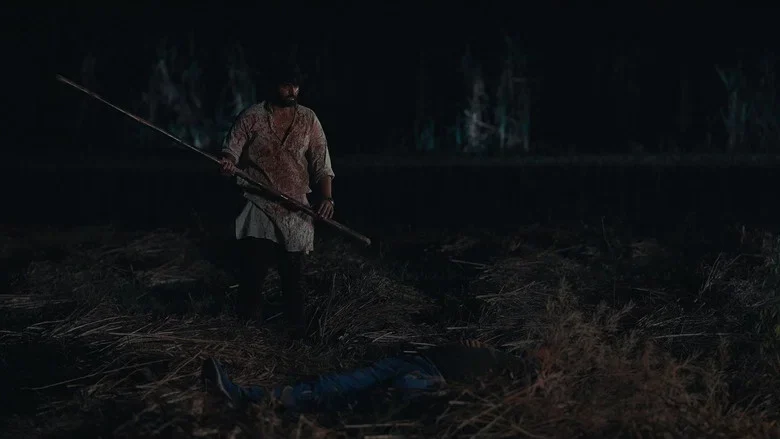
A Feud Rekindled by Paper and Greed
Aakarsh and Agrim Sansanwal build their inheritance quarrel on a foundation of inherited hatred, and the machinery clicks into place with mechanical precision. The lovers, caught between bloodlines, become collateral damage in a war over acreage rather than affection.
What works is the containment. The isolated village setting traps every whispered accusation and every sideways glance, forcing the community to witness its own ugliness. The Sansanwal brothers understand that claustrophobia is the engine of black comedy.
Where the film stumbles is in its tonal calibration. The shift from romantic tenderness to property dispute feels abrupt, as if the screenplay trusts the audience to fill in emotional transitions that the direction refuses to dramatize.
Just as the sibling directors of Parivarik ManuRanjan struggled to balance ensemble chaos with intimate stakes, this film occasionally loses its grip on the lovers at the center.
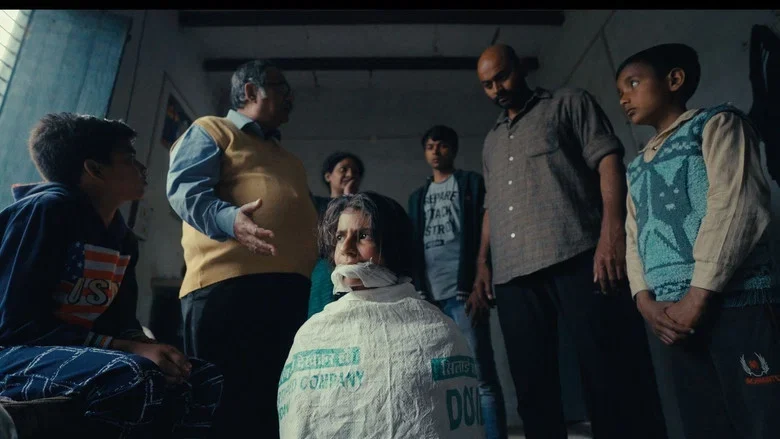
Performances Held at a Distance
Rudrashish Majumdar carries the weight of a man who loves someone he is supposed to despise, and his physical restraint in the early courtship scenes is striking. He communicates hesitation through posture rather than dialogue, shoulders angled away from his beloved even as his eyes refuse to leave her.
Simran Tandon matches him with a quiet defiance, particularly in a mid-film confrontation where she stands motionless while the men around her shout about inheritance. Her stillness is the film’s most potent weapon, a silent rebuttal to the noise of family loyalty.
The supporting ensemble, however, operates as a chorus of types rather than individuals. The village elders and rival relatives function as obstacles and commentators, their faces interchangeable in the crowd scenes.
The restrained physical exhaustion Majumdar brings to the climactic confrontation recalls the psychological weight of his turn in Ramayana, but the screenplay gives him fewer spaces to inhabit that silence.
The Comedy That Refuses to Land
Black comedy requires precision timing, and the Sansanwals’ rhythm is inconsistent. A scene involving a disputed will reading stretches past its comic potential, the camera lingering on reaction shots that yield diminishing returns.
The film’s smartest sequences arrive when the lovers are forced to navigate public spaces where their private bond becomes a communal spectacle. A village fair sequence, shot in natural light with the couple separated by a crowd of feuding relatives, demonstrates what the film could have been: tense, funny, and deeply uncomfortable.
Elsewhere, the comedy curdles into repetition. The inheritance dispute becomes a revolving door of accusations, each scene adding volume without adding consequence. The screenplay mistakes escalation for development.
The thematic kinship with Dilwali Diwali is evident in how both films use festival settings to expose family fractures, but that film’s tighter focus on displacement gives its comedy a sharper edge.
Visual Restraint and Sonic Absence
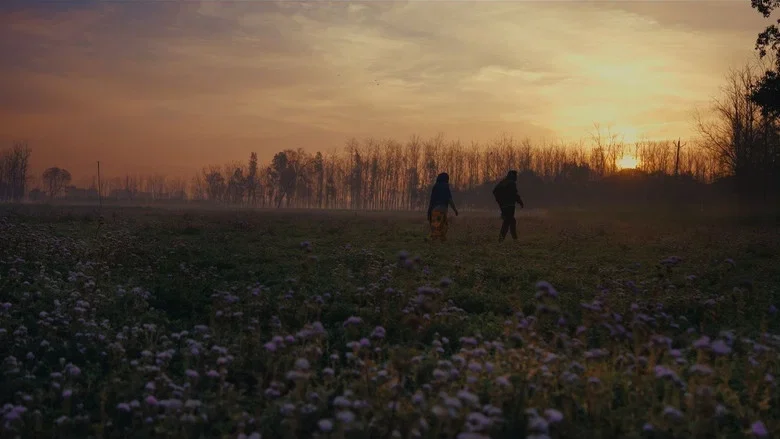
The cinematography favors wide compositions that emphasize the landscape’s indifference to human conflict, a choice that serves the film’s fatalistic undertone. The camera often positions the lovers at opposite edges of the frame, the space between them filled with relatives, livestock, and property markers.
Shray Saxena’s score is sparing, almost absent in key moments, allowing the ambient sounds of village life to carry the emotional weight. This restraint works in the film’s favor during the quieter passages, though it leaves the more chaotic scenes feeling unmoored.
The editing in the first half builds momentum through elliptical transitions, jumping between the lovers’ stolen moments and the families’ escalating tensions. The second half, however, loses that rhythm, with scenes that feel either rushed or unnecessarily prolonged. The film’s 125-minute runtime could have been tightened by fifteen minutes without losing a single essential beat.
The Unresolved Inheritance of Independent Cinema
Enfant Terrible Productions and Platoon One Films have positioned this film as festival fare with theatrical ambitions, and the Tallinn Critics’ Picks selection lends it credibility. But the commercial question remains: who is this film for?
The theatrical marketplace for rural Hindi black comedies is narrow, and the absence of recognizable stars limits the film’s opening potential. The producers are betting on word-of-mouth from festival circuits, a strategy that has worked for smaller films but requires a level of critical consensus that this film has yet to generate.
The film’s fate will likely mirror the trajectory of other independent Hindi dramas that find their audience on streaming platforms rather than in theaters. For a production house still establishing its identity, the theatrical release serves as a calling card more than a revenue driver.
What the Sansanwals have made is a film that understands the mechanics of rural conflict but not always the hearts of the people trapped within it. The inheritance dispute is vivid; the romance that should anchor it remains frustratingly abstract.
Kidney leaves its lovers in a kind of limbo, neither victorious nor defeated, which feels honest if not entirely satisfying. The film’s final shot, a long take of the couple standing apart in a field they cannot claim, lingers longer than the narrative has earned.
It is an image of contemporary Hindi cinema’s ongoing negotiation between tradition and intimacy, between the stories we inherit and the ones we choose.

Ankit Jaiswal is the Chief Author, covering Indian cinema and OTT releases with honest, no-filler criticism. An SEO strategist by background, he brings a research-driven approach to film writing, cutting through hype to tell you exactly what's worth your time.