Gajab Raat (2026): Manoj Bajpayee Anchors a Noir That Thinks Faster Than It Feels
Manoj Bajpayee’s Ajay Dikshit spends the first act of Gajab Raat doing arithmetic on a dying woman’s body. That is the film’s real inciting incident, not the car door opening, but the ledger in his head.
A Corrupt Cop Is Only Interesting When the Corruption Costs Him Something
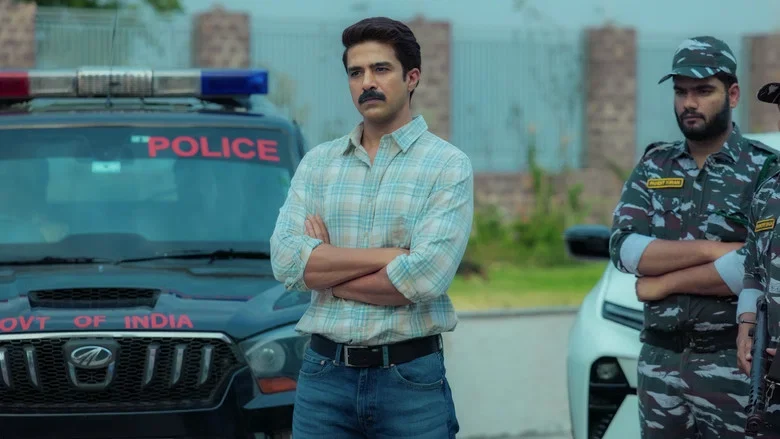
Ritesh Shah’s premise is deceptively clean: a compromised Delhi officer, a woman thrown from a moving vehicle, one night to decide whether the wreckage is profit or evidence.
What elevates the setup above standard procedural furniture is the order of operations. Ajay does not stumble into heroism. He stumbles into a cost-benefit analysis, and the film watches him run the numbers.
That inversion gives the thriller its friction. Every clue he chases is a clue he could have sold, and Shah keeps that tension live long enough to make the investigation feel like self-betrayal.
The Conspiracy Keeps Growing Because the Protagonist Keeps Shrinking
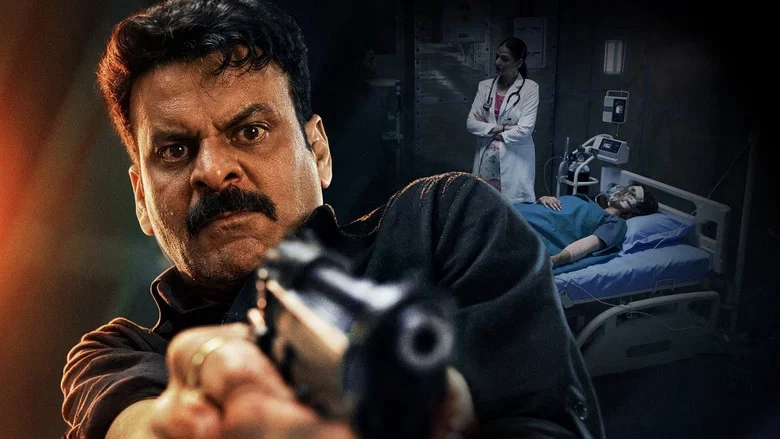
Around the midpoint, the case stops being local. What began as an assault becomes a web of hidden operators, and the screenplay’s smartest structural move is refusing to give Ajay a clean adversary.
There is no villain to outsmart, only a system that keeps absorbing him. That diffuse threat is dramatically richer than a snarling antagonist, and it is also where the film risks losing the audience’s hand.
The escalation from street crime to far-reaching conspiracy mirrors the institutional rot dramatized in Reporting Live, though Shah’s version trades journalistic idealism for outright venality.
Where that film buried its own procedural under noise, this one stays lean. The one-night clock does the heavy lifting, compressing every bad decision into the same suffocating dark.
Bajpayee Plays the Calculation, Not the Conscience
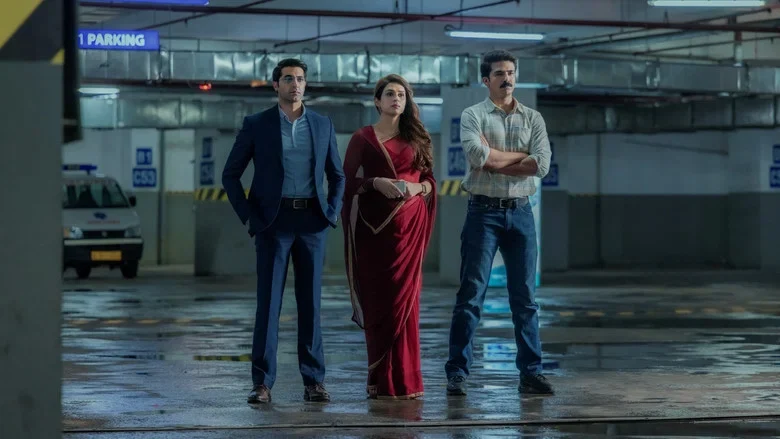
Watch his hands in the early scenes. Bajpayee keeps them busy, patting pockets, checking a phone, adjusting a collar, while his face stays carefully blank, as if the body is doing the lying and the mind is doing the math.
It is a performance built on withheld reaction. When the woman’s identity starts pointing somewhere dangerous, he does not register shock. He registers recalculation, a fractional shift around the eyes that reads as a man updating his own price.
The restraint recalls the bureaucratic stillness he brought to Governor, but here the stillness is predatory rather than principled. Same instrument, inverted moral register.
Divya Dutta, in the film’s most textured supporting turn, does more with a single held glance across a room than most of the plot mechanics manage in a reel. Her scenes with Bajpayee have the charged politeness of two people who know exactly what the other is capable of.
Shah Directs the Night Like a Closing Fist
The visual grammar is disciplined to the point of severity. Delhi becomes a corridor of sodium light and wet asphalt, and the camera stays close enough that the city feels less like a location than a pressure vessel.
Shah resists the temptation to open up during the conspiracy reveals. He tightens instead, favoring faces over geography, which keeps the paranoia intimate even as the stakes go continental.
That control has a cost. The film’s middle stretch runs on procedural momentum rather than emotional escalation, and some of the supporting figures register as plot functions rather than people.
There is a comparable obsession with texture over tidy resolution in Tu Hai Meri Kiran, another recent release that trusted atmosphere to carry what the script could not always articulate.
Here the atmosphere mostly holds. The sound design does quiet, unpleasant work, traffic bleeding through walls, the hum of a car engine that will not shut off, and the score knows when to get out of the way.
The Ending Refuses the Comfort of a Clean Arrest
Without spoiling the mechanics, the resolution lands closer to exhaustion than vindication. Ajay does not become a good man; he becomes a man who has run out of ways to profit from the truth.
That is a braver ending than the genre usually permits, and it leaves a residue the film earns. The final image lingers on the cost of competence without conscience, and it is the strongest argument the screenplay makes for itself.
Not every thread closes with equal precision. Certain operators in the conspiracy remain sketched rather than dramatized, and the film’s confidence in ambiguity occasionally shades into evasion.
Still, the cumulative effect is a thriller that respects its audience’s intelligence more than its appetite for catharsis, a rarer commodity than it should be across contemporary Hindi thrillers.
A Mid-Budget Noir Betting on Star Gravitas Over Spectacle
The commercial math here is straightforward and unglamorous. This is a star-vehicle noir built for the adult multiplex audience that turns out for Bajpayee’s name rather than for franchise spectacle.
That audience is real but finite. The film’s refusal to supply a clean villain or a triumphant third act limits its word-of-mouth ceiling, even as it strengthens its critical standing.
For the producers, the calculation is a familiar one in the current market: modest theatrical footprint, strong post-theatrical life, and a lead actor whose credibility functions as the marketing budget.
Bajpayee’s bankability in this register is well established by now. The question is whether the noir-thriller lane can sustain repeated iterations before it hardens into formula.
On the evidence here, the lane still has room, provided the scripts keep giving him something to calculate.
The Verdict: A Sharp, Cold Thriller That Trusts Its Star and Its Silence
Gajab Raat is not a warm film, and it does not want to be. It wants to put you in a car with a man who is deciding, minute by minute, whether you are worth more alive or erased.
Shah directs with the patience of someone who knows tension is a subtraction game, and Bajpayee supplies the arithmetic. The result is a noir that occasionally mistakes opacity for depth, but never mistakes noise for drama.
It ends where it should, not with justice, but with the bill coming due. In a season of thrillers shouting their twists, this one whispers its cost, and that whisper follows you out of the theater.

Ankit Jaiswal is the Chief Author, covering Indian cinema and OTT releases with honest, no-filler criticism. An SEO strategist by background, he brings a research-driven approach to film writing, cutting through hype to tell you exactly what's worth your time.