Sumo Didi (2026): Shriyam Bhagnani Anchors a Sincere but Soft-Edged Sports Biopic
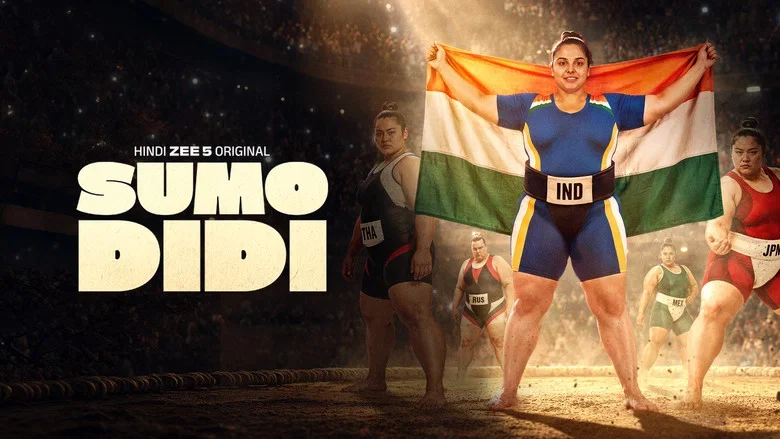
Shriyam Bhagnani steps into the ring as Hetal Dave, India’s first professional female sumo wrestler, and the film opens with her winning a bout in Taiwan before rewinding nine months to explain how she got there.
It’s a canny structural gambit for a Zee5 original that wants to be about self-acceptance as much as sport, but the execution never quite matches the heft of its subject.

A Flash-Forward That Promises More Than the Film Delivers
Jayant Rohatgi’s decision to open with the Taiwan victory is the film’s smartest narrative choice, establishing the destination before the arduous journey.
Yet the nine-month rewind immediately reveals the film’s central tension: it wants to be a rousing sports drama and an intimate portrait of body shame, and it never fully commits to either.
The early domestic scenes establish Hetal’s world with brutal clarity, her mother Sudha’s bitter-gourd juice regimen, the yoga sessions, the casual mention of liposuction as if discussing a haircut.
These moments land because they’re specific, rooted in the mundane cruelty of familial concern that masquerades as care.
When Body Shame Becomes the Only Antagonist
The film’s refusal to manufacture a conventional villain is both its most interesting instinct and its most frustrating limitation.
Sudha, played by Anubha Fatehpuriya with a tightly wound anxiety that never tips into caricature, becomes the primary source of opposition, but her resistance stems from social fear, not malice.
This is dramatically honest and psychologically credible, yet it leaves the middle act without a sustained external force to push against.
The conflict distributes itself across neighbourhood ridicule, marriage pressure, inadequate infrastructure, and Hetal’s own internalised shame, a diffuse antagonism that mirrors real life but saps momentum from a genre built on escalation.
Rohatgi keeps the camera close to Hetal’s face during these confrontations, catching the micro-flinches and downward glances that register humiliation more effectively than any dialogue could.
It’s in these quiet moments of retreat that the film briefly becomes something sharper than its inspirational trappings suggest.
Bhagnani’s Physical Commitment Outpaces the Material
Shriyam Bhagnani’s transformation for the role is genuinely impressive, she carries Hetal’s weight not as costume but as lived-in physical reality.
In the ring, she uses balance and heft with a directness that makes the sumo sequences legible as athletic contests rather than staged spectacle.
Watch her stance in the Taiwan match: feet planted, centre of gravity low, eyes fixed on her opponent’s midsection with the flat concentration of someone who has learned to trust her body after years of being told it was the problem.
The performance distinguishes between Hetal’s existing judo discipline and her discovery of sumo as a sport where her build becomes an asset rather than a liability, a distinction the screenplay sometimes blurs but Bhagnani’s body language keeps clear.
Fatehpuriya’s Sudha is the film’s most complex creation, her face cycling through disapproval, fear, and something like love in the span of a single kitchen exchange.
Nitesh Pandey’s Rajendra provides necessary warmth as the father who redirects his daughter’s anger into judo training after she strikes a mocking neighbour, but the role remains underwritten.
The Sports Sequences That Never Quite Ignite
Here is where the film’s ambitions collide with its execution most visibly.
The sumo matches, particularly the climactic Taiwan bout, lack the sustained intensity that defines the genre’s best entries, the camera captures the throws and pushes without ever making us feel the weight of them.
Compare the training montages here to the visceral exhaustion of the wrestling sequences in Gajab Raat, where physical strain becomes character revelation rather than plot necessity.
Rohatgi’s direction favours emotional interiors over athletic exteriors, which serves the social drama but leaves the sports material feeling like connective tissue rather than climax.
The editing in the first half carries the burden of establishing PCOD, childhood bullying, judo training, and family dynamics before sumo even enters the frame, a density of exposition that occasionally flattens the narrative into checklist form.
By the time we return to Taiwan, the outcome feels predetermined not because we’ve earned it but because the structure demands it.
The Performance Foil That Highlights What’s Missing
What separates Tu Hai Meri Kiran from this film is the willingness to let its protagonist’s flaws breathe without immediate redemption.
Bhagnani’s Hetal is sympathetic from the first frame, her victimhood established so thoroughly that we never doubt her worthiness, but this also means we never see her at her worst.
The screenplay softens every edge that might make her difficult to root for, and in doing so, it misses the opportunity to explore the messier psychology of a woman who has internalised decades of body shame.
When Hetal finally confronts her mother in the third act, the scene lands with genuine emotional force, but it’s a force that arrives too late and resolves too cleanly.
The film’s insistence on uplift prevents it from sitting with the uglier truths it initially promises to examine.
A Familiar Tale Told With Insufficient Urgency
The comparisons to other Indian women’s sports biopics are inevitable, and Poniiy demonstrates how regional specificity and textured character work can elevate familiar narrative beats.
Sumo Didi has the specificity, the bitter-gourd juice, the judo background, the Kolkata-to-Japan geography, but lacks the patience to let its protagonist’s contradictions remain unresolved.
Chaitanya Sharma’s Akshat functions as the supportive physiotherapist and emotional anchor, but his role is so purely functional that he registers more as plot device than character.
The supporting cast around Hetal’s family orbit, the relatives who question her choices, the neighbours who mock her, remain indistinct, their cruelty generic rather than particular.
This is a film that wants to celebrate an unconventional athlete but hedges its bets by making her journey as conventionally inspirational as possible.
The Streaming Calculus and the Limits of the Inspirational Model
As a Zee5 original, Sumo Didi bypasses the theatrical exhibition economy entirely, which means its success will be measured in streaming engagement rather than box-office returns.
This is both a liberation and a limitation, freed from the pressure of opening-weekend numbers, the film can afford to be smaller and more intimate, but it also lacks the commercial imperative that sometimes forces tighter narrative discipline.
The film’s real-life subject, Hetal Dave, represents exactly the kind of story that streaming platforms have championed: underrepresented, regionally specific, centred on a woman whose achievements have gone largely unrecognised.
Yet the execution suggests a production that trusted the inspirational arc more than the athletic reality, that believed the social message would carry what the sports sequences could not.
This patient character study signals a welcome tonal maturity across contemporary Hindi dramas, but it also reveals the limits of a model that prioritises representation over rigour.
Bhagnani deserves a vehicle that trusts her physical commitment as much as her emotional availability, this film only half does.
The Uncomfortable Truth Beneath the Uplift
The ending frames Hetal’s recognition as the result of persistence and self-acceptance, but the film’s own structure suggests something more complicated.
Her triumph in Taiwan works because the narrative has prepared us for it, but the preparation has been emotional rather than athletic, we’ve seen her suffer, but we haven’t seen her train with the obsessive specificity that would make the victory feel earned.
The real Hetal Dave’s achievement is remarkable precisely because the infrastructure didn’t exist, because she had to invent a path where none was available.
The film tells us this but doesn’t dramatise it, the training sequences are montages, not struggles, and the international competition arrives with a sense of inevitability rather than hard-won arrival.
What lingers after the credits is not the sumo but the kitchen: Sudha’s face as she measures out bitter gourd juice, the liposuction suggestion delivered with maternal concern, the small daily violences that shape a body’s relationship to itself.
Those scenes have the specificity of lived experience; the ring has the generality of genre expectation.
Sumo Didi wants to be about a woman who found her power in the one place she was told she didn’t belong, but it settles for being about a woman who was sad and then wasn’t.
The difference is everything.

Ankit Jaiswal is the Chief Author, covering Indian cinema and OTT releases with honest, no-filler criticism. An SEO strategist by background, he brings a research-driven approach to film writing, cutting through hype to tell you exactly what's worth your time.