Lakadbaggha 2: The Monkey Business (2026): Anshuman Jha’s International Action Gamble
The forest is the first thing you notice, and the forest is the last thing that saves it. Anshuman Jha moves his animal vigilante from Kolkata’s alleys into West Java’s canopy, and the shift in geography is the most honest thing about the film.
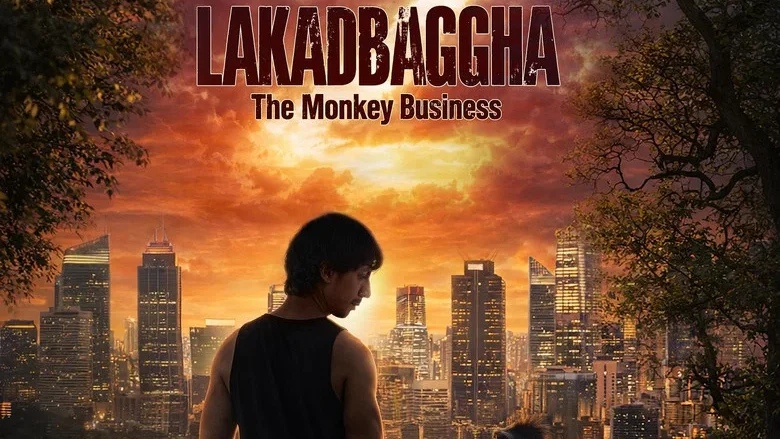
When A Local Vigilante Becomes A Global Tourist
The first Lakadbaggha worked because its moral engine was small: one man, one city, one abused creature. Jha’s sequel widens the aperture to international wildlife trafficking, and the widening costs the story its intimacy.
The premise remains sturdy, Arjun Bakshi still fights for voiceless animals, but the transnational network he faces lacks a face. A trafficking operation without a named architect is a weather system, not an antagonist.
Where a peer release like Dilwali Diwali trusted quiet displacement over spectacle, this sequel reaches for scale and loses the human breath at its center.
The Martial Arts Casting Is A Promise The Film Struggles To Keep
Tony Jha and Sunny Pang and Dan Chupong on a call sheet signals intent. On screen, the choreography’s clarity is another matter, international action stars require spatial discipline, and the staging here too often buries impact in movement.
Jha himself carries the protagonist’s physical commitment without the same dramatic precision. His Arjun is a body in motion; the interiority arrives in fragments, not in a sustained register.
Contrast that with the ferocious gravity of Ramayana, where stillness did the work the sequel’s editing cannot. Here, the camera rarely lets a confrontation breathe before cutting away.
The Villain Problem Is Structural, Not Performative
Wildlife trafficking as a villain is thematically rich and dramatically thin. The film gestures at an international syndicate but never gives its cruelty a specific human gesture to hate.
Adil Hussain’s presence, replacing Milind Soman in the production, brings a familiar authority to the frame. His function, though, remains more institutional than antagonistic; the screenplay never lets him own a scene.
Without a face to fear, the action sequences become demonstrations rather than confrontations. The sequel’s stakes are announced, not dramatized.
The Forest Setting Deserves A Better Camera
West Java’s canopy offers texture the first film’s urban setting could not. The sequel uses it as backdrop rather than as pressure, the jungle should constrict, and instead it decorates.
The editing rhythm in the second half accelerates without escalation, mistaking speed for tension. A tighter spatial grammar would have served the material far better than the constant cutting.
There is a version of this film, quieter, more patient, more interested in the animals than the syndicate, that could have landed. This is not that version.
Studio Calculus And A Franchise Still Finding Its Feet
The sequel arrives in a market that has grown impatient with regional action remakes and hungry for original IP. Lakadbaggha 2 sits awkwardly between those appetites: too international to feel local, too local to compete globally.
Jha’s theatrical leverage as a lead remains modest, and the postponement from November 2026 to early 2027 signals a distributor hedging rather than committing. The film needs a clear theatrical identity it has not yet articulated.
Against the kinetic sensationalism of a genre sibling like Awarapan 2, this sequel’s restraint reads as uncertainty rather than discipline.
A Sequel That Protects Its Animals Better Than Its Story
The film’s moral seriousness about wildlife exploitation is genuine and occasionally moving. The problem is that conviction alone does not manufacture drama; the screenplay must earn the anger it wants us to feel.
Jha’s commitment to the franchise’s animal-protection identity is the sequel’s most durable asset. It is also the reason the film’s failures sting, the cause deserves a sharper vehicle.
Across contemporary hindi actions, the lesson is consistent: scale is not stakes, and geography is not drama. Lakadbaggha 2 learns that lesson the hard way, one beautiful forest at a time.
The monkeys, at least, remain innocent. The screenplay cannot say the same.

Ankit Jaiswal is the Chief Author, covering Indian cinema and OTT releases with honest, no-filler criticism. An SEO strategist by background, he brings a research-driven approach to film writing, cutting through hype to tell you exactly what's worth your time.