Bhai Tera Star Hai (2026): comic timing lifts key stretches, not the full runtime
Ajay Singh (Raghav Juyal) stands outside a London audition, convinced the role of “Bhaijaan’s brother” is his ticket to Bollywood glory. Within hours, his delusion spirals into a farcical night involving a pregnancy misunderstanding, an angry brother, and the police.
Raghav Juyal: The Engine That Stutters
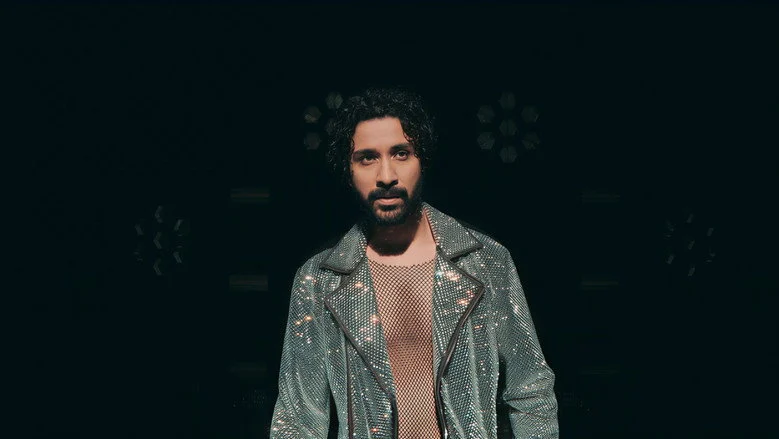
Juyal commits fully to Ajay’s self-absorbed bubble. His physical comic timing and rambling monologues, like the “Abey, meri girlfriend ne apne bhai ko bola hai…” speech, capture a man drowning in his own mythology.
Yet the performance lacks a second gear. Juyal stays at a consistent pitch of desperate charm, so when the script demands vulnerability or surprise, his reactions feel rehearsed. His talent for self-delusion is the film’s backbone, but the spine bends under repetitive beats.
Vivek B. Agrawal’s Script: One Good Idea, One Fatal Flaw
Director Vivek B. Agrawal gets points for compressing the story into a single night. The structure naturally accelerates lies and consequences, and the audition scene, “Kisi Ka Bhai, Kisi Ki Behen ka, Bhaijaan ke bhai ka role”, is a sharp satirical dart.
But the screenplay never deepens its central observation. After the first thirty minutes, the film recycles the same “who told whom what” confusion without escalating jeopardy. The second act drags through repetitive phone calls and doorbell rings. Agrawal seems afraid to let Ajay truly fail, so the comedy remains safe.
Comedy in a Compressed Cap: The One-Night Farce
The one-night structure is both the film’s best friend and its most demanding boss. When comedy lives inside a tight window, every misunderstanding must pile onto the next like collapsing dominoes. Here, the dominoes fall at the same speed throughout.
The pregnancy-money subplot, where Ajay’s girlfriend tells her brother she’s pregnant, and Ajay tells his sister she’s pregnant, is classic farcical material. The joke lands because it feeds on the gap between Ajay’s fantasy and the real-world stakes of an abortion expense.
But the film never tightens the screw. Instead of building toward a final, devastating humiliation, it tiptoes toward a resolution that feels like a shrug. The satire on clout and self-made celebrity stays shallow, a tweet-length observation stretched to 121 minutes.
Supporting Cast: Wasted Firepower
Sanjay Kapoor’s Fatty is meant to be the chaotic catalyst, but he disappears for long stretches. His energy is welcome when he appears, a rare presence who understands the film’s tone better than the lead.
Niharika NM and Barkha Singh bring youthful freshness, but their characters exist as plot triggers rather than people. Barkha’s Laila, in particular, has one standout moment where she deadpans through Ajay’s lies, and you wish the script gave her more of that steel. Chandan Roy Sanyal’s Officer Ham adds a slapstick edge, yet his scenes feel bolted onto the narrative rather than woven in.
Given the ensemble, Tina Desai, Vivan Bhatena, Niki Walia, the casting signals ambition for a multi-layered London comedy. The film never delivers that depth, but the faces suggest a better script was possible.
Audience Reception: Who Will Knock, Who Will Skip
Without verified critical scores, the film’s fate will rest squarely on Raghav Juyal’s fanbase. Viewers who enjoy exaggerated self-delusion in the vein of “Treat yourself like a star” delusional comedy will find familiar ground. The meta-Bollywood jokes, “main Bhaijaan ke bhai ka role pakka karunga”, will land with audiences who follow industry gossip.
But those allergic to farce built on repeated phone-booth misunderstandings will check out early. The one-night structure, while clean on paper, tests patience when the laughs stall. I found myself checking my watch during the third cycle of door-slamming entrances.
For the right crowd, young, forgiving, Juyal-curious, this is a breezy evening. For everyone else, it’s a missed chance to turn a worthwhile premise into something sharper.
For more takes on Hindi youth comedies, browse our Hindi Comedy reviews.
Go or Skip: The Honest Call
If you’re a Raghav Juyal loyalist or enjoy low-stakes Bollywood satire, you can stream this on a lazy afternoon, preferably in a regular theatre seat, not a premium screen. If you want actual stakes, character arcs, or a comedy that earns its punchlines, wait for the next thing.
Bhai Tera Star Hai rarely rises above average, but its heart is in the right place, somewhere between a selfie and a reality check. I’d give it a generous 2.5 out of 5, mostly for Juyal’s unfiltered commitment to his own absurdity.
For a different take on a lead actor holding uneven material together, check out Pluto review.

Ankit Jaiswal is the Chief Author, covering Indian cinema and OTT releases with honest, no-filler criticism. An SEO strategist by background, he brings a research-driven approach to film writing, cutting through hype to tell you exactly what's worth your time.