Sathi Leelavathi (2026): A Promising Premise Lost in Noisy Comedy
There’s a moment early in Sathi Leelavathi when Ram Sethu tells his filmmaker wife that her success has made him feel invisible in his own marriage. It’s a sharp, uncomfortable beat that promises a Telugu rom-com willing to poke at male ego and shifting domestic power equations. For about an hour, director Tatineni Satya seems to know exactly what film he’s making. Then the comedy tracks arrive, and that promising marital drama slowly drowns in its own noise.
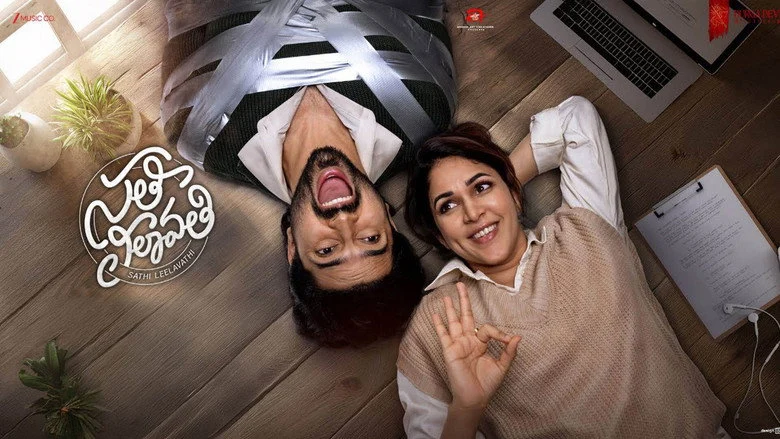
Lavanya Tripathi Anchors a Film That Keeps Slipping Away From Her
Lavanya Tripathi is the reason this film stays watchable through its uneven stretches. As Leelavathi, she carries the emotional weight of a woman trying to hold together a marriage her husband wants to exit. Her best work comes in those early scenes where she registers confusion and hurt without melodrama.
But there’s only so much one performance can do when the writing around it keeps losing focus. Tripathi keeps the film grounded, but she deserved a screenplay that matched her commitment.
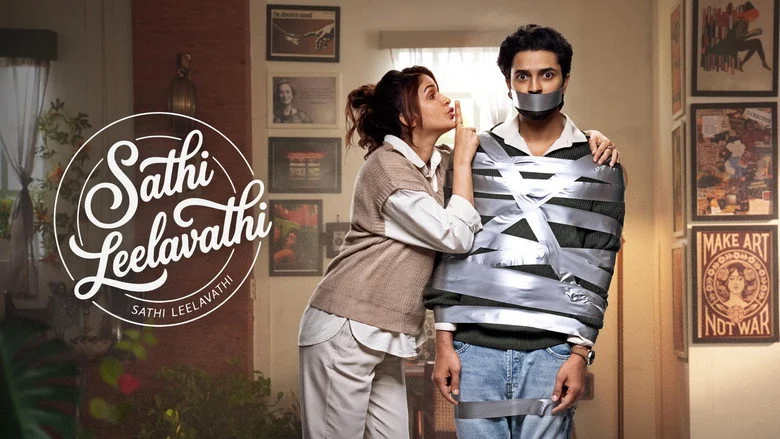
Dev Mohan and the Divorce That Shifts the Ground
Dev Mohan’s Ram Sethu is less a villain than a man childishly nursing his wounded pride. His divorce announcement, where he admits feelings for Madonna Sebastian’s Nicola, lands as the film’s most honest moment of conflict. Mohan plays the insecurity well, even when the script asks him to undercut that tension with buffoonery later.
The setup of a husband feeling threatened by his wife’s professional success is genuinely uncommon in mainstream Telugu cinema. That alone gives the film a distinction it never fully capitalises on.
The Romance Genre Needs Conflict That Builds, Not Dissolves
What makes Sathi Leelavathi’s premise feel fresh is that it skips the conventional courtship arc entirely. This is a marriage already in crisis, and the drama comes from watching two people confront what they’ve stopped saying to each other. The early confrontation scenes work because they feel specific to this couple’s dynamic.
But the film loses its nerve in the second half. The emotional spine that held the first hour together gets buried under comedy tracks featuring Naresh, VTV Ganesh, Sapthagiri, and Motta Rajendran. What should be a slow burn toward reconciliation becomes a scramble for laughs that mostly don’t land.
The later confrontation scene, where hidden truths finally surface, shows what the film could have been. It’s a brief return to the intimacy of that first half, but by then the tonal whiplash has already done its damage. The emotional payoff feels rushed because the screenplay spent its middle section elsewhere.
Supporting Cast and the Second-Half Problem
Madonna Sebastian’s Nicola exists mainly as a plot device, the other woman whose presence forces the marriage’s cracks open. She does what the role requires, but there’s no independent arc for her to play. The supporting comedians, including Sapthagiri and VTV Ganesh, get material that drew the most criticism for dragging the pace down.
The film’s tonal inconsistency is its biggest structural flaw. Director Tatineni Satya handles the domestic drama with a light touch in the first half, but loses control once the comedy tracks take over. What begins as a relationship study degrades into scattered narration that weakens the very conflict it set up so well.
Still, there’s something worth noting in how the film frames its central issue. A husband who feels overshadowed by his wife’s career isn’t a standard rom-com conflict, and the film deserves credit for attempting it within a mainstream entertainer format.
Critics have been divided but mostly underwhelmed. Bingebaaz noted that “Lavanya Tripathi keeps the film watchable, but the writing turns a promising relationship drama into a noisy, uneven comedy.” 123telugu was blunter, calling it “an underwhelming family entertainer” while Times of India summed it up as “love triangle meets emotional chaos in this uneven rom-com.” The average critic rating sits at 2.5 across these publications, which feels about right for a film with a good idea and a muddled execution.
The core problem isn’t the premise, it’s that the film doesn’t trust it. Every time the marital conflict threatens to get serious, a comedy track swoops in to deflate the tension. The result is a film that can’t decide whether it wants to make you think or just make you laugh, and it ends up doing neither consistently.
At 131 minutes, Sathi Leelavathi isn’t an endurance test, but it does test your patience in that dragged-out second half. The first-half promise and Lavanya Tripathi’s performance make it a watchable one-time affair, though you’ll likely find yourself wishing the film had trusted its more interesting instincts. If you’re curious about the premise, catch it on streaming, this is not a film that demands a theatrical experience. For more Telugu comedy reviews, keep exploring our coverage.
Those who appreciated this marital-conflict setup might also find resonance in how Operation Sindoor approaches complicated human dynamics under pressure.
Sathi Leelavathi is a film with a genuinely interesting idea trapped inside a conventional, noisy package, a 2.5 out of 5 that you watch for Lavanya Tripathi and little else.
For a sharper look at how a single performer can elevate thin material, I m verdict offers a far more disciplined study of the same principle.

Ankit Jaiswal is the Chief Author, covering Indian cinema and OTT releases with honest, no-filler criticism. An SEO strategist by background, he brings a research-driven approach to film writing, cutting through hype to tell you exactly what's worth your time.