VISA – Vintara Saradaga (2026): Vintara Saradaga (2026): Ashok Galla Anchors a Student-Abroad Romance That Hasn’t Found Its Drama Yet
The first thing Udbhav’s debut asks you to accept is a radio jockey narrating the ordinary life of an Indian student in America, and that framing device is doing almost all the heavy lifting the screenplay can manage. Ashok Galla stands at the centre of it, a familiar face in an unfamiliar country, and the film wants us to believe his voice can carry us through homesickness, romance, and the bureaucratic maze of a student visa.
The Radio Jockey Device Is a Crutch, Not a Spine
There is something promising in the idea of a narrator who observes rather than participates, a young man cataloguing the small indignities of life abroad like a campus anthropologist. That promise evaporates quickly because the film never lets the device develop into a perspective. It remains a convenience, a way to skip the hard work of dramatising what it can simply describe.
The teaser establishes the tone with a brisk, observational rhythm, and you can feel the ambition to make the ordinary feel universal. But observation without confrontation is just commentary, and the film seems content to comment. Where a sturdier screenplay would push its protagonist into a situation that tests his voice, this one lets him narrate from a safe distance.
A Romantic Pairing That Sells Itself on Chemistry Alone
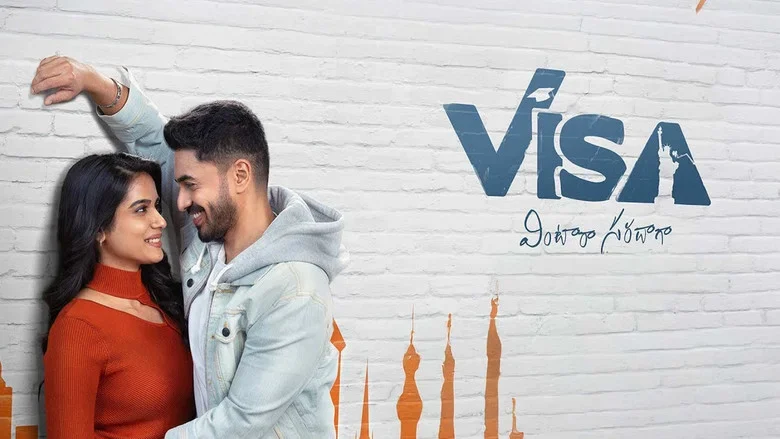
Sri Gouri Priya enters as the romantic counterweight, and the promotional material leans hard on the pair’s natural ease with each other. The song “Anaga Anaga America” is the clearest evidence of that, a sequence that trades on the visual pleasure of two people simply enjoying each other’s company. It is charming in the way a good advertisement is charming: well-lit, well-paced, and unwilling to complicate the feeling.
What the song cannot tell us is whether the film has any interest in the friction beneath the romance. The synopsis gestures at friendship, academic pressure, and the messy realities of chasing a future abroad, but the promotional material keeps retreating to the comfort of the couple. The comparison with the tonal confusion that undercut the rural drama of Crazy Kalyanam is instructive: both films have a clear central pair, and both seem uncertain whether the romance is the point or the packaging.
The Ensemble Exists, But the Film Doesn’t Know What to Do With It
Rahul Vijay and Shivathmika Rajashekar are positioned as key members of the student ensemble, and the film’s early scenes suggest a broader social world of shared apartments, group chats, and the low-grade anxiety of being far from home. That world is the film’s richest resource, and it is the one it treats most casually. The friends are there to react to the protagonist, not to challenge him.
Harsha Chemudu’s presence points toward a comedy register the film wants to access but never fully commits to, and the supporting cast as a whole functions as texture rather than friction. A coming-of-age story needs at least one relationship that refuses to be useful to the hero, and this one is short on that kind of resistance.
Udbhav’s Direction Is Assured but Unadventurous
For a debutant, Udbhav shows a steady hand with tone and a clear sense of how to frame young people in spaces that feel lived-in. The camera stays close enough to catch the small physical hesitations of a conversation, and there is a willingness to let a moment breathe that suggests a director who trusts his actors. What he has not yet developed is a sense of when to break the rhythm, when to let a scene go on long enough to become uncomfortable.
The film’s visual language is pleasant without being distinctive, and the music by Vijai Bulganin does the emotional work the screenplay often declines to do. This is the kind of competent, frictionless craft that keeps a film watchable and prevents it from becoming memorable. It is the same instinct that made the folk-biopic ambitions of Garividi Lakshmi feel buried under its own polish.
The Stakes Are Personal, Which Is Both the Strength and the Problem
What the film gets right, at least on paper, is the decision to locate the conflict in the ordinary pressures of student life rather than in a villain or a crisis. There is no antagonist here, and that is not a flaw in itself. The problem is that the film has not yet found a way to make the absence of a villain feel like pressure rather than absence.
The thematic sibling in Comrade Kalyan shows how quickly a film can lose its footing when it cannot decide whether it is a comedy, a drama, or a message. VISA has a clearer sense of its own register, but it shares the same risk: a premise that promises complexity and a screenplay that keeps reaching for the easiest available beat.
Sithara Entertainments Is Betting on a Familiar Formula
For Sithara Entertainments and Fortune Four Cinemas, this is a calculated swing at the youth-entertainer market, the kind of mid-budget romantic drama that has historically performed well with younger Telugu audiences and overseas viewers. The production houses are not chasing spectacle here; they are chasing relatability, and the film’s entire marketing strategy is built around the idea that its audience will see their own student years reflected back at them.
The commercial question is whether that relatability is enough to sustain a theatrical run in a market that has grown increasingly impatient with films that mistake familiarity for depth. Ashok Galla’s box-office leverage is still being established, and a film like this is less a statement of intent than a test of whether his screen presence can carry a narrative that does not give him much to push against. Across contemporary Telugu dramas, the audience has shown a willingness to embrace small stories, but only when those stories have a point of view sharp enough to justify the trip to the theatre.
The Ending the Film Hasn’t Earned Yet
Because the film has not yet been released, the climax remains a question mark, and that uncertainty is itself revealing. A coming-of-age story lives or dies on whether its final act can make the protagonist’s choices feel inevitable and surprising at once. Nothing in the promotional material suggests that this film has built toward a moment of genuine reckoning, and the absence of a disclosed resolution makes it hard to trust that the screenplay has one.
What we can see is a film that wants to be about the cost of chasing a future abroad, and that keeps retreating to the comfort of a likeable protagonist and a pleasant romance. The result is not a failure of craft so much as a failure of nerve, a willingness to describe a feeling without ever risking the discomfort of actually dramatising it.
VISA – Vintara Saradaga arrives with a clear sense of who it is for and a much less clear sense of what it wants to say to them. It is the kind of debut that suggests a director with taste and a screenplay that has not yet learned to trust its own silences. Whether that changes when the film reaches theatres is the only question that matters, and it is one the promotional material cannot answer.

Ankit Jaiswal is the Chief Author, covering Indian cinema and OTT releases with honest, no-filler criticism. An SEO strategist by background, he brings a research-driven approach to film writing, cutting through hype to tell you exactly what's worth your time.