She Sells Seashells (2026): A Quiet iPhone Drama About Imagined Freedom
Maruti moves through her morning routine on a Goa beach, selling seashells to indifferent tourists, her stillness speaking louder than any dialogue could. The opening sequence establishes a woman whose physical freedom, the open sky, the endless water, mocks the constraints closing in around her.
Director Ritesh Sharma, working under the MAMI Select banner with an iPhone, understands that the sea can be both liberation and cage. This is a watch for those who appreciate cinema as mood rather than plot delivery.

A Lead Performance Carried by Presence, Not Words
With no verified cast name attached in the available material, the central role must be assessed purely at character level, and what a physically demanding character it is. Maruti is defined by routine, by the repetitive labour of selling, by the way her body occupies space on the beach while her mind drifts elsewhere.
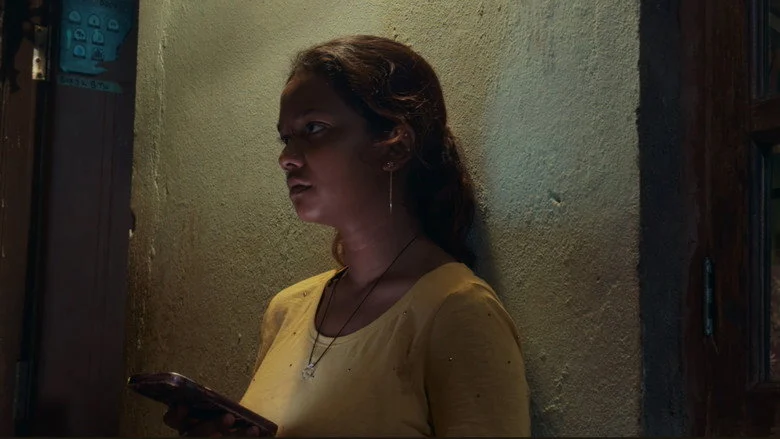
The performance works through stillness and reaction rather than dialogue-heavy confrontation. When the phone call arrives with news of her in-laws’ impending visit, the shift is registered in posture and silence. It is an effective choice, though one that leaves the actor without a climactic emotional release to sink into.
Visual Poetry Meets Structural Impatience
Sharma’s direction shows a clear hand in aligning the camera with Maruti’s psychology. The beach cinematography is genuinely striking, using focus shifts to separate the protagonist’s grinding reality from the dreamlike passages where she imagines belonging elsewhere. These subjective sequences are where the film finds its most confident voice.
Yet the screenplay, linear with brief imagined interruptions, cannot escape its own brevity. The emotional escalation following the phone call feels rushed, the cultural stakes of what the in-laws represent never fully land. One wishes the dreamlike passages had been trimmed to give the final stretch more room to breathe.
The film’s quiet indictment of patriarchy works precisely because it never names its enemy. There is no villain here, only social structures, family obligation, and a woman who has briefly tasted the idea of another life. That restraint is admirable, but it also leaves the drama feeling slightly undercooked.

Supporting Figures as Social Contrast
The compassionate stranger who offers Maruti a tentative connection functions as a catalyst rather than a fully realised character. He represents possibility, the brief sense that her imagined life might be reachable, and his presence is enough for the film’s purposes, even if a feature-length version would demand more.
The tourists populating the beach serve as a pointed social contrast, their casual freedom highlighting Maruti’s constrained reality. They are not characters but environmental texture, and Sharma uses them economically to make his point about who gets to enjoy Goa and who merely works there.
Audience Reception and the Politics of Restraint
Viewers have responded warmly to the beach imagery and the legibility of Maruti’s emotional isolation, with the dreamlike visuals praised for making internal conflict visible without exposition. The film’s framing as a quiet critique of patriarchy has found favour with class audiences who appreciate social realism in compact doses.
Yet the complaints are consistent: twenty-three minutes is simply too short to develop either the character or the cultural context. The romanticised tone of the early passages sits slightly at odds with the harshness of the reveal, and some viewers have wanted a more direct resolution after the family-related news breaks. The film never quite decides whether it is a portrait or a protest.
I found myself wishing the final stretch had been granted even five additional minutes to let the implications of that phone call settle. For a film so attentive to interiority, it withdraws at the exact moment its protagonist faces her greatest external pressure.
For those interested in how compact storytelling can address weighty themes, the film rewards attention despite its constraints. You can browse more Hindi Drama reviews for similar experiments in short-form social realism.
She Sells Seashells is best experienced on a regular screen or OTT platform, where its visual intimacy can breathe without theatrical distraction. It is a promising fragment rather than a complete statement, one that announces a visual sensibility worth tracking.
The film earns a reserved 2.5 out of 5: a beautifully shot meditation that understands its protagonist’s inner world far better than it understands the social machinery threatening to reclaim her. Watch it for the craft, and for what it suggests Ritesh Sharma might achieve with a feature-length canvas. The connection to Maruti’s imagined freedom finds a more impatient cousin in Sathi Leelavathi review, where premise also struggles against format. For a sharper take on national stakes told with documentary urgency, Operation Sindoor verdict offers a different kind of short-form punch.

Ankit Jaiswal is the Chief Author, covering Indian cinema and OTT releases with honest, no-filler criticism. An SEO strategist by background, he brings a research-driven approach to film writing, cutting through hype to tell you exactly what's worth your time.