Operation Sindoor: A Nation’s Resolve (2026): A 27-Minute Document of National Resolve
The war-room hums with intent. Senior officials lean over maps and screens, and the phrase “A Nation’s Resolve” frames the opening like a seal stamped on official stationery. This is not a thriller with fictional stakes; it is a documentary about Operation Sindoor, a 27-minute record of India’s retaliatory response to the Pahalgam terror attack that unfolds as a tightly controlled piece of statecraft cinema.
For audiences expecting a conventional feature, this will feel like a briefing. For those who track military strategy and political signaling, it is a concise, visually dense account of how the state chose to frame its own strike.
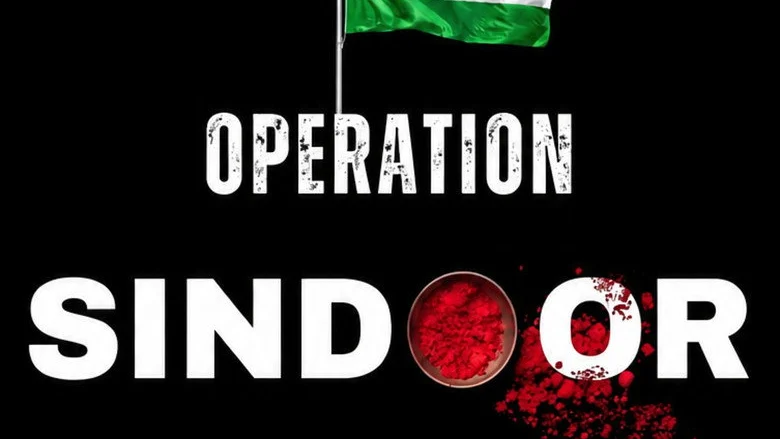
The Precision-Strike Montage Is the Film’s Only True Star
There is no actor to praise here, no performance to dissect. The “lead” of this film is the footage itself, fighter jets, naval deployments, and the clinical choreography of a tri-services operation. The montage depicting the precision strikes is the strongest element in the available coverage, and it earns that distinction.
It visualizes scale without melodrama. The coordination across air, land, and sea is presented as the central character, and the editing gives it a brisk, procedural rhythm.
A Linear Screenplay That Favors Clarity Over Complexity
The structure is strictly linear: the attack, the deliberation, the response. The first half leans exposition-heavy, establishing the political context of the Pahalgam attack and the rationale for retaliation. This is efficient but dry; it prioritizes information over atmosphere.
The second half shifts into a faster, montage-driven gear during the strike sequences. The flaw is the absence of friction, there is no room for doubt, debate, or counterpoint in this editorial vision.
Documentary Craft: The Genre Core Is Built on Visual Evidence
The film operates as a documentary first and a war film second. It relies on official footage and command-room material to explain operational stakes, avoiding dramatized reenactment entirely. This choice grounds the narrative in a sense of verifiable reality, even when the perspective is strictly one-sided.
The war-room deliberation sequence is the film’s intellectual anchor. It shows senior leadership weighing options, and the gravity of the decision is communicated through framing and pacing rather than dialogue. The phrase “India will identify and punish every terrorist and their backers” lands as a policy statement, not a dramatic beat.
By prioritizing visual evidence over narrative invention, the film achieves a focused, 27-minute argument. It is not investigative journalism; it is an operational explainer with a patriotic spine, and within that limitation, it executes its intent cleanly.
For a deeper look at how documentary and dramatic forms handle national themes, browse more Hindi War reviews.
The Supporting Cast Is the Machinery of the State
There are no named supporting actors, but the film’s “cast” is the institutional presence of the military and political leadership. The adversary is not a person but terror infrastructure, hostile intent visualized through maps and target coordinates.
This abstraction is deliberate. By refusing to personalize the enemy, the film keeps its focus on systems and coordination. It signals an intent to document capability rather than vendetta, even as the tagline “Never Forget, Never Forgive” injects a visceral emotional undertone.
Audience Fit and the Political Frame
This is a film for a specific viewer: one who wants a concise, mass-oriented recap of a military operation without narrative embellishment. The target profile is clear, fans of patriotic documentaries and those tracking India’s security posture will find it digestible.
Those seeking a balanced, multi-perspective political treatment should look elsewhere. The film is explicitly tied to a sensitive operation and the Pahalgam attack, and it does not pretend to neutrality. Its framing is a nationalist response narrative, and its brevity prevents any deep interrogation of consequences or diplomatic fallout.
There is no verifiable critical dissent in the sourced material, which is telling in itself. The absence of negative reviews may reflect limited press access or a media environment wary of critiquing military action. I find that silence as noteworthy as the film’s confident tone.
At 27 minutes, it is best watched as a record of intent rather than a work of cinematic artistry. If you want the official story of Operation Sindoor in a compact, visually clear format, this delivers. If you want debate or drama, skip it and wait for a more independent account.
Operation Sindoor is a competent, one-sided document of national resolve that earns a 2.5 out of 5 for execution, but loses points for its deliberate lack of critical depth.
For a contrasting study in restrained, character-driven storytelling, see how I m review builds tension through performance rather than spectacle.
Where this film uses hardware to define intent, Sitting verdict uses stillness, two very different languages of cinematic persuasion.

Ankit Jaiswal is the Chief Author, covering Indian cinema and OTT releases with honest, no-filler criticism. An SEO strategist by background, he brings a research-driven approach to film writing, cutting through hype to tell you exactly what's worth your time.