Licence (2026): Masoom Sharma s stands out while the narrative loses grip
There is a moment early in Licence where Masoom Sharma’s Satta, a fruit vendor, stands in a government office and is told, in so many words, that his kind doesn’t get licenses. The camera stays on his face as the weight of that casual humiliation lands, and you understand exactly what kind of film director Ranjeet Chauhan is making, a crowd-pleasing drama about institutional bias, delivered with the blunt force of a Haryanvi mass entertainer.
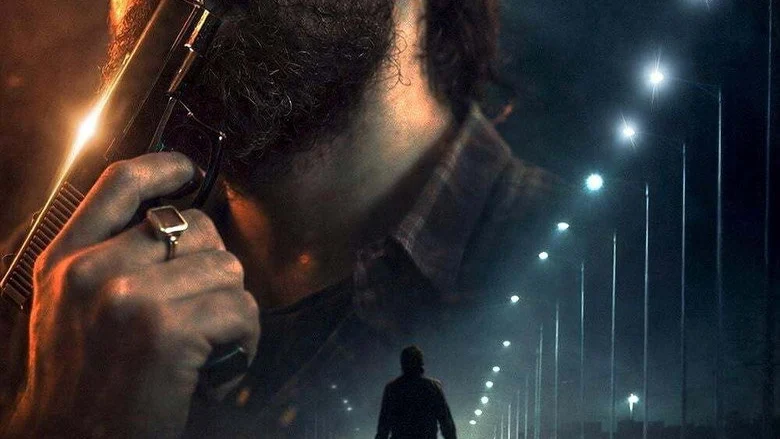
Masoom Sharma’s working-class rage is the film’s beating heart
Sharma doesn’t so much act as occupy the screen. His Satta is a man of few words and simmering anger, and the actor channels that frustration through his posture and his eyes rather than lengthy dialogue.
His repeated attempts to secure a gun license become the film’s central ritual, each rejection hardening his resolve. It is a performance built on physical presence and reactive energy, and it carries the film through its more predictable stretches.
Chauhan’s direction favors directness over nuance
Ranjeet Chauhan keeps the narrative linear and uncluttered, which serves the film’s accessibility. The central conflict, a poor man denied legal protection because of his social standing, is presented without ambiguity or moral grey areas.
The flaw is that this directness leaves little room for texture. The system is corrupt, the hero is righteous, and the film rarely pauses to complicate that equation, making the drama feel preordained even when the scenes crackle with energy.
The crime drama core runs on escalation and music
Licence is not a procedural. It does not care about the paperwork or the legal loopholes that might make a gun license story feel authentic. Instead, it treats the license as a symbol of dignity, and every confrontation with authority is staged as a small war.
The confrontations between Satta and the officials who deny him are shot with a television-style immediacy, favoring close-ups and heated exchanges over spatial geography. Chauhan understands that his audience is here for the emotional payoff, not the bureaucratic detail.
What sustains the film is its music-driven momentum. The audience response heavily emphasizes the soundtrack, and it works as a narrative crutch, pumping energy into scenes that might otherwise stall. For a film this straightforward, the songs provide the rhythm that keeps the mass audience engaged.
For more on how Haryanvi cinema is evolving, browse our Hindi film reviews.
Yashpal Sharma and the supporting cast ground the conflict
Yashpal Sharma plays Dev Parkash, the antagonist, and his casting signals the film’s intent to have a heavyweight opposition. Sharma brings a weathered authority to the role; he does not need to shout to convey power, and his calm dismissal of Satta’s requests is more chilling than any overt threat.
Rakhi Lohchab appears as Madhu, presumably the emotional anchor, though the available material offers little on her specific beats. Sunil Chitkara as Jai Bhagwan and Abhimanyu Yadav as Dharma round out the world, and their presence suggests a supporting ensemble built for authenticity rather than star power.
The supporting cast is functional rather than showy, which is appropriate for a film centered on one man’s struggle. They exist to push back against Sharma’s protagonist, and they do so without stealing focus.
Audience verdict and the political undertone of a denied license
There is no controversy surrounding Licence, but the premise itself carries a quiet political charge. A man denied a gun license because he is poor is a pointed comment on who gets to exercise legal rights in India, even if the film never explicitly names the system it critiques.
The audience has responded warmly. On BookMyShow, the film holds an 8.9/10 from over 890 votes, with many tagging it as a Blockbuster and praising the acting. The UK opening of $10, 863, as reported by Box Office Mojo, suggests a modest but real international appetite for Haryanvi-language content.
Licence is not a subtle film, and it does not pretend to be. It is a mass entertainer that uses a social issue as its springboard, and it works because Masoom Sharma makes Satta’s fight feel personal. If you want a detailed procedural about gun laws, look elsewhere.
But if you want to see a performer command the screen and a crowd-pleasing drama executed with conviction, this delivers. Watch it for Sharma’s presence and the music, ideally on a regular screen where the energy of the audience can amplify the experience.
Licence earns a solid 3 out of 5 for its raw performance power and unpretentious storytelling, even if it never rises above its familiar formula.
For another take on a single-minded lead carrying a flawed narrative, see Dridam review.
And for a similar study in tension and uneven execution, KD Devil verdict offers a comparable case.

Ankit Jaiswal is the Chief Author, covering Indian cinema and OTT releases with honest, no-filler criticism. An SEO strategist by background, he brings a research-driven approach to film writing, cutting through hype to tell you exactly what's worth your time.