KD – The Devil (2026): Dhruva Sarja s keeps the film tense but uneven overall
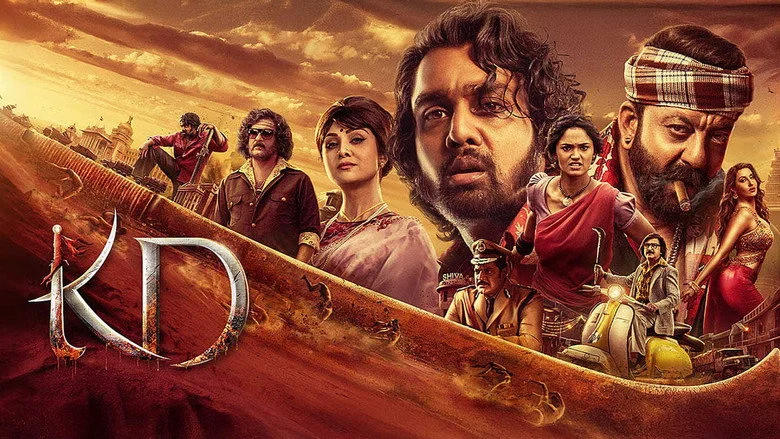
Dhruva Sarja doesn’t walk into frames; he bulldozes through them. As Kaalidasa, the small-time criminal who becomes KD, he anchors this 1970s Bangalore underworld tale with a presence that demands attention.
His early criminal setup is where the film finds its footing. The escalation into gangland conflict is staged with a muscular intensity that suits his strengths. The discussion around his performance focuses on mass appeal and action energy rather than nuanced emotional shading, and that’s precisely where he delivers.
Prem’s Direction Builds a World But Loses the Pace
Director Prem constructs a convincing period atmosphere, with the gritty underworld of early 1970s Bangalore rendered with clear visual intent. The gangster staging shows genuine attention to physical confrontation and scale.
But the screenplay follows a linear, familiar rise-and-fall template that undercuts the novelty. The pacing drags noticeably, and at 141 minutes per CBFC certification, the film overstays its welcome. I found myself checking the runtime during the second half’s repetitive conflict escalation.
Action Craft: Built for Mass Appeal, Not Innovation
The action sequences are framed around hero-centric physicality, with Sarja’s confrontation beats carrying the genre weight. The early underworld entry scene that changes KD’s life trajectory is the film’s most effective action moment, establishing stakes with efficient brutality.
The second half’s gang conflict sequences rely on intimidation and brute force rather than choreographic invention. There’s a workmanlike quality to the staging that serves the mass-market intent but rarely surprises. The period setting supports the crime-thriller tone, yet the action style never transcends its conventional framing.
The violence is functional, never transformative. For a film with this star cast and budget, the setpieces feel adequate rather than ambitious. The confrontation-driven sequences deliver their beats competently, but nothing here will be remembered as a genre benchmark.
If you’re hunting for more Kannada action dramas that balance mass appeal with storytelling, browse our Kannada Action reviews for deeper cuts.
Sanjay Dutt and the Ensemble Bring Star Power, Not Depth
Sanjay Dutt’s Dhaak Deva is positioned as the major antagonistic force, built around intimidation and criminal authority. His presence adds scale, though the characterization remains one-note. The veteran actor’s casting signals commercial ambition, and he delivers the menace without adding layers.
Shilpa Shetty’s Satyavathi is tied to the central conflict and brings star value to a key supporting part. Ramesh Aravind and V. Ravichandran serve as stabilizing presences, with Kiccha Sudeep and Nora Fatehi appearing in special roles that add buzz. Reeshma Nanaiah’s Machhlakshmi provides the personal stakes that shift KD’s trajectory, though her arc stays underdeveloped.
The Box Office Verdict: A ₹75 Crore Gamble That Flopped
Trade reporting from Koimoi paints a sobering picture. The film collected ₹10.71 crore worldwide by Day 3, and its lifetime total settled at ₹25.62 crore gross against a stated ₹75 crore budget. That’s a recovery of just 28.96%, finishing with a deficit of ₹53.28 crore.
The flop verdict reflects weaker word-of-mouth than the star cast suggested. Audience complaints about length and narrative familiarity clearly outweighed praise for Sarja’s screen presence and the period styling. The IMDb rating of 8.3 exists, but with only 3 votes, it’s meaningless as a metric.
For fans of mass-market Kannada cinema, there’s enough here to justify a casual watch. For everyone else, the familiar gangster template and pacing issues make this a rental at best. Watch it for Sarja’s physical commitment and Dutt’s villainous authority, but temper expectations.
If you enjoyed this period gangster setup, you might find Flashback review similarly ambitious in its narrative reach.
KD – The Devil is a 2.5/5 star effort that never escapes its own formula, a flop that proves star power alone can’t mask a screenplay that’s been done better elsewhere.
For a sharper take on symbolic storytelling, check out Storm Calm verdict

Ankit Jaiswal is the Chief Author, covering Indian cinema and OTT releases with honest, no-filler criticism. An SEO strategist by background, he brings a research-driven approach to film writing, cutting through hype to tell you exactly what's worth your time.