Kartavya (2026): Saif Ali Khan lifts key stretches, not the full runtime
The journalist dies within minutes of arriving under Pawan Malik’s protection, a murder that should ignite a thriller but instead settles into a slow burn of moral accounting. Saif Ali Khan’s small-town cop carries the weight of this Red Chillies production, yet Pulkit’s direction never quite ignites the powder keg of caste, exploitation, and institutional rot it so earnestly stacks up.
For a crime drama that wants to be the next Paatal Lok, Kartavya plays its hand far too safely, leaving a competent lead stranded in a narrative that loses its nerve exactly when it should bare its teeth.
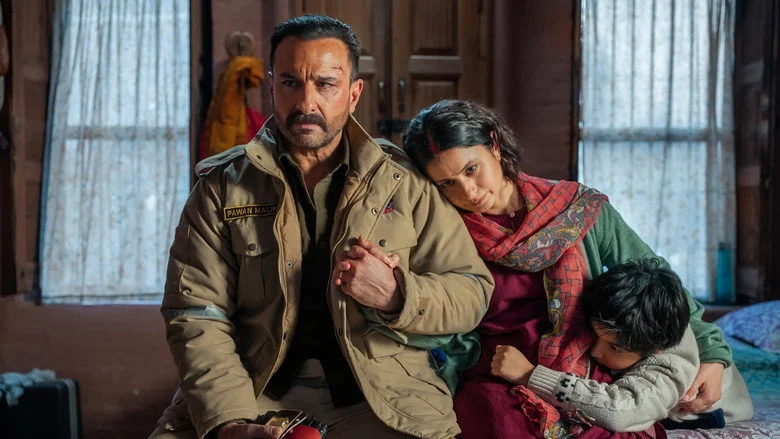
Saif Ali Khan’s Restrained Cop Is the Film’s Only True Anchor
Pawan Malik is a man squeezed between a uniform that demands obedience and a conscience that refuses to look away. Saif Ali Khan plays this conflict with the kind of coiled restraint that has become his signature in recent years, making the officer’s silences speak louder than the screenplay’s dialogue ever manages.
His scenes of moral confrontation are the most consistently praised elements across reviews, and it’s not hard to see why. Khan locates the humanity in a character written as a walking dilemma, keeping the film watchable even when the writing around him wobbles.
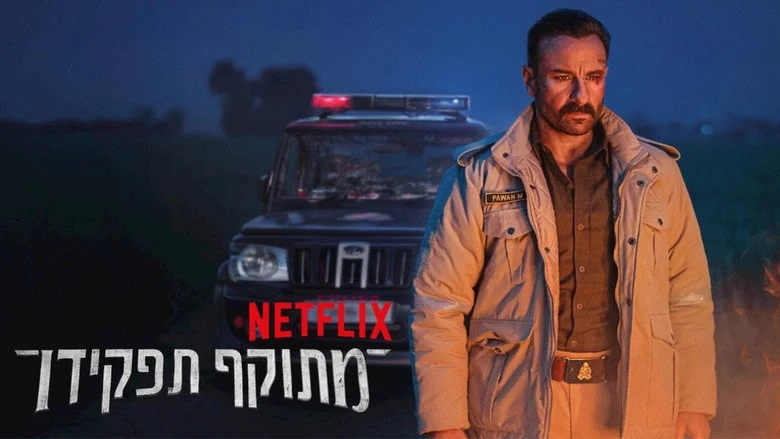
Pulkit’s Direction Grounds the Story but Refuses to Push Back
The director deserves credit for maintaining a serious, grounded tone throughout, never letting the crime-thriller format slide into cheap spectacle. The heartland setting feels authentic, and the film’s commitment to examining caste prejudice inside the officer’s own family is genuinely commendable territory for mainstream Hindi cinema.
But Pulkit’s restraint becomes a liability. The screenplay is linear to a fault, and the tension that crackles through the first half flattens into predictability once the investigation starts connecting dots. Multiple critics have noted the second half’s emotional distance, and it’s a fair charge, the film seems afraid to let its characters bleed.
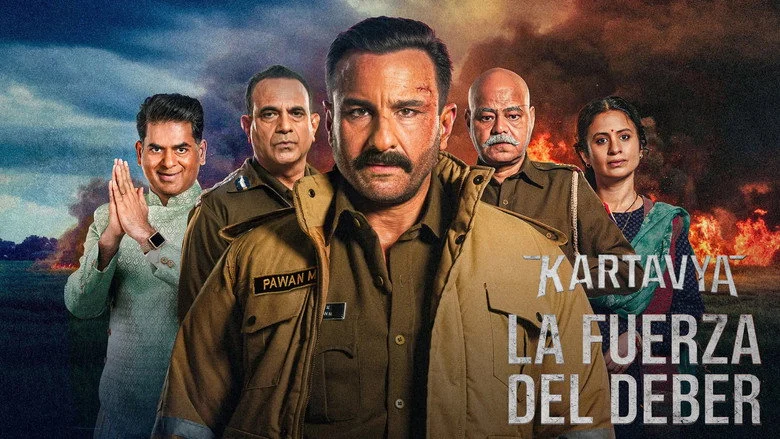
The Investigation Setup Works as Social Commentary, Not Procedural Thrills
Kartavya’s genre engine runs on moral conflict rather than detective mechanics. The missing 16-year-old boy and the links to Anand Shri’s spiritual empire are framed through social power structures, making the antagonist a systemic threat rather than a cartoonish villain. This is where the film distinguishes itself from routine cop dramas.
The journalist’s killing serves as an effective trigger, sparking an investigation that touches on child exploitation and caste prejudice with genuine earnestness. The film wants to be about something, and its ambitions are visible in every frame of the investigative setup.
Yet the craft never matches the intent. Where Bhakshak and Paatal Lok sustained their grip through layered storytelling, this film settles for easy closures and a climax that critics have called underwhelming. The final act resolves conflicts with a tidiness that betrays the messiness of its subject matter.
Saurabh Dwivedi’s Anand Shri Is a Villain of Convenience
Dwivedi, better known as the journalist behind Aarambh, brings an unsettling calm to Anand Shri, a cult-like spiritual leader whose hidden criminality operates through institutional influence rather than brute force. The casting is inspired, Dwivedi’s public persona lends the character an uncomfortable plausibility.
But the screenplay never gives him enough to do. Anand Shri functions more as a symbol of systemic rot than a fully realised antagonist, and the final confrontation lacks the dramatic weight it needs. The supporting ensemble, Rasika Dugal, Sanjay Mishra, Zakir Hussain, and Manish Chaudhari, provides solid professional backing, though none of them get moments that linger.
Dugal’s presence grounds the domestic framework, while Mishra and Hussain populate the police and social ecosystem with their usual reliability. Chaudhari rounds out the institutional pressures. These are actors who signal quality, but the material leaves them underused.
Audience Verdict: A Noble Failure That Demands Too Much Patience
Times of India and Hindustan Times average out to a telling 2.75/5, and the audience response echoes that ambivalence. Praise centres on Khan’s performance and the socially relevant subject matter, while complaints focus on predictable plotting and a weak emotional payoff.
There is no controversy here, no political firestorm, just a film that tries to be important and settles for being merely earnest. The first half works because it establishes stakes efficiently; the second half loses its nerve, becoming the kind of safe, distant drama that frustrates more than it offends.
I found myself wishing Pulkit had trusted his material more, the caste dynamics and family prejudice angle deserves sharper teeth than this.
For those drawn to socially conscious crime dramas, this is a watch-on-a-lazy-afternoon affair rather than a must-see. The 108-minute runtime is mercifully tight, and the OTT format suits its restrained ambitions. Fans of Saif Ali Khan’s recent dramatic work will find value here, but anyone expecting the tension of Paatal Lok should recalibrate expectations.
If you want to see how this compares to other Hindi crime dramas, browse more Hindi Thriller reviews on the site.
Kartavya is a film that means well but executes timidly, a 2.5/5 effort elevated by its lead and diminished by its own caution.
The moral conflict at the heart of Kartavya finds a more emotionally resonant echo in Sattendru Maarudhu review, where duty and personal desire collide with far greater urgency.
For another take on institutional failure and individual conscience, Aakhri Sawal verdict offers a sharper critique of systems that crush the vulnerable.

Ankit Jaiswal is the Chief Author, covering Indian cinema and OTT releases with honest, no-filler criticism. An SEO strategist by background, he brings a research-driven approach to film writing, cutting through hype to tell you exactly what's worth your time.