Babita Singh Reporting (2026): Nimisha Sajayan anchors a crime drama buried in domestic tension
There is a moment early in Ambiecka Pandit’s Babita Singh Reporting where the suspended cop Babita, played by Nimisha Sajayan, is reduced to silence at her in-laws’ dining table, a body-shaming remark hanging in the air while she is expected to serve food. It is a small, unglamorous beat, but it tells you everything about the film’s priorities: this is a character study posing as a police procedural, and the murder is merely the excuse to examine the bars of the cage Baby lives in.
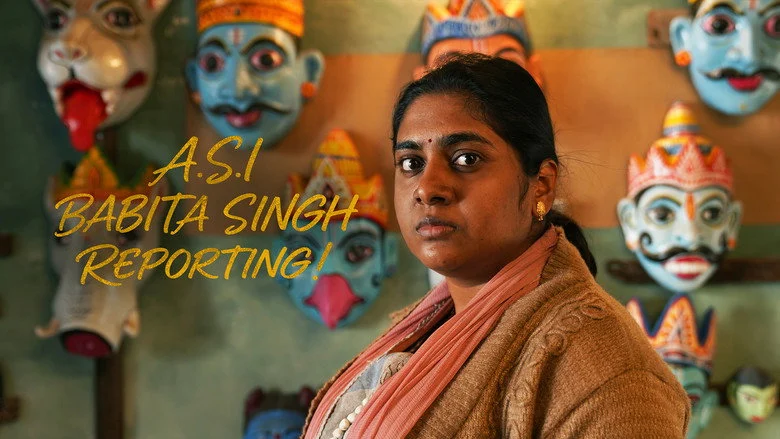
Nimisha Sajayan turns restraint into a weapon of quiet rebellion
Nimisha Sajayan is the engine that keeps this uneven vehicle moving. Her performance is built on posture and silence, making Babita’s discomfort in domestic spaces legible without a single outburst. She carries the investigative track with a grounded urgency even when the screenplay around her wobbles.
Her most praised scenes are the confrontations with family, where she holds her ground through controlled reactions rather than broad dramatics. It is a performance that makes you wish the writing matched her commitment.

Ambiecka Pandit’s direction finds the social pulse but loses the procedural rhythm
Pandit deserves credit for shaping a socially grounded mystery that prioritizes character and domestic tension over cheap thrills. The small-town setting is visually effective, restrained rather than flashy, supporting the drama’s somber tone.
But the screenplay, written by Amita Vyas, has a structural flaw: the pacing becomes uneven in the middle, and the investigation loses momentum. Reviews point to predictable beats and a mystery that does not always sustain its suspense, making the film feel like a strong idea in search of sharper execution.
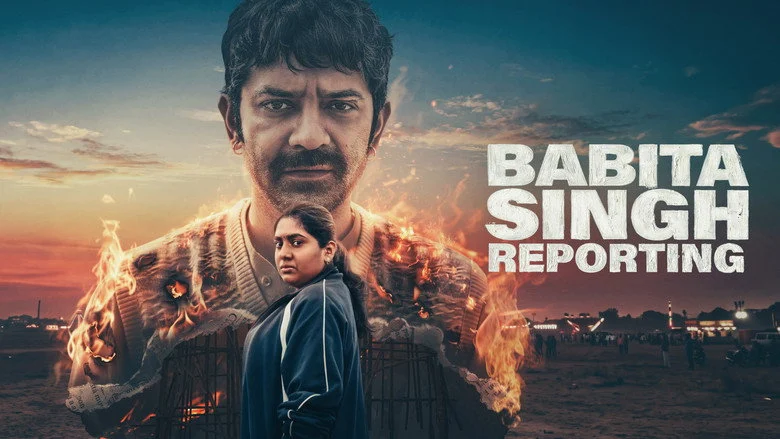
The genre-core tension: a murder mystery that breathes through domestic pressure
The film uses the murder inquiry to expose domestic and social control, building suspense through character pressure rather than action-heavy set pieces. The procedural structure is a frame for social commentary, and the emotional center remains Babita’s internal conflict, not just the case. This is a deliberate choice, and it works when the writing stays focused on the household confrontations that tie the crime story to patriarchal pressure.
However, the mystery itself is the weak link. The discovery of Bansi’s murder triggers the investigation, but the procedural beats are described by multiple reviewers as underdeveloped and predictable. The blend of crime procedural and marital drama does not always feel integrated, leaving the film caught between two tones it cannot fully reconcile.
The tone remains subdued and issue-driven rather than purely plot-driven, which will frustrate viewers expecting a tight thriller. But for those willing to sit with the film’s quieter rhythms, the social commentary lands with more force than the whodunit elements.
Barun Sobti and the supporting ensemble: anchors of a familiar world
Barun Sobti’s Bansi functions as the emotional trigger for the investigation, a childhood friend whose murder pulls Babita back into a world she tried to leave. The role is central to the mystery, even if it is not described as performance-led in the reviews.
Rajesh Kumar appears in a pivotal role as part of the ensemble supporting the investigation, though sources did not provide scene-specific evaluation. Anshumaan Pushkar is included in the key cast and story setup, but his contribution remains underexamined in the critical conversation. The casting signals an intent to build a credible, lived-in world around Sajayan’s central turn.
An audience divided: character-driven praise against procedural fatigue
The critical response is split down the middle. Times of India and iDiva both landed at 3.5/5, with NewsBytes agreeing, while India TV was more cautious at 3/5. MensXP was the outlier, dismissing it with 1.5/5, calling it “The worst cop to solve a ‘murder’ case.” The average settles around 3.3/5, a fair reflection of a film that inspires admiration for its intent and frustration with its execution.
Viewers responded positively to Sajayan’s lead performance and the film’s serious tone, with the domestic and social conflict around patriarchy resonating with audiences interested in character-driven dramas. The complaints are equally clear: the pacing is slow, the murder-mystery beats are predictable, and the procedural elements do not fully deliver suspense. This is a film for those who value a woman’s perspective over a tightly plotted crime story.
For more on how Hindi cinema handles social tension through genre, browse our Hindi Drama reviews.
Babita Singh Reporting is not a thriller, despite its marketing. It is a quiet, thoughtful investigation into patriarchy and self-worth, and it works best when it stops pretending to be a whodunit. Watch it for Sajayan’s performance, which deserves a sharper film around it.
If you are looking for a tighter blend of crime and emotion, Once More handles grief with a similar restraint.
For a more subdued take on personal conflict, Sanjeev offers a quieter register worth exploring.

Ankit Jaiswal is the Chief Author, covering Indian cinema and OTT releases with honest, no-filler criticism. An SEO strategist by background, he brings a research-driven approach to film writing, cutting through hype to tell you exactly what's worth your time.