Aligned Apart (2026): Arham Jain s stands out while the narrative loses grip
The trailer introduces Neel in the aftermath of a breakup and a job loss, and Arham Jain plays him as a man who has gone quiet rather than loud. His emotional collapse is rendered through subdued, internalized reactions, the kind of performance that asks you to lean in rather than sit back.
Jain’s key function is carrying the film’s sense of dislocation, and he does so with a restraint that keeps the drama grounded. He never overplays the victim card, even when the dialogue hands him that exact accusation.

Direction and Screenplay: A Strong Mirror That Lacks a Final Image
Parth Bhonge’s direction establishes a parallel-character structure that keeps Neel and Tara’s arcs in constant conversation. The cross-cutting between their separate losses builds a thematic resonance that feels deliberate and earned.
The flaw is that the screenplay, co-written with Dhriti Lowe, is linear to a fault. The trailer suggests a setup that converges through repeated intersections, but the absence of a revealed climax leaves the structure feeling like a promise rather than a payoff.
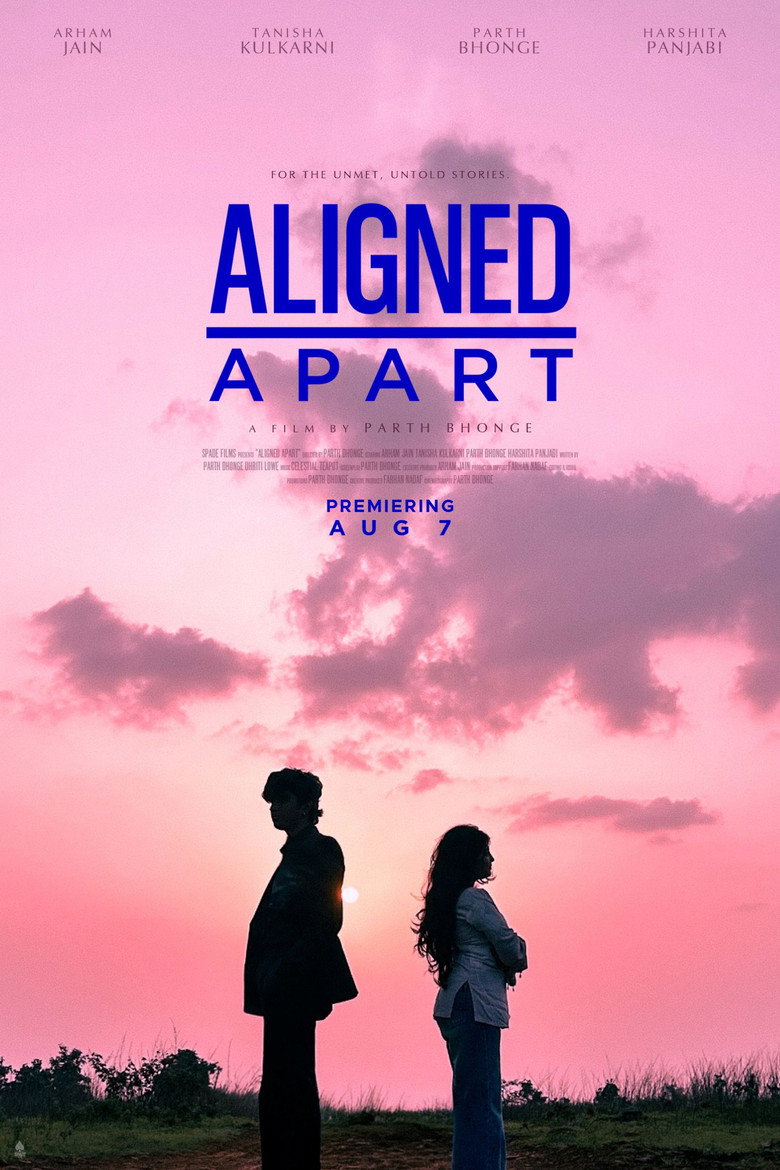
The Drama’s Core: Dialogue as the Only Vehicle
This is a drama that externalizes grief through words, and the script’s best moments land as hard verbal punches. The breakup confrontation, “Now you play the victim-card… and make me the villain!”, is the kind of line that cuts because it sounds like a real argument, not a written one.
The film leans entirely on intimate conflict rather than plot-driven escalation. The scene built around “It’s been four months, bro… when will everything be okay?” captures the specific exhaustion of grief that refuses to follow a timeline.
The closing reflective passage, linking hope and emptiness, is the film’s most effective sequence. It ties the parallel journeys together thematically, even if the trailer withholds how those journeys resolve.

Tanisha Kulkarni’s Tara Anchors the Reflective Beats
Tanisha Kulkarni’s Tara is framed through family conflict and the strain of her parents’ separation, and her performance appears to require reactive, dialogue-driven work. She anchors the film’s more interpersonal moments, providing a counterweight to Jain’s quieter collapse.
Her presence signals a film interested in how women process instability differently, through engagement rather than withdrawal. The trailer suggests she carries the emotional weight of the mirror structure just as heavily as Jain does.
Supporting Cast and the Audience Angle
Himanshi Satwani’s Kavya is directly named in the argument scene, placing her at the center of the breakup conflict even without further detail. Mr. Sudeep Bobde’s “Boss” role implies a workplace pressure point in Neel’s story, adding a professional dimension to his personal collapse.
Parth Bhonge as Veer and Harshita Panjabi as Nikita remain undefined in the available material, but their casting suggests a friend circle that observes rather than intervenes. With no controversy or political angle attached, the film’s reception will likely hinge on whether audiences connect with its introspective tone. Those seeking action or plot-heavy content should look elsewhere, but viewers invested in relationship drama may find this a resonant watch on OTT.
The film’s use of She & Him’s “I Thought I Saw Your Face Today” signals a specific indie-romantic register, one that matches the moody, interior visual tone suggested by the trailer’s thunder and reflective voiceover. For more independent drama explorations, browse these Hindi Drama reviews.
If the trailer is any indication, Aligned Apart is a film that trusts its audience to sit with discomfort rather than resolve it quickly. The hope that keeps its characters alive is the same hope that keeps the film from feeling entirely bleak, but it is a fragile thread.
I would have liked the trailer to reveal more of the climax, as the setup promises a convergence that the available material only teases. Still, for a short film built on parallel emotional journeys, the craft is sincere and the performances are committed.
Aligned Apart is a watch for those who prefer their drama slow, dialogue-heavy, and introspective, best experienced on OTT with the lights dimmed. Arham Jain and Tanisha Kulkarni make the quiet moments count, even when the screenplay leaves their destination unclear.
Aligned Apart earns a reserved 3 out of 5 for its honest performances and thematic ambition, but it remains a film that promises more than it currently shows.
For a similar register of tense, dialogue-driven storytelling, see how KJQ review.
If you prefer your mysteries with a grittier edge, Detective Teekshanaa verdict on unresolved tension.

Ankit Jaiswal is the Chief Author, covering Indian cinema and OTT releases with honest, no-filler criticism. An SEO strategist by background, he brings a research-driven approach to film writing, cutting through hype to tell you exactly what's worth your time.