System (2026): A Courtroom Drama That Prefers Lectures Over Tension
Neha Rajvansh walks into her tenth consecutive case with the weight of her father’s law firm on her shoulders, a prosecutor who has learned to win but not yet to question. When she meets Sarika Rawat, a courtroom stenographer whose life sits on the other side of India’s class divide, the case stops being about verdicts and starts being about everything the legal system refuses to see. This is a watch for those who like their justice served with a side of sermon, and a skip for anyone craving genuine courtroom suspense.
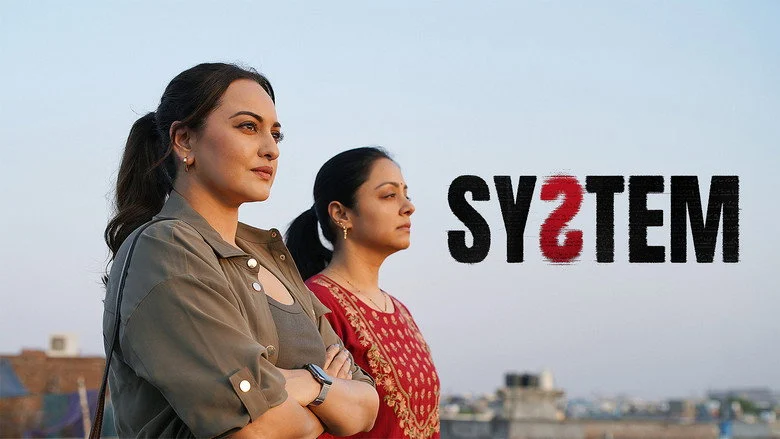
Sonakshi Sinha Anchors Neha’s Moral Tightrope
Sinha carries the film’s emotional and professional center with visible effort, particularly in the scenes where Neha must choose between her father’s expectations and the case’s moral weight. Her introduction, framed by the pressure of securing a tenth consecutive victory, establishes a character caught between ambition and awakening.
The confrontation with her father Ravi Rajvansh over the case’s direction is where Sinha’s performance finds its sharpest edge. She plays the conflict not as rebellion but as reluctant realization, which keeps Neha sympathetic even when the script around her turns preachy.

Ashwiny Iyer Tiwari’s Direction: Clear Intent, Blunt Execution
Tiwari keeps the narrative focused on the clash between law and privilege, using the two-woman dynamic to give the film its social and emotional structure. The courtroom and office spaces are shot to underline institutional power, and the visual contrast between Neha’s privileged world and Sarika’s practical labor reinforces the class divide without subtlety.
The weakness is that the messaging becomes direct rather than dramatically layered, and the tonal balance between thriller and drama wobbles. The screenplay turns overtly didactic at key moments, slowing the legal conflict’s momentum and reducing complex issues to explanatory dialogue.
The Genre Core: Legal Drama That Explains More Than It Argues
The prosecutor-stenographer pairing is a smart structural choice, building courtroom tension through institutional conflict rather than physical action. The race for a tenth consecutive win gives the opening a ticking clock that the film unfortunately abandons as it moves toward social commentary.
The most praised scene, where the class divide between Neha and Sarika becomes central to the case, shows what this film could have been: a legal procedural that places inequality inside the process of justice. Here, the two women’s different relationships to the law create genuine dramatic friction.
But the pacing weakens when the narrative leans too heavily into its message, and the thriller elements recede behind explanatory stretches. The screenplay is linear to a fault, and the middle sections feel heavier as the film argues its thesis rather than dramatizing it.
Jyotika and Ashutosh Gowariker: The Supporting Architecture
Jyotika’s Sarika Rawat provides the grounded perspective that Neha’s privileged arc needs, her scenes emphasizing the practical labor and class difference that the legal system ignores. Her presence gives the film a moral counterweight, though the script could have given her more to do than represent the other side of the divide.
Gowariker’s Ravi Rajvansh embodies the family and institutional authority pressing down on Neha, and his casting signals the film’s interest in patriarchy as a legal force. Vijayant Kohli’s Vikram Bajral functions more as a system-linked obstacle than a personal antagonist, which fits the film’s argument that the problem is structural rather than individual.
Audience Reception: Social Relevance Versus Predictable Structure
Viewers praise the lead performances and the class-and-justice conflict, while complaining about predictable dramatic structure and heavy-handed messaging. The New Indian Express rating of 3/5 captures the film’s position: commendable intent, uneven execution.
The film arrives without theatrical box office pressure, released directly on streaming, which suits its message-driven temperament. I found myself wishing the screenplay trusted its actors and premise more, instead of explaining every moral beat twice.
For those who enjoy courtroom dramas that wear their social conscience openly, this delivers enough through Sinha and Jyotika’s chemistry. But viewers wanting taut thriller pacing or narrative restraint should adjust expectations before pressing play. Browse more Hindi Thriller reviews if this legal drama leaves you wanting sharper edges.
Watch it on OTT for the two lead performances and the class-conscious courtroom premise, but prepare for a film that tells you what it means rather than trusting you to feel it. System earns a fair 2.5 out of 5 for its intentions, though its execution keeps it from the first rank of legal dramas.
For a more grounded look at how privilege distorts justice, Ugly Story review offers a similar critique with sharper teeth.
If you prefer your social commentary wrapped in melody rather than legal argument, Chand Mera verdict takes a softer route to the same class divide.

Ankit Jaiswal is the Chief Author, covering Indian cinema and OTT releases with honest, no-filler criticism. An SEO strategist by background, he brings a research-driven approach to film writing, cutting through hype to tell you exactly what's worth your time.