Ugly Story (2026): Avika Gor Carries stands out while the narrative loses grip
There is a moment early in Pranava Swaroop’s Telugu psychological thriller where Karthik’s attention shifts from charming to invasive, and the air in the room changes. It is in these quiet transitions that Ugly Story finds its most unsettling power, the slow, creeping realisation that what looked like devotion is actually a cage closing in on Neha.
This is not a conventional romance, and it never pretends to be. The film, which released on May 22, 2026, wants to sit inside the discomfort of a relationship rotting from within, and for a while, it does so with genuine tension.
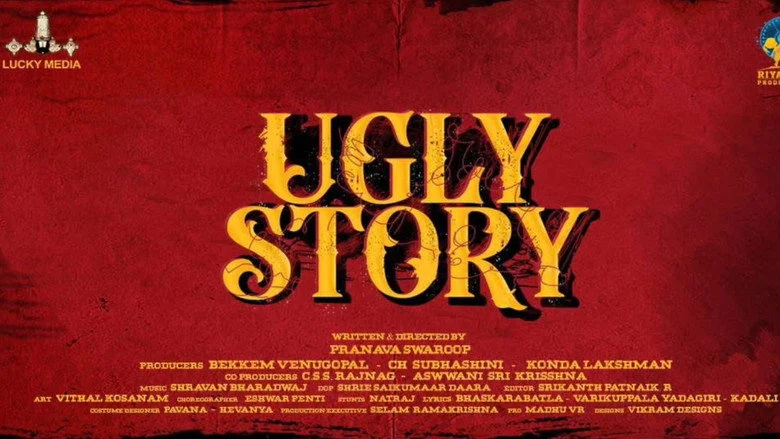
Avika Gor Carries the Weight of Fear and Confusion
Avika Gor’s Neha is the emotional anchor, and she registers every shift from affection to dread with visible precision. Her best moments come in scenes where fear overtakes her character’s initial warmth, the confusion in her eyes does more work than the dialogue.
She makes Neha’s entrapment feel lived-in rather than performed. When the writing forces her into repetitive emotional beats in the second half, she still holds the screen with a quiet resilience that keeps the film watchable.

Shree Nandu’s Obsession Is Built on Restraint, Not Rage
Shree Nandu, playing the obsessive Karthik, understands that true menace in a psychological thriller rarely shouts. His performance is centred on controlled intensity, a fixed stare, a persistence that feels suffocating, a way of framing possession as protection.
He is most effective when obsession is expressed through restraint, and those scenes carry the film’s psychological pressure even when the screenplay weakens around him. The character never becomes a conventional villain, which makes his threat feel closer to reality.
The Genre Core Thrives on Unease, Not Action
As a psychological thriller, Ugly Story uses relationship conflict as its engine, and tension comes from emotional dominance rather than external crime. The early scenes showing Karthik’s attachment turning invasive are where the film’s craft is sharpest, gradual unease building into something recognisably dangerous.
The later confrontation scenes, where Neha’s fear and resistance define the thriller tension, show what this film does better than a routine romance: it takes its dark premise seriously. The tonal shift away from lightheartedness is deliberate, and it differentiates this from the typical Telugu romantic drama.
But the execution struggles with consistency. The second half reportedly slows down and repeats emotional conflicts without advancing the plot enough, and the initial tension is not fully sustained. The premise is compelling; the follow-through is uneven.
Supporting Cast Adds Context but Stays in the Shadows
Ravi Teja Mahadasyam’s Gowtham functions as part of the supporting conflict structure, widening the social context around the central pair. His presence gives Neha’s world a texture beyond Karthik’s obsession, even if his role remains underdeveloped.
Sivaji Raja’s Narayana Rao brings generational weight to the interpersonal tension, grounding the story in family dynamics that make Neha’s isolation feel more complete. His scenes suggest a larger world that the film chooses not to explore fully.
Both actors serve the narrative’s need for external pressure, but the film’s focus remains squarely on the two leads, which is both its strength and its limitation.
Audience Reception and the Box Office Reality
Critics have been divided, with Filmy Focus averaging 2.75/5, praising the lead performances and the core premise while flagging the uneven pacing. On IMDb, audiences have been kinder, with a 7.3/10 rating reflecting appreciation for the dark relationship arc and the chemistry between the leads.
The commercial story is less forgiving. News9 Live reported an opening day of just ₹0.07 crore, though Filmibeat’s figures from the same day claim ₹1.74 crore, a discrepancy that speaks to the film’s troubled theatrical run. The final verdict is a flop, and the box office numbers confirm that this was never going to be a crowd-pleaser.
For those who prefer their Telugu cinema to take risks with darker material, there is something worth engaging with here, even if the second half tests patience. The A certificate signals adult content, and the coercive relationship themes will not sit well with everyone.
This is a film that understands its own discomfort zone, and I found myself wishing the screenplay had trusted that instinct more consistently instead of padding the middle stretch. The first half establishes the premise with genuine tension; the second half loses its nerve. Browse more Telugu Thriller reviews to see how other films handle similar psychological terrain.
Ugly Story is best watched on OTT, where its intimate scale and performance-driven tension can work without the pressure of theatrical expectations. If you are here for Avika Gor’s quiet strength or Shree Nandu’s unsettling control, there is enough to hold your attention.
The film earns a 2.5/5, a promising psychological drama that never quite escapes the shadow of its own uneven execution, but one worth a watch for fans of dark relationship thrillers.
For a similar study in obsessive control with stronger narrative discipline, Chand Mera review offers an interesting counterpoint.
If you prefer your thrillers with a seasoned performer holding the centre, Drishyam 3 verdict demonstrates how calculated calm can elevate familiar material.

Ankit Jaiswal is the Chief Author, covering Indian cinema and OTT releases with honest, no-filler criticism. An SEO strategist by background, he brings a research-driven approach to film writing, cutting through hype to tell you exactly what's worth your time.