Flashback (2025): Prabhu Deva Returns stands out while the narrative loses grip
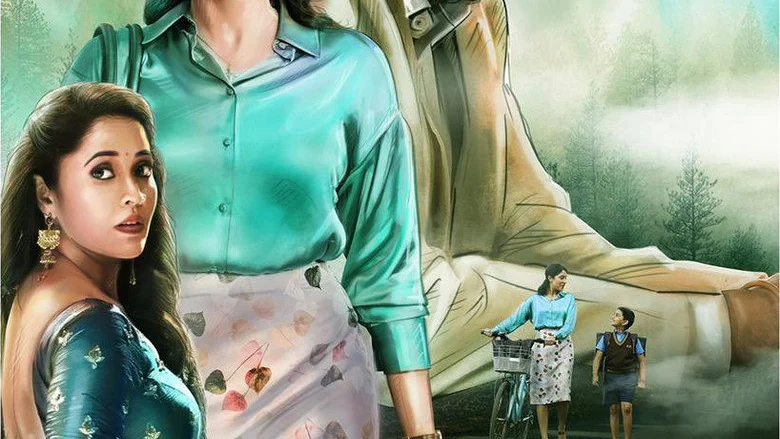
The opening frames introduce young Siddhu, a boy whose eyes follow his caregiver with a devotion that feels heavier than childhood affection. There is an unsettling stillness to how director Don Sandy frames these early moments, as if preparing us for something the film itself cannot fully confront.
That something arrives when Siddhu grows up and Prabhu Deva steps into the frame, and the movie asks us to accept an intimacy that never earns its moral weight. This is a watch for the curious, not the convinced.

Prabhu Deva’s Silent Struggle Against a Thin Character
Prabhu Deva brings his natural physical grace to Siddharth, but the script hands him little beyond longing glances and conflicted silences. His best moments come when he says nothing at all, letting the camera read the tension in his posture.
Yet even his star presence cannot rescue a role that never decides whether Siddhu is a victim of circumstance or an agent of his own choices. The actor commits fully, but the character remains a sketch waiting for colour.
Regena Cassandrra and the Uncomfortable Centre
Regena Cassandrra as Angel carries the film’s most difficult assignment, playing a woman whose role shifts from teacher to object of desire without a single scene that justifies the transition. She performs with a quiet dignity that the screenplay does not reciprocate.
Her casting signals an intent to treat this as a serious drama, but the material keeps pulling toward something sleazier. Anasuya Bharadwaj appears as Nirmala, and her presence reminds us that a more grounded supporting performance could have anchored this ship. Aryan as young Siddhu delivers the film’s most honest work, capturing confusion without the adult film’s heavy-handedness.

Don Sandy’s Direction: A Moral Fog That Never Lifts
Don Sandy directs with a linear focus that tracks Siddhu from childhood to adulthood, but the screenplay’s moral confusion is not a bug; it is the entire operating system. The film wants to provoke discussion about forbidden attraction, yet it refuses to take a stance, leaving viewers stranded in ambiguity.
The screenplay’s specific flaw is its ending, which offers incomplete closure and reads less like artistic restraint and more like an inability to finish the thought. One IMDb user called it “completely pathetic and misleading, ” asking how Siddhu could become intimate with his teacher after growing up, and that frustration is hard to dismiss.
Genre Execution: Drama That Forgets to Dramatize
As a drama, Flashback should build emotional pressure through scenes that complicate the central relationship, but the childhood attraction setup is the only moment with genuine tension. The adult intimacy development plays out with a flatness that suggests the director was unsure how far to push.
The most criticised scene, the intimacy between adult Siddhu and his former caregiver, lands with a thud because nothing in the screenplay has prepared us for its emotional logic. The film’s IMDb rating of 6.2 from 10, 240 votes suggests divided audiences, and the negative points in the research are specific: morally confusing storyline, incomplete ending, and a relationship depiction that veers toward the inappropriate.
One viewer dismissed it as “someone’s big-budget mommy fantasy showcase, ” which captures the tonal problem better than any professional review could. The 120-minute runtime feels longer because the drama never accelerates; it just repeats its one idea with diminishing returns.
The Political Angle: A Debate the Film Won’t Join
The controversy here is not political but social, as audiences have pushed back against the caregiver-protagonist dynamic with notable intensity. This is a film that will be discussed in comment sections more than in film circles, and the discussion is rarely flattering.
Viewers seeking conventional moral narratives should stay away, as should anyone who wants their drama to take a clear position on its own subject matter. The film’s limited theatrical release and unreported earnings suggest a distributor who knew exactly what they were releasing.
If this exploration of complicated human dynamics interests you, browse more Tamil Drama reviews for films that handle similar themes with greater clarity.
Should You Watch It?
Flashback is a film that will frustrate anyone looking for a coherent take on its provocative premise, and even Prabhu Deva’s committed performance cannot compensate for the moral fog at its centre. The best format to watch this is on streaming, where you can pause, rewind, and wonder what the filmmakers were thinking.
I found myself more fascinated by the audience reaction than by the film itself, which is rarely a good sign for the work in question.
For a more disciplined take on unspoken emotional weight, consider how Storm Calm review handles its symbolic load with intention rather than accident.
Flashback (2025) is a misfire that earns a 2/5 for its ambition, but the execution falters at every moral crossroads, making it a skip for all but the most forgiving Prabhu Deva completists.
If you prefer films where silence carries meaning rather than confusion, 8th Street verdict offers a quieter, sharper study of lives weighed down by what remains unsaid.

Ankit Jaiswal is the Chief Author, covering Indian cinema and OTT releases with honest, no-filler criticism. An SEO strategist by background, he brings a research-driven approach to film writing, cutting through hype to tell you exactly what's worth your time.