Sudesha (2026): A 35-Minute Ecofeminist Testament That Prioritizes Purpose Over Polish
The Himalayan foothills frame Sudesha Devi not as a passive victim of ecological collapse, but as its most determined adversary. In a compact 35-minute runtime, director Deepak Ramola captures women hauling firewood, drawing water, and feeding families, only to watch timber traders dismantle the very forest that sustains them.
This is not a film that seduces you with cinematic flourishes; it corners you with political clarity. If you need your documentaries to breathe and wander, this one will feel like a tightly held breath. But if you value argument over atmosphere, Sudesha commands attention.
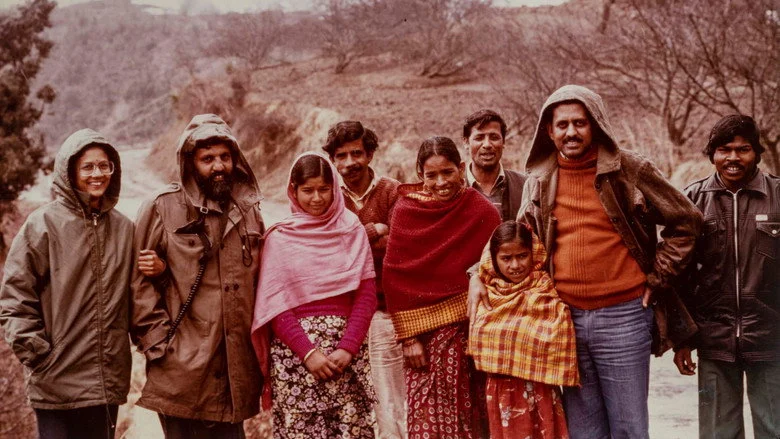
Women’s Labor as the Film’s True Lead
Sudesha Devi is the anchor here, but not in the way a fictional protagonist would be. Her presence is felt through the physical grind of village life, the weight of wood, the distance to water, the exhaustion that doubles as political fuel.
The film’s most praised sequences connect that everyday labor directly to protest. When Devi organizes resistance, it never feels like a separate act; it is an extension of the work she already does to keep her community alive. The documentary understands that for these women, environmentalism is not a slogan, it is survival.
Ramola’s Direction: Focused Argument, Compressed Canvas
Deepak Ramola’s direction maintains a disciplined political line. He links domestic responsibility to environmental resistance without letting the central subject drift into abstraction. The mountain terrain is shot to emphasize physical burden, turning landscape into a character that both gives and takes away.
But the short format cuts both ways. Secondary perspectives, the men working away from home, the traders’ logic, the state’s response, are barely sketched. I wanted more room for the women whose collective action forms the film’s spine, but the 35-minute structure leaves them as a chorus rather than individuals.
The Documentary’s Genre-Core Execution: Three Observations
As an ecofeminist political documentary, Sudesha operates on a clear thesis: women’s resistance is both environmental protection and social survival. The film builds its tension not from action setpieces but from the slow encroachment of destruction, a tree felled here, a livelihood threatened there. The imprisonment sequence in the final act lands with quiet force because it arrives after we have seen what these women stand to lose.
The linear structure serves the argument well, moving from livelihood dependence to protest consequences with economical pacing. There are no plot holes, but there is also no narrative fat, every scene is doing political work, which leaves little room for texture or ambiguity.
What the film lacks in breadth, it compensates with thematic rigor. The forest is never just scenery; it is the contested ground where labor, gender, and ecology collide. For a 35-minute documentary, that is a considerable achievement, even if it leaves you wishing the camera had lingered longer.
For those interested in how regional cinema tackles environmental and social themes, browse more Hindi Documentary reviews on our site.
Supporting Voices: A Collective Rather Than a Cast
There is no conventional supporting cast here, only the village women who appear as collective political agents. Their presence signals the film’s intent: this is not one woman’s story but a movement’s portrait. The men are largely absent from domestic labor, working away from home, which subtly underscores the gendered burden the women carry.
The HDHub4u review rates the film 3.5/5, praising its clear ecofeminist perspective. The IMDb audience score sits at 6.6, reflecting appreciation for the historical and political relevance of the Chipko movement context. These are not blockbuster numbers, but they signal a specific, engaged viewership.
Audience Reception: Purpose Over Polish
Social media sentiment, where available, skews toward respect for the women-centered activism narrative. Viewers who came expecting a conventional entertainment film will leave disappointed; those seeking a focused documentary with political teeth will find it here.
The film invites comparison to works like “As Women See It: India: Sudesha” and “My Survival as an Aboriginal, ” but it distinguishes itself by centering the Chipko movement directly. What it loses to those films in breadth, it gains in specificity, though the limited runtime does restrict layered character development.
There is no controversy attached to this release, no censorship battles, no casting drama. The political charge is in the content itself: a village woman going to prison for protecting the forest that feeds her children is still a radical story in 2026.
If 35 minutes of unapologetic ecofeminist argument sounds like your kind of cinema, this is a clear watch. It is best experienced on a regular screen or OTT platform, where its compact structure can be absorbed in one sitting. It will not entertain you; it will inform you, and that is precisely the point.
For a deeper dive into films that struggle with narrative bite despite strong premises, consider how LURK review handles similar tensions.
Sudesha (2026) earns a firm 3.5/5 for its uncompromising political vision, even as its brevity keeps it from greatness.
If you appreciate documentaries where performance registers are replaced by real conviction, Oh Sukumari verdict offers another angle on women anchoring narratives with limited structural support.

Ankit Jaiswal is the Chief Author, covering Indian cinema and OTT releases with honest, no-filler criticism. An SEO strategist by background, he brings a research-driven approach to film writing, cutting through hype to tell you exactly what's worth your time.