Daadi Ki Shaadi (2026): Neetu Kapoor Anchors a Family Drama That Loses Its Way
Neetu Kapoor sits in a quiet Shimla room, and for a fleeting moment, the film around her stops shouting. The viral remarriage announcement has already detonated, the wedding plans are in ruins, and the family is pointing fingers, but her stillness says more than the chaos ever will. That gap between the actress’s restraint and the screenplay’s noise is where Daadi Ki Shaadi lives and dies.
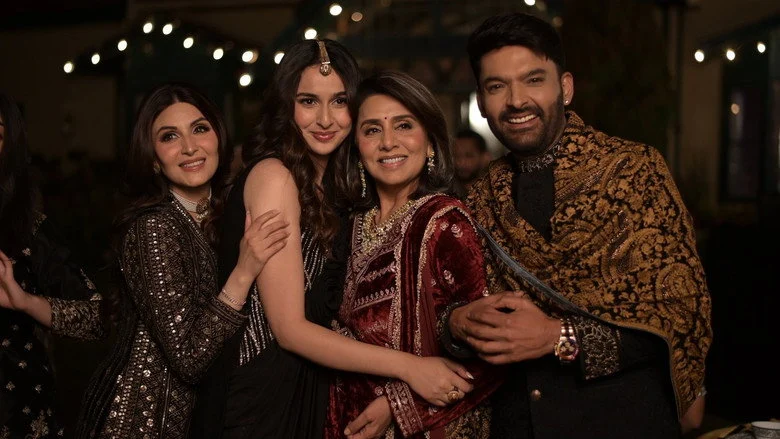
Neetu Kapoor’s Quiet Authority Exposes the Script’s Loudness
Kapoor plays Vimla Ahuja, a widow whose desire for companionship becomes a family battleground, and she delivers the kind of performance that makes you wish the writing matched her. Her quieter confrontational moments carry genuine weight, the hurt is visible in her posture before a single line is spoken.
She is repeatedly described as the film’s emotional anchor, and that assessment holds. When the comedy misfires or the melodrama overshoots, her presence keeps the picture watchable. It is a reminder that a strong lead can elevate weak material, but cannot fully rescue it.

Ashish R. Mohan’s Direction Struggles to Balance Two Tonal Registers
Mohan keeps the story centered on an accessible family premise, and the Shimla setting provides a calm visual backdrop that suits the reflective mood. But tonal control slips early and never fully returns, the film lurches between comic misunderstanding and tearful confrontation without earning either switch.
The screenplay, credited to Bunty Rathore and Saahil S. Sharma, starts with a fresh hook but grows cluttered as it progresses. The second half repeats conflicts instead of deepening them, and the preachiness that critics flagged begins to feel like a lecture rather than a conversation. I found myself checking the runtime more than once.
The Comedy-Drama Blend Never Finds Its Rhythm
The viral announcement functions as a solid comedic trigger, placing the grandmother’s private choice into a public spectacle that the family cannot control. That premise has genuine potential for farce, especially with a wedding hanging in the balance. But the film undercuts its own jokes by pivoting to melodrama too quickly, leaving laughs stranded mid-scene.
The drama works best when it stays close to Vimla’s perspective, framing remarriage as a matter of dignity rather than scandal. Those moments of clarity suggest a sharper film buried inside this one. When the narrative drifts toward the younger characters’ wedding anxieties, it loses that focus and becomes generic family friction.
Cinema Express awarded the film 1.5 out of 5, and that harshness is understandable even if Kapoor’s work deserves better. The genre blend is simply not controlled, the comedy lacks consistency and the drama lacks restraint, weakening both sides of the equation.
For more family-centric storytelling from Hindi cinema, browse our Hindi Drama reviews.
Kapil Sharma and the Supporting Cast Operate in the Film’s Shadow
Kapil Sharma brings his established comic timing to Tony Kalra, but the script limits him to the family-chaos structure rather than giving him a sharply defined character. His presence signals commercial intent, yet the material never lets him build a consistent comic rhythm. He works best in small bursts, reacting to the chaos around him.
Riddhima Kapoor Sahni and Sadia Khateeb are present within the family-drama framework, though detailed scene-level assessments are scarce in available coverage. R. Sarathkumar’s inclusion adds heft to the ensemble, and Yograj Singh’s supporting presence rounds out a cast that suggests ambition beyond the final execution.
The Box Office Verdict Matches the Critical Reception
Koimoi reported the film wrapped as a flop after a weak multi-week run, with total India net around ₹7.58 crore against roughly 40% recovery of investment. The opening day brought in just ₹0.72 crore, and the first week netted ₹5.34 crore before the decline set in. Those numbers tell the same story as the reviews.
The comparisons to Baghban are inevitable given the elder-centric family drama framework, but this film lacks that classic’s emotional control. What it does better is centering an elderly woman’s remarriage as the primary conflict, giving Kapoor a more active dramatic role than similar films typically allow. What it does worse is nearly everything else, the writing is weaker, the pacing is uneven, and the emotional beats feel rehearsed rather than earned.
If the premise of an aging parent seeking companionship resonates with you, Krishnavataram Part review explores similar generational friction with its own set of strengths and flaws. For a tighter ensemble drama that keeps tension alive despite uneven execution, Last Tenant verdict offers a different kind of family conflict worth your time.
Watch Daadi Ki Shaadi for Neetu Kapoor’s performance alone, preferably on Netflix where the TV-PG cut keeps things light. But go in knowing the film around her is a 1.5-out-of-5 experience that never matches its lead’s commitment.

Ankit Jaiswal is the Chief Author, covering Indian cinema and OTT releases with honest, no-filler criticism. An SEO strategist by background, he brings a research-driven approach to film writing, cutting through hype to tell you exactly what's worth your time.