The Night of Life: Before You Think About It (2026): Aryan Singh Wears stands out while the narrative loses grip
There is a particular kind of ambition in a filmmaker who writes, directs, edits, composes, and stars in his own project. Aryan Singh’s The Night of Life: Before You Think About It is that ambition in its purest, most unvarnished form. The 2026 Hindi-language short crime drama arrives as a calling card, even if the calling card itself is still being designed.
Singh places himself at the center of the frame, and the film’s gravitational pull follows his choices. When he commits to a moment, the screen holds attention. When he hesitates, the short’s pacing exposes every gap in the edit.
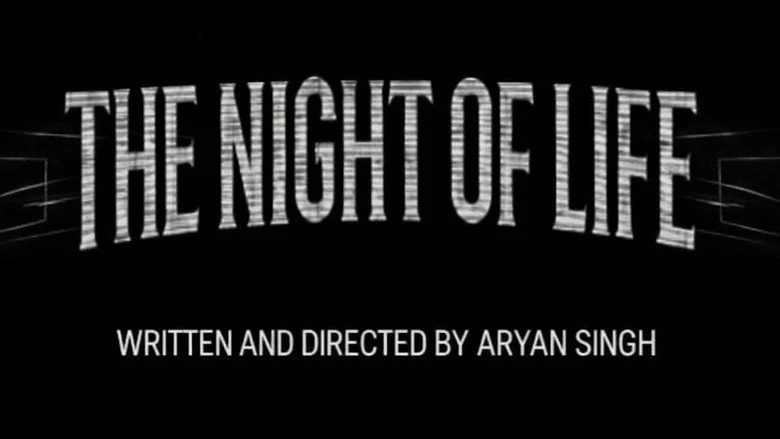
Direction and Screenplay: A Single Vision With Double Edges
The strength here is clarity of intent, Singh knows he is making a crime drama, and he never confuses that with a thriller or a morality play. The screenplay’s structure, though marked as unknown in available records, feels like a night that starts quiet and tightens into consequence.
The flaw is equally clear: a one-man vision can become a one-note echo chamber. Without a second voice in the writing room, the film risks mistaking repetition for tension. I found myself wishing for a collaborator to challenge Singh’s instincts, especially in the middle stretch where the short’s momentum stalls.
Genre-Core Execution: Crime Drama Built on Restraint
Crime dramas live and die on atmosphere, and Singh’s approach leans into the night itself. The absence of daylight scenes is a deliberate choice, one that keeps the viewer inside the protagonist’s headspace. Prince Gupta’s cinematography, the one credited craft outside Singh’s own contributions, frames the darkness as a character rather than a backdrop.
The film’s short runtime works in its favor, there is no room for the bloat that plagues longer crime features. Every scene must justify its existence, and most of them do. The editing, handled by Singh himself, keeps the cause-and-effect chain visible without over-explaining.
What the film lacks is a signature setpiece, a moment that announces itself as the reason to watch. The craft is competent, the tone is consistent, but the genre demands a jolt that this short does not quite deliver. It is a solid exercise, not yet a statement.
Shubham Chaudhary and Satyam Yadav: Supporting Cast as Narrative Furniture
Shubham Chaudhary’s presence signals that Singh understands the value of contrast. A lead who carries every scene needs a counterweight, and Chaudhary’s casting suggests that dynamic was considered, even if detailed performance data remains limited.
Satyam Yadav completes the trio, and his role in the film’s cast list hints at a broader ensemble than the one-man-show framing suggests. The casting choices imply a filmmaker thinking in terms of chemistry, not just self-expression. That instinct, more than any single scene, points toward Singh’s potential as a director of actors.
The Audience Question: Who Is This For, and Does It Matter?
Without box office figures or audience scores available, the film’s reception remains an open question. What is clear is the target: viewers who appreciate a director’s personal vision over polish. The short’s existence on festival circuits and digital platforms will determine whether Singh’s gamble pays off.
For a debut, this is a film that announces a voice. For a career, it is a promise that still needs a stronger script and a willingness to let others in. The audience that values process over product will find something to respect here.
If this measured debut piques your interest, browsing more Hindi Thriller reviews might reveal what the genre demands beyond atmosphere.
Final Word: A Calling Card That Needs a Bigger Canvas
The Night of Life: Before You Think About It is worth a watch if you track emerging filmmakers, and it is best experienced in a quiet setting where the sound design can do its work. But do not expect a finished statement, expect a sketch that shows promise in its lines.
Singh’s film is a 2.5-out-of-5 debut, an honest first draft from a filmmaker who needs a stronger screenplay and a collaborator’s push to become the voice he is reaching for.
For more on single-vision filmmaking, consider how Your s review wrestles with genre overload.
The same instinct to control every frame appears in Jeevan Bheema verdict, where ambition and patchy structure collide.

Ankit Jaiswal is the Chief Author, covering Indian cinema and OTT releases with honest, no-filler criticism. An SEO strategist by background, he brings a research-driven approach to film writing, cutting through hype to tell you exactly what's worth your time.