Oru Durooha Saahacharyathil (2026): A Promising Premise Lost in Uneven Execution
The stranger enters Sethu’s home and the quiet geometry of his domestic life collapses into suspicion. What follows is a thriller that trusts its lead actor far more than its own screenplay, and that faith is both its saving grace and its undoing.
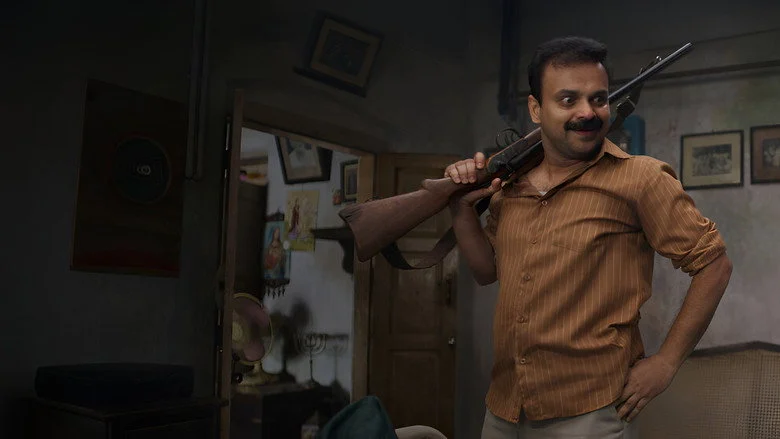
Kunchacko Boban’s Restraint Holds the First Half Together
Boban plays Sethu, a timid health center worker whose routine is shattered when an unexpected visitor destabilizes everything around him. His performance in these early domestic disruption sequences is the film’s most reliable asset, carrying tension through gestures and silences rather than dialogue.
Critics repeatedly singled out his work as the main strength, noting he carries the film through its weaker structural stretches. The opening act works because Boban makes Sethu’s discomfort feel lived-in rather than performed.

Poduval’s Direction Shows Control, Then Loses Its Grip
Ratheesh Balakrishnan Poduval demonstrates strong command over the setup, generating genuine unease from the home as a pressure point. The way suspicion creeps into ordinary exchanges between characters shows a director who understands how domestic spaces breed mistrust.
But the construction grows increasingly bizarre as complications pile up. The screenplay’s refusal to settle into a single tone becomes a liability, and the third act arrives fragmented, leaving questions unresolved and momentum scattered.
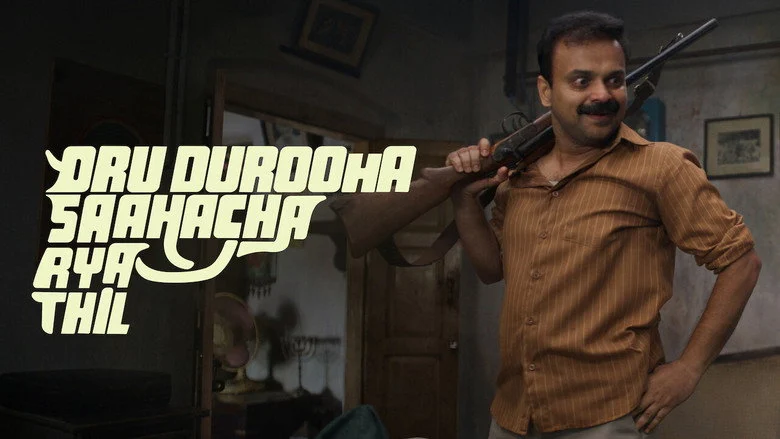
The Thriller Mechanics Work Best When They Stay Small
The genre execution leans on secrecy and doubt rather than action escalation, which suits the material’s intimate scale. The stranger’s arrival functions as the key thriller setup, and the film’s best stretches treat the home as a stage where alliances shift and quiet routines collapse.
The comedy-thriller alternation lands effectively in the first half, where the tonal shifts feel deliberate rather than desperate. Poduval balances awkward humor with creeping uncertainty, and the early portions sustain a tension that keeps the audience engaged.
The later stretch weakens the genre payoff by becoming structurally diffuse. What began as a tight domestic suspense piece sprawls into something messier, and the third-act escalation feels stitched together rather than earned. One critic noted the film “feels like parts of different movies stitched together, ” which captures the problem precisely.
For more Malayalam thriller reviews, browse our Malayalam Thriller reviews.
Dileesh Pothan and Chidambaram Anchor the Ensemble
Pothan brings weight to the ensemble as Madhu, adding credibility to the suspicion-soaked exchanges that dominate the middle section. His presence gives the film a grounded counterpoint to the increasingly abstract threat.
Chidambaram stands out among the supporting cast, effective in the performance-heavy scenes where the narrative leans on character dynamics. Sajin Gopu, Sharanya R. Nair, Jaffer Idukki, and Sudheesh fill out the roster with competent presence, though the script gives them limited room to register beyond the ensemble’s collective function.
The Box Office Verdict Reflects the Critical Split
The film opened with ₹0.70 crore India net and ₹0.84 crore worldwide on day one, per Filmivilla’s reporting. The first week total reached ₹2.67 crore India net and ₹3.20 crore worldwide, but the reported lifetime India net of roughly ₹1.86 crore tells a sobering story.
The Week, Times of India, and Rediff coverage averaged around 2.5, with the consensus captured in one recurring line: “a strong first half and compelling lead performances but struggles with an uneven third act.” Audience scores on BookMyShow sit at 7.7/10, a gap that suggests viewers were kinder than critics, though the commercial verdict remains a flop.
The film’s central problem is ambition outpacing structure. The premise promises a sharp domestic thriller, but the screenplay keeps adding ideas until the original tension drowns in its own complications.
I found myself wishing the film had trusted its first-half instincts more, because the early stretches prove Poduval can build suspense with restraint. The third act’s incoherence isn’t just a stumble, it’s a collapse that retroactively weakens what came before.
Watch this for Boban’s performance and the promising setup, but temper expectations for the payoff. The first half justifies a viewing; the second half explains why this landed as a flop. For fans of performance-driven Malayalam suspense, there’s enough here to warrant a matinee, but not enough to recommend full price. A 2.5/5.
For a more cohesive take on domestic tension and suspicion, see how Carmeni Selvam review handles similar themes.
If you prefer tighter Malayalam thrillers with clearer payoffs, Nee Forever verdict offers a different but equally uneven experience.

Ankit Jaiswal is the Chief Author, covering Indian cinema and OTT releases with honest, no-filler criticism. An SEO strategist by background, he brings a research-driven approach to film writing, cutting through hype to tell you exactly what's worth your time.