Neelira (2026): Someetharan Turns a gives the film energy despite weak payoffs
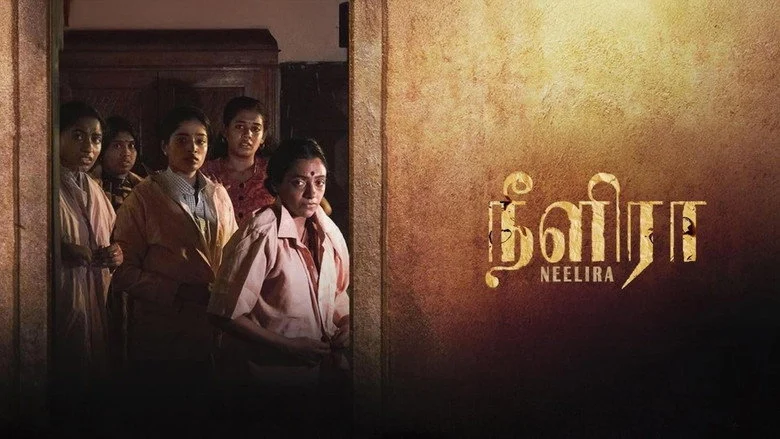
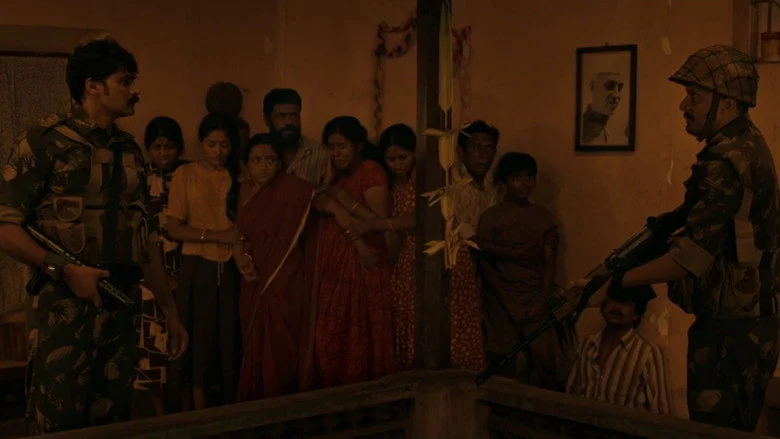
The wedding eve preparations are interrupted, not by rain, but by the heavy boots of Indian Peace Keeping Force soldiers. In 1988 Jaffna, a Sri Lankan Tamil family’s home becomes an involuntary barracks when Captain and his men occupy it due to a navigational error.
Director Someetharan, drawing from his own childhood as a war child, refuses spectacle. He gives us a chamber drama where the walls sweat tension and the hens keep clucking, indifferent to the human tragedy unfolding inside.
Naveen Chandra’s Captain is a Study in Controlled Aggression
Naveen Chandra plays the occupying officer with a stillness that feels more threatening than any shouted order. As Captain, he doesn’t need to raise his voice; the quiet authority he projects turns the family’s living room into a war zone.
His performance is most effective when he is simply observing the family’s rituals, a silent predator in a domestic space. It is a restrained turn that understands the banality of military evil, making the character’s presence the primary source of dread.
The House as a Character: Direction and Screenplay
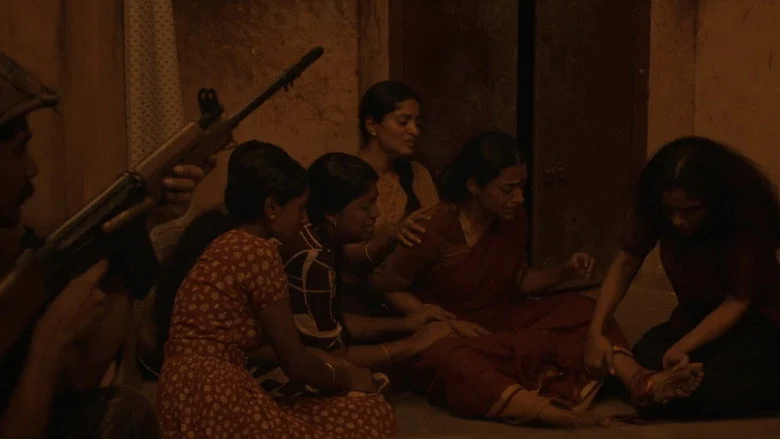
Someetharan’s direction is laser-focused on the single-location format, which works wonders for the narrative’s claustrophobia. The screenplay is a linear, tightrope walk over one day and night, never losing its grip on the central conflict.
The specific flaw lies in the film’s pacing in the middle act, where the standoff’s repetition occasionally tests patience. Yet, the director’s lived-in surroundings, the sound of utensils clanking, the ambient noise of a home under siege, keep the experience grounded and authentic.
War Genre Execution: The Civilian Cost
This is not a film about soldiers fighting soldiers; it is about the civilians caught in the crossfire. The house becomes a metaphor for the land itself, a body subjected to occupation and collective trauma. The film’s anti-war stance is not preached but felt through the family’s silent resilience.
The wedding eve preparations, interrupted by the occupation, serve as the film’s most potent visual. It contrasts the promise of a new beginning against the grim reality of a conflict that steals futures. This single moment encapsulates the film’s entire thesis on the human cost of war.
By focusing on the micro-dynamics of the hostage situation, the film avoids the jingoism typical of the genre. It is a fictional story rooted in the director’s memories, giving it a raw, personal texture that generic war films lack.
Kapila Venu and the Ensemble of Resistance
Kapila Venu as Devaki is the emotional anchor, her performance conveying a mother’s terror and defiance without a single melodramatic outburst. Her silent exchanges with the soldiers speak louder than any dialogue, embodying the quiet strength of the displaced.
Sananth as Castro/Devan brings a complex ambiguity to the soldier ranks, while Sidhu Kumaresan as Vasuki, the bride-to-be, represents the shattered innocence of the conflict. The ensemble works as a unit, each actor contributing to the film’s suffocating atmosphere of fear and resilience.
Why This Film Resonates: Audience and Critical Consensus
India Today gave the film a 3.5 rating, calling it a “quietly devastating film about the human cost of war in Sri Lanka.” The publication’s praise aligns with the audience’s response, where the film holds a 6.9/10 on IMDb from over 10, 000 votes, signaling a strong class audience reception.
Critics have consistently lauded the realistic portrayal of conflict’s impact on civilians and the authentic sound design. The film’s limited collection data of ₹1.05 Cr suggests an average box office run, but its critical standing positions it as a significant work for those who seek out meaningful war dramas.
While the film lacks the bombast of larger productions, its strength lies in its focused storytelling. It is a specific, deeply human look at a historical conflict that rarely gets this level of nuanced treatment on screen.
For more insightful takes on regional cinema, browse our Tamil Drama reviews collection.
Verdict: A Must-Watch for Cinephiles, a Skip for Action Seekers
If you are looking for a war film with gunfights and heroism, this is not it. Neelira is a slow burn that demands patience, rewarding viewers with a profound sense of sorrow and understanding.
Watch it in a quiet setting, preferably on OTT, where its intimate sound design can be fully appreciated. This is a film that stays with you, not for its action, but for its silence.
The chamber drama format in Neelira shares a thematic DNA with Oru Durooha review.
Neelira (2026) is a compelling, anti-war drama that earns a solid 3.5 out of 5 for its unflinching look at civilian suffering.
For another take on family dynamics under pressure, see Carmeni Selvam verdict.

Ankit Jaiswal is the Chief Author, covering Indian cinema and OTT releases with honest, no-filler criticism. An SEO strategist by background, he brings a research-driven approach to film writing, cutting through hype to tell you exactly what's worth your time.