Ginny Wedss Sunny 2 (2026): A Familiar Matrimonial Comedy That Can’t Escape Its Repetitive Script
The matrimonial-ad reveal where Sunny and Ginny catch each other in their respective lies is the one stretch where this sequel feels alive, two performers, a workable premise, and the promise of a sharper romantic comedy. That promise evaporates quickly, because what follows is a 134-minute exercise in repeating the same family-conflict beat until the audience’s patience wears thin.
This is a film that understands its setup but has no idea how to develop it. The director, Prasshant Jha, gets the concept of arranged-marriage deception on paper, yet the execution never rises above the level of a television serial stretched to feature length.
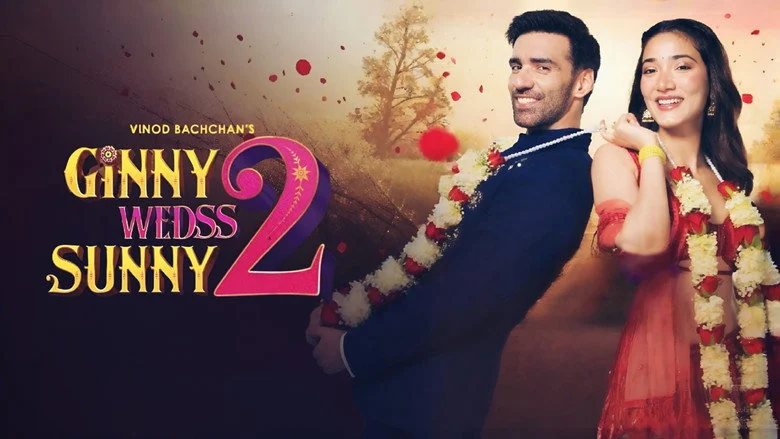
Avinash Tiwary’s Sunny Is the Only Anchor in a Drifting Narrative
Tiwary, playing the small-town wrestler Shivansh “Sunny” Chaturvedi, walks through this film like a man carrying a heavier script than the one he was given. His comic timing in the early meet-up scenes with Medha Shankr is genuinely serviceable, he sells the awkwardness of a man caught in his own lie with a physical looseness that suggests real comedic instincts.
But there is only so much an actor can do when the writing keeps circling the same joke. Tiwary tries to elevate the material, and critics noted his effort, but the screenplay gives him nowhere to go after the first act. His best moments remain trapped in those first thirty minutes.
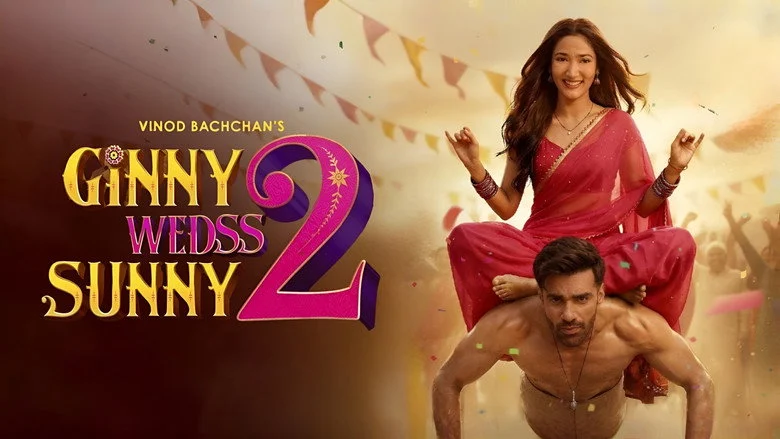
Medha Shankr’s Ginny Gets Lost in the Family Chaos
Shankr’s Geetanjali “Ginny” Goenka is positioned as the city-bred counterpoint to Sunny’s small-town simplicity, yet the film never commits to giving her a real interior life. She reacts to family pressure, she performs social expectations, and she occasionally sparks against Tiwary, but the character remains a collection of responses rather than a person with agency.
The chemistry between the leads works in lighter scenes, and that is worth something. But the romance is presented through conflict rather than sustained emotional buildup, which means the couple’s reconciliation in the third act feels earned by plot convenience rather than by feeling.
The Genre Core: A Romantic Comedy That Forgets the Romance
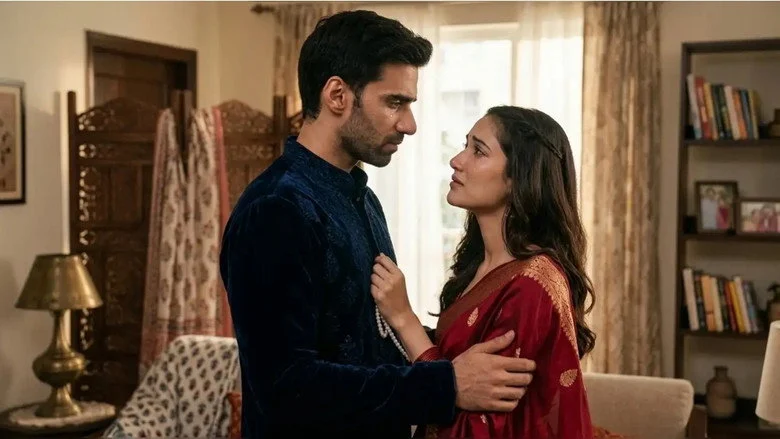
The arranged-marriage meet-cute and deception premise is a solid romantic-comedy engine, and the matrimonial-ad reveal sequence proves the film knows how to set that engine running. The problem is that the film treats this premise as a destination rather than a starting point, once the lie is exposed, the narrative has nowhere to go.
Romantic tension here is tied entirely to family approval rather than external adventure or melodrama, which is a legitimate choice for the genre. But the comedy is built from domestic friction and social performance, and those beats repeat themselves with diminishing returns. The family confrontation scenes show how the film tries to mix romance with social comedy, yet the tone shifts between romance, social commentary, and slapstick are uneven throughout.
By the second half, the pacing drags and conflict beats recycle without adding new information. Critics described the narrative as scattered and predictable, and it is hard to argue with that assessment when the film keeps returning to the same generational-interference argument without deepening it.
Veteran Support That Adds Texture But Not Weight
Lillete Dubey brings senior-family authority to the domestic conflict scenes, functioning as a stabilizing presence in ensemble stretches that otherwise feel chaotic. Sudhir Pandey reinforces the generational-control angle as another elder tied to marriage politics, and his scenes with Dubey suggest a family dynamic the film never fully explores.
Govind Namdev’s Ayodhya Prakash is less a villain than a family-pressure device, and the film wastes his considerable screen presence by giving him nothing sharp to play. Vishwanath Chatterjee’s Purshram, aka Pintu, works as an auxiliary source of disruption and comic friction, while Gopi Bhalla’s Sugriv uncle is deployed mainly for lighter family beats. Rohit Chaudhary and Nayani Dixit round out an ensemble that critics found unevenly used.
If you are curious about how other Hindi films handle similar family dynamics, our Hindi Drama reviews cover a wider range of domestic dramas.
The Box Office Verdict: A Sequel That Never Found Its Audience
The numbers tell a brutal story. The film opened at just Rs 30 lakh India net, as reported by Sacnilk via India TV News on 25 April 2026, and managed only Rs 1.2 crore after three days, per Koimoi. Trade coverage has already declared it a flop, and the low opening suggests the audience simply did not show up for a sequel to a film that had modest cultural footprint to begin with.
The critical response mirrors that indifference. Bollymoviereviewz gave the film 2.1/5, and the complaints are consistent: regressive handling of relationships, clichéd writing, and a comedy-drama blend that never integrates cleanly. I found myself agreeing with most of that, particularly the film’s inability to decide whether it wants to critique arranged-marriage pressures or simply exploit them for easy laughs.
Fans of Avinash Tiwary and Medha Shankr will find their favorite performers working hard to breathe life into thin material. Everyone else should probably skip this one, or at best catch it on streaming where the stakes feel lower. The best format to watch this is on a small screen, with low expectations and a remote nearby.
Ginny Weds Sunny 2 is a sequel that mistakes repetition for comedy and family noise for drama, a 2/5 effort that only Tiwary’s commitment makes watchable at all.
For a darker take on family dynamics, explore Bharathanatyam 2 review.
If you prefer films where a strong lead carries uneven stretches, Pallichattambi verdict offers a similar dynamic.

Ankit Jaiswal is the Chief Author, covering Indian cinema and OTT releases with honest, no-filler criticism. An SEO strategist by background, he brings a research-driven approach to film writing, cutting through hype to tell you exactly what's worth your time.