Paharganj to Phuket (2026): A 16-Minute Travel Sketch That Overstays Its Welcome
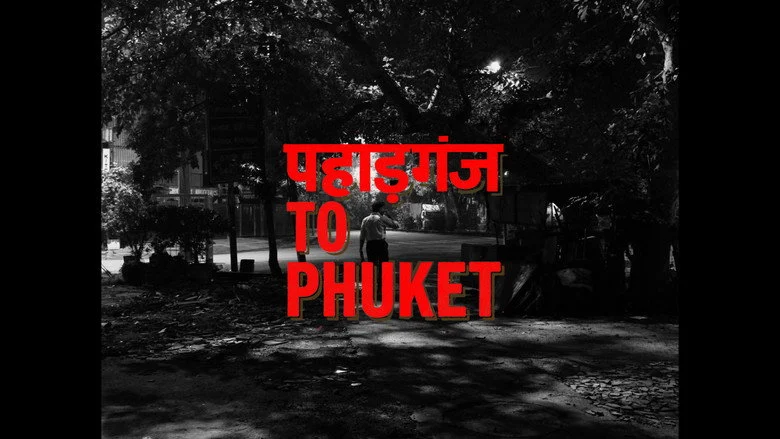
A man from Delhi boards a journey from the chaos of Paharganj to the beaches of Phuket, narrating every stumble and stare as if it were scripture. The premise is ripe with comic potential, the gap between how we experience travel and how we retell it, but this 16-minute comedy never quite locates the punchline it keeps reaching for.
The Short Runtime Is Both the Film’s Gimmick and Its Cage
Sixteen minutes is an unusual bet for a theatrical release. It signals either a bold experiment or a stretched student film, and Paharganj to Phuket lands closer to the latter.
The compact structure works in its favor during the opening stretch, where the Delhi setting offers texture, crowded lanes, honking traffic, the specific exhaustion of a man who has never left his city. But the brevity also means the film never develops a rhythm; just as the comic tone settles, the credits roll.
The Narration Carries a Comedy That the Scenes Never Match
The film’s humor lives almost entirely in the voiceover. The protagonist’s self-aggrandizing retelling of his journey, calling it “the journey of a lifetime”, is a solid comic engine, and the gap between his grand words and the mundane reality of travel is where the jokes should land.
But the visual storytelling doesn’t keep pace. The scenes feel like illustrations of the narration rather than comedic setpieces in their own right. This is a film that talks funny more than it plays funny.
The middle act shifts toward reflection, and that tonal wobble is where the comedy loses its nerve. A 16-minute film cannot afford to pause for introspection; it needs to keep its comic gears turning, and here they grind to a halt.
Direction and Screenplay: A Linear Structure With Nowhere to Go
The screenplay follows a straightforward linear path, departure, encounters, arrival, which suits the travel premise but leaves little room for surprise. The central question, holiday or transformation?, is teased but never dramatized with enough force to matter.
The director’s strength is in restraint; the film doesn’t oversell its moments. The weakness is the same restraint applied too evenly, leaving no scene that pops, no image that lingers beyond the frame.
For a film about a man constructing a story about himself, the screenplay misses the chance to play with unreliable narration. That missed opportunity is the difference between a sketch and a short film with a point of view.
Supporting Cast: Present but Undefined
The research offers no named cast members, which itself is telling, this is a one-man show dressed as a travel tale. The encounters that populate the middle act function as narrative furniture rather than characters, each appearing just long enough to register as a type before disappearing.
What the casting signals is intent: this is a solo performance piece about self-mythology, and the supporting players exist only to reflect the protagonist’s evolving self-image. That’s a legitimate choice, but it leaves the film feeling thin, especially when the lead’s charisma isn’t enough to fill the void.
Audience Fit and the Politics of the Travel Narrative
There’s no controversy here, no political angle, no censorship battles. The film’s risk is quieter: it asks audiences to invest in a character who is, by design, a bit of a bore spinning a yarn about himself.
That’s a hard sell in a landscape where even short-form content needs immediate hooks. Viewers who enjoy compact experimental vignettes will find something to chew on; those expecting a conventional comedy will leave puzzled.
For a film about transformation, the irony is that Paharganj to Phuket itself never transforms, it stays a modest travel anecdote stretched to its limit.
If you’re curious about how other compact narratives handle their payoffs, our Hindi Comedy reviews cover similar ground with sharper execution.
Verdict: a curious experiment that might work better as a YouTube short than a theatrical release. If you go in expecting a full meal, you’ll leave hungry, but the voiceover has enough wit to justify a casual watch on a lazy afternoon.
Paharganj to Phuket is a mild diversion with a clever premise and thin execution, earning a generous 2 out of 5 for its ambition alone.
For a more satisfying take on self-reinvention, Beyond Pages review builds similar themes with stronger dramatic stakes.
And if you want to see how another short film handles its central tension, Black pepper verdict pushes its premise much harder.

Ankit Jaiswal is the Chief Author, covering Indian cinema and OTT releases with honest, no-filler criticism. An SEO strategist by background, he brings a research-driven approach to film writing, cutting through hype to tell you exactly what's worth your time.