Vaazha II (2026): Savin SA’s Debut Prioritizes Pace Over Permanence
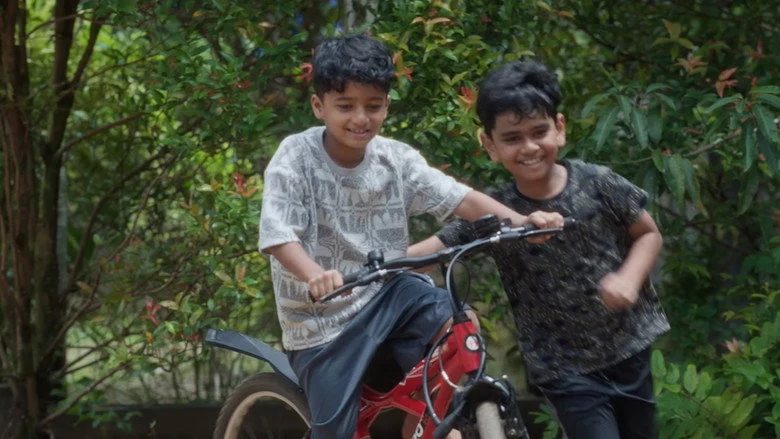
Four young men labeled as losers retaliate against their tormentors in a haze of chaotic energy and constant motion, their fists and witticisms landing rapid-fire before the audience can catch breath. Savin SA’s directorial debut understands the grammar of speed, cutting, pacing, visual momentum, but mistakes velocity for depth.
**Savin SA’s Directorial Debut Trades Lingering Emotion for Immediate Laughs**
SA sticks closely to the structural template of Vipin Das’s original *Vaazha*, widening the focus to encompass four boys rather than one, and stretching the emotional and geographical canvas accordingly. The result is funnier and quirkier than its predecessor, slicker in execution, more assured in tone. Yet this very confidence in the formula exposes its limitations; the director executes what came before without interrogating whether the expansion actually deepens the material. As the New Indian Express observed, the film “feels very much like an Instagram reel expanded into a feature film, filled with humour, life lessons and a fair bit of chaos.”

**The Ensemble Carries the Weight of Coming-of-Age Pressure**
The cast, Hashir, Alan, Ajin, and Vinayak at the core, engage the central premise with genuine chemistry and comic timing. Their performances anchor the chaos, making the friendship believable even when individual arcs feel thin. The four navigate school management indifference, parental disappointment, and social stigma with the kind of performative ease that suggests considerable ensemble rehearsal.
**Coming-of-Age Drama Constructed Around Momentum Rather Than Reflection**
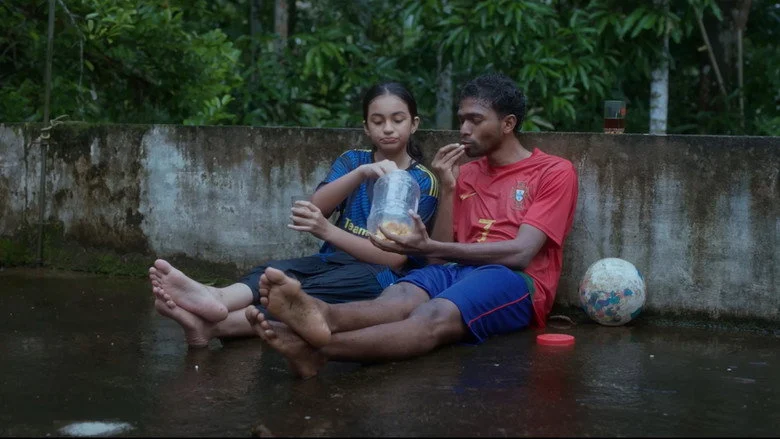
The film channels its energy into amusing setpieces and escalating conflict, leaning on the school-and-family-pressure machinery that defines the coming-of-age template. Vinayak’s father’s death from liver cirrhosis provides the emotional punctuation the narrative reaches for, yet the moment registers as obligatory rather than inevitable, a tonal shift the preceding lightness hasn’t earned.
The antagonist, played by Aju Varghese as Ameen, functions as a catalyst for the third-act flashback where Hashir and his friends exact revenge for an earlier wedding assault. This retaliation sequence promises weight but slides past without the psychological consequence such violence typically demands in drama.
Throughout, the film privileges consistently amusing moments over emotional architecture. The comedy lands; the coming-of-age framework holds; but the machinery never quite transcends into something that justifies the expanded runtime and four-protagonist structure. Support players like Biju Kuttan, Alphonse Puthren, and Vijay Babu populate the margins without leaving impression.
I found myself respecting the technical execution far more than the emotional investment the film asks of me, a gap that suggests competent direction running slightly ahead of screenplay ambition.
Our archive of Malayalam comedy-drama reviews continues to expand with each new coming-of-age release, and Malayalam Action reviews remain essential reading for tracking how the form evolves.
**Vipin Das’s Screenplay Prioritizes Entertainment Over Lingering Impact**
The linear structure holds firm across 162 minutes, yet the screenplay leans on charm and reel-like energy without creating moments that stay with you after the credits roll. The Times of India found it “funnier, quirkier and slick, ” but the New Indian Express correctly identified the core limitation: it “misses the emotional depth of the first instalment.” The film does not reinvent the template; it polishes and expands it, which may satisfy audiences seeking comfort-food entertainment but leaves critics hungry for something that lingers.
**Commercial Success Masks the Creative Ceiling**
The film became the highest-grossing Malayalam film of 2026 and the fifth highest-grossing Malayalam film of all time, a financial vindication that speaks to audience appetite rather than critical durability. The ensemble cast, supported by Gibin Gopinath as Vivek’s father and Arunsol as Kalam’s father, reflects a production confident in its commercial appeal, if not its artistic reach.
Watch *Vaazha II* if you value immediate entertainment over lasting resonance. The humor works, the pace keeps you engaged, and the ensemble charm carries most scenes. But expect to forget significant portions within weeks, the film is built for the moment, not for memory.
*Vaazha II: Biopic of a Billion Bros* is a competently executed but emotionally shallow sequel that chooses momentum over meaning, earning a 2.5 out of 5 for those seeking deeper coming-of-age drama.
Savin SA’s approach to comedy-drama ensemble work parallels the fractured narrative ambitions explored in Love Insurance review, where tonal balance proves more elusive than surface charm suggests.
The tension between commercial formula and artistic statement that defines *Vaazha II* also surfaces in Inkosari Chapter verdict, where directorial control struggles against structural constraints.

Ankit Jaiswal is the Chief Author, covering Indian cinema and OTT releases with honest, no-filler criticism. An SEO strategist by background, he brings a research-driven approach to film writing, cutting through hype to tell you exactly what's worth your time.