Love Insurance Kompany (2026): Vignesh Shivan’s tech-satire romance loses grip after promising start
In 2040 Chennai, a man without a phone emerges from an organic commune to meet a woman whose every decision flows through an algorithm. Pradeep Ranganathan’s Vibe Vaasey exists as the voice inside an app designed to control love itself, a premise that gleams with potential before collapsing under the weight of its own preachiness.
Vignesh Shivan constructs a futuristic Tamil Nadu that bristles with visual confidence: monorails cutting through reimagined streets, drones dotting the skyline, a Chennai styled like Times Square’s neon cousin. The directorial eye catches these details, subtle backdrops, carefully placed poster-lines, a world-building ambition that feels genuinely considered. Yet this craft foundation crumbles precisely where it matters most: the screenplay’s ability to sustain its central contradiction between romantic comedy and science-fiction social commentary.
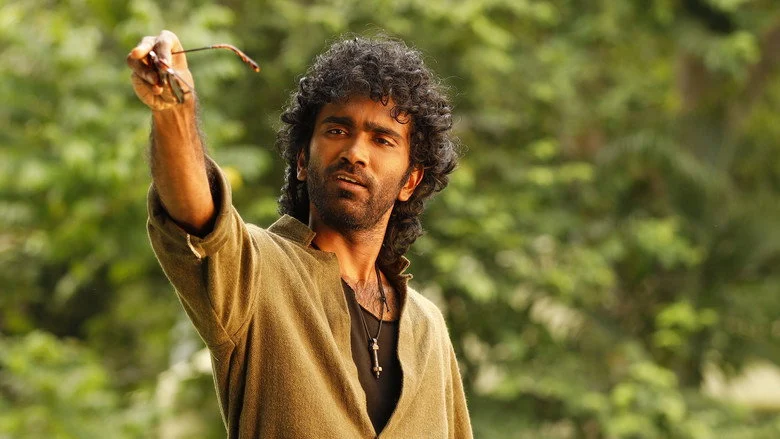
**Pradeep Ranganathan carries the absurdist core with restraint**
Ranganathan inhabits Vaasey with a deadpan stillness that anchors the film’s most absurd moments. His refusal to perform loudly, even within a tech-saturated dystopia, grounds the rom-com’s early sections in genuine charm. The actor understands that a man living without technology in 2040 gains comedic weight through understatement, not mugging.
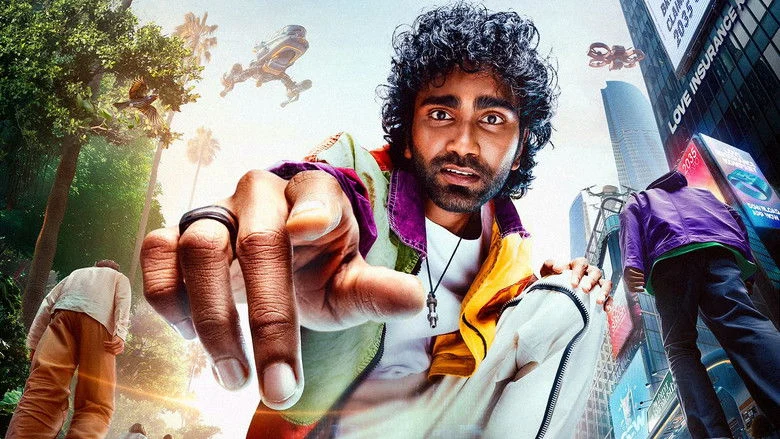
**Shivan’s direction peaks when the app becomes character**
The film’s most confident passage arrives when the LIK application actively dictates Vaasey and Dheema’s relationship, weaving pop culture references into algorithmic romance. Here, Shivan orchestrates a collision between human emotion and mechanical instruction that clicks. The integration feels purposeful rather than clumsy. This sequence alone validates the entire conceptual framework, until the narrative abandons it entirely.

**The rom-com mechanics fracture under sci-fi expectations**
A romantic comedy requires opposing worldviews to collide in moments of escalating absurdity and intimacy. Vaasey’s no-phone ideology versus Dheema’s app-dependency creates genuine tension at first. The LIK app, controlled by S. J. Suryah’s Suriyan, becomes a plausible antagonist force rather than mere plot device.
Yet after the midpoint, the film’s identity crisis becomes paralyzing. It cannot decide whether to deepen the rom-com’s chemistry or expand its sci-fi critique. Instead, it attempts both simultaneously and succeeds at neither. Repetitive warnings about technology dependency blunt what should be sharp satirical moments. The screenplay drifts into familiar love-story territory, abandoning the app’s narrative authority just as that authority becomes most interesting.
By the climax, the entire apparatus transforms into an anti-technology lecture posing as drama. What felt like confident world-building in Act One reads as preachy documentary by the final act, a tonal whiplash that undermines the craftsmanship evident in every frame.
For those seeking deeper Tamil film analysis, Tamil Sci Fi reviews often explore how Kollywood navigates genre hybridity with varying degrees of success.
**S. J. Suryah embodies algorithmic villainy with conviction**
Suryah’s Suriyan, the brilliant inventor who abandoned human connection to build an empire on app-based relationships, represents a villain designed by committee yet performed with unexpected nuance. The actor refuses to play the role as mere technological menace. Instead, he suggests a man rationalized by his own systems, a creator trapped inside his creation. This performance registers as the film’s most thematically coherent element.
**Seeman and supporting cast absorb world-building without development**
Seeman, as Anbukadal who runs the organic commune where phone-lessness becomes punishment, occupies a strange thematic space the film never properly explores. The casting of such a prominent actor for limited screen time suggests abandoned subplots. Yogi Babu, Gouri G Kishan, and Mysskin populate the narrative landscape without achieving memorable moments. They service the world’s rules rather than inhabit genuine emotional stakes. The supporting architecture feels built for a film with clearer tonal commitments.
Gulte’s 2/5 rating captures the central disappointment: a film that begins with directorial brilliance, those subtle backdrops and pop-culture integrations registering as accomplished craft, yet surrenders that brilliance to repetitive messaging and generic rom-com beats. The cinematography constructs a bustling metropolis that deserves a sharper screenplay. I found myself appreciating individual sequences more than the cumulative experience, a gap that no amount of production design can finally bridge.
Watch this for Shivan’s visual ambition and the first half’s conceptual sharpness, but steel yourself for a second half that prioritizes lectures over laughter. A theatrical viewing captures the futuristic Chennai’s design in full splendor, though the film’s tonal collapse remains inescapable regardless of format.
Similar structural ambitions toward genre-blending appear in Inkosari Chapter review, where directorial reach exceeds narrative grip.
Love Insurance Kompany arrives as an accomplished technical exercise fatally undone by its own inability to commit, a romantic comedy-sci-fi hybrid that needed either deeper romance or sharper satire, settling instead for neither, earning a 2/5 for ambition squandered.
Period dramas built on nostalgic frameworks face similar execution pitfalls explored in Thimmarajupalli TV verdict.

Ankit Jaiswal is the Chief Author, covering Indian cinema and OTT releases with honest, no-filler criticism. An SEO strategist by background, he brings a research-driven approach to film writing, cutting through hype to tell you exactly what's worth your time.