Star Wars: The Mandalorian and Grogu (2026): Pedro Pascal’s Stoic Bond Anchors Galactic Stakes
Din Djarin emerges from the cockpit of his ship into a New Republic briefing room, the weight of the galaxy’s reconstruction settling across his shoulders while Grogu waits in the corridor, a forced choice between mercenary independence and political obligation. The theatrical pivot transforms what could have remained a streaming saga into a feature-length meditation on duty, protection, and the cost of choosing sides in a fractured galaxy.
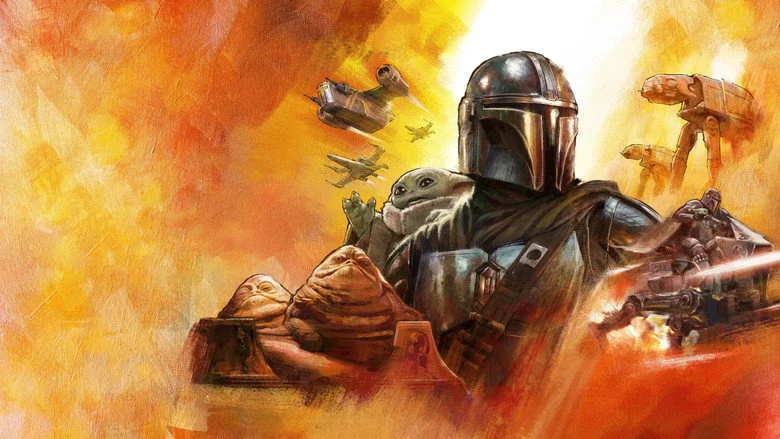
Pedro Pascal’s Mandalorian Carries the Film Through Moral Ambiguity
Pascal’s return as Din Djarin proves the anchor this sprawling narrative requires. The stoic bounty hunter now faces a character conflict sharper than any he encountered in the series: whether to serve the New Republic’s stabilization efforts or protect Grogu from deeper entanglement in galactic politics. Without access to his face, Pascal conveys Din’s internal struggle through posture, the rhythm of his breathing, and the measured cadence of his dialogue, a performance built on constraint and silence rather than expressive range.
The thematic weight falls entirely on how Pascal inhabits the tension between these two poles. His Mandalorian doesn’t heroically embrace his new role; he enters it with visible reluctance, suggesting a man watching his quiet life with his apprentice collapse under the gravitational pull of necessity. This restraint is precisely what the material demands.
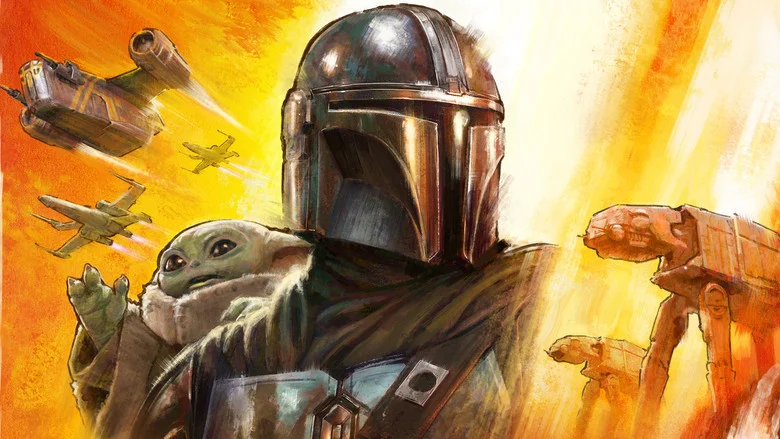
Jon Favreau Expands Series Continuity Into Feature Stakes, Yet Familiar Patterns Dominate
Favreau’s directorial choice to elevate the Din-Grogu partnership into a theatrical format carries genuine intent, the New Republic mission setup and the conflict involving Imperial warlords and Hutt interests create political teeth that the series occasionally lacked. His strength lies in understanding how to weaponize Star Wars’ existing mythology; the inclusion of Zeb Orrelios from animated continuity and the weaving of New Republic politics into action sequences shows a filmmaker committed to expanding rather than retreading.
Where the screenplay falters is in its reliance on linear, predictable quest structure. Act One establishes the mission, Act Two escalates the complications, Act Three resolves through confrontation, serviceable but not inventive. The dialogue occasionally lands with thematic weight (“The old protect the young, and then the young protect the old”), yet too often characters explain stakes rather than embody them.
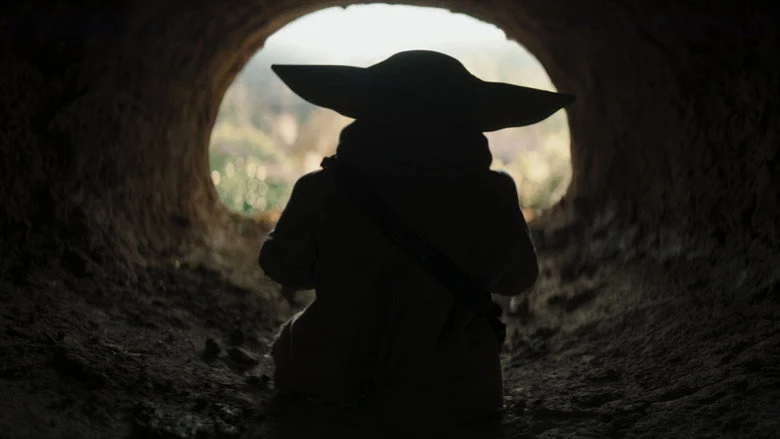
Action-Adventure Spectacle Built on Legacy Stakes and Character Movement
The film’s action architecture rests on a sound principle: Din and Grogu don’t fight to conquer, they fight to survive and protect. The New Republic mission context gives combat sequences purpose beyond choreography, each skirmish pulls them deeper into political machinery they initially resisted. The presence of both Imperial remnants and organized-crime antagonists (represented through Rotta the Hutt and Jeremy Allen White’s casting) creates escalating pressure that escalates naturally from mercenary survival into something approaching reluctant heroism.
The Hutt-related sequence stands as the film’s clearest attempt at world-building spectacle. Live-action expansion of Hutts, criminals, and underworld politics grounds the sci-fi spectacle in tactile stakes, territory, power, and survival, rather than abstract galactic conflict. This sequence works because it privileges character vulnerability over visual excess.
Theatrical presentation in IMAX format amplifies what Favreau orchestrates competently: wide-angle setpieces across hostile landscapes, the isolation of characters against vast environments, and the scale differential between Din’s modest ship and the bureaucratic machinery of the New Republic. The large-format commitment is appropriate to the material, though it doesn’t rescue sequences that serve function over artistry.
I found myself respecting the film’s commitment to grounding its spectacle in emotional stakes even when the action itself follows predictable rhythms. Where Star Wars spectacle too often defaults to noise and scale, this film occasionally remembers that Din’s journey matters because Grogu depends on him, not because the New Republic’s political stability affects audiences emotionally.
For readers seeking analysis of how modern franchises balance continuity expansion with character-driven storytelling, our English Action reviews examine similar dynamics across the broader landscape.
Sigourney Weaver Debuts Without Dramatic Definition; Jeremy Allen White Vanishes Into Creature Design
Weaver’s arrival as an unnamed New Republic character signals franchise prestige-casting, the legendary actor’s involvement should carry weight. Yet the provided materials reveal no specific character definition or memorable scenes; she appears to function as bureaucratic embodiment rather than a person with stakes. The casting screams unfulfilled potential.
Jeremy Allen White’s casting as Rotta the Hutt represents a puzzling choice. A performer of White’s intensity and specificity, known for raw emotional vulnerability, assigned to a crime-boss role obscured by creature effects and presumably minimal screentime. Jonny Coyne’s positioning as an Imperial warlord follows the same logic, capable supporting actors deployed without narrative space to operate. The film crowds its antagonist landscape without allowing any single threat to develop psychological dimension.
Star Wars Franchise Strategy Takes Precedence Over Standalone Story
The film’s positioning targets three distinct audiences: franchise loyalists awaiting Din and Grogu’s continuation, casual viewers drawn to theatrical Star Wars absence, and families seeking spectacle. It succeeds unambiguously for the first group. The New Republic’s efforts to protect Rebellion-era victories create thematic continuity with Lucasfilm’s broader post-Empire storytelling.
However, viewers seeking a complete story rather than franchise connective tissue will encounter familiar limitations. The central conflict, Imperial remnants destabilizing the galaxy, operates as backdrop more than genuine threat. Rotta the Hutt and his criminal interests provide muscle, but the film never articulates what Din Djarin fears beyond surface-level danger. The story resolves their partnership continuation, not their moral evolution.
This is a film designed for audiences already invested in Din Djarin and Grogu’s dynamic. For those audiences, it delivers exactly what was promised: feature-length confirmation that their bond survives institutional obligation. For everyone else, it remains competent Star Wars fan service without the character depth or thematic risk that would elevate it beyond franchise maintenance.
Watch it in IMAX if the visuals matter to you, but understand that you’re paying for scale, not innovation. Pascal’s restrained performance and Favreau’s competent continuity-expansion work anchor what amounts to a very expensive television episode stretched into cinema.
Star Wars: The Mandalorian and Grogu delivers franchise satisfaction for invested viewers while offering little to non-believers, a solid 2.5/5 that respects what came before without risking anything new.
For those interested in how legacy characters anchor feature narratives, Michael review explores similar terrain.
Like Drishyam 3 verdict, this film operates as franchise-continuation spectacle where character familiarity matters more than dramatic novelty.

Ankit Jaiswal is the Chief Author, covering Indian cinema and OTT releases with honest, no-filler criticism. An SEO strategist by background, he brings a research-driven approach to film writing, cutting through hype to tell you exactly what's worth your time.