Raakaasa (2026): Sangeeth Shobhan’s Comedy Fantasy Stumbles Into Familiar Supernatural Territory
A cheerful NRI returns to his village to reclaim his childhood love, only to find her already promised to another, so he spends a desperate night near a cursed fort, and wakes entangled in something far darker than heartbreak. Raakaasa begins as a romantic comedy romp but pivots sharply into supernatural horror, a tonal collision that director Manasa Sharma struggles to navigate with any real conviction.
Sangeeth Shobhan carries the first half on pure charisma, his cheerful energy as Veeru landing comedic moments when paired against Getup Srinu and Vennela Kishore’s timing. The film works hardest when it leans into broad rural humor and the absurdity of a protagonist chasing love across village superstitions. But the moment the curse intensifies and the narrative shifts toward sacrifice and ancient darkness, Raakaasa abandons everything that made it fun and defaults to predictable genre mechanics.
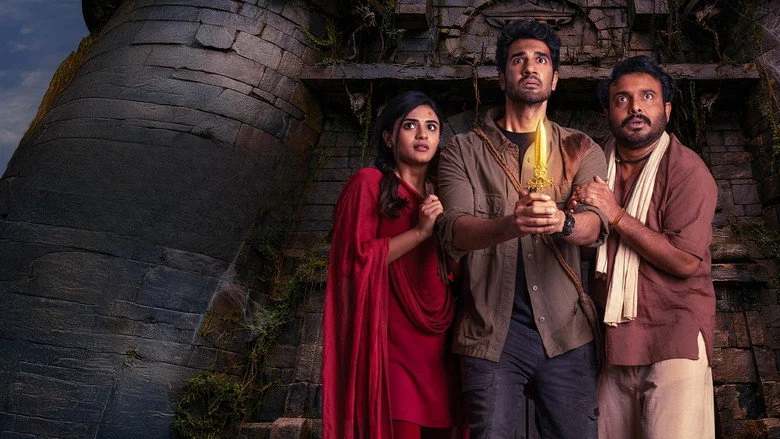
Sangeeth Shobhan’s Charm Carries an Uneven Script
Shobhan’s performance peaks in Act One, where his NRI affectations and bumbling romantic attempts generate genuine laughs. His chemistry with the village setting, treating a feared fort as a romantic backdrop, gives the early scenes levity. But once the supernatural narrative demands emotional weight, his lighter register feels misaligned with the darker material the script suddenly demands.

Manasa Sharma’s Direction Signals Risk but Executes Routine Fantasy
The director attempts something structurally ambitious: pivoting from romance-comedy into thriller territory within a single arc. That ambition is the film’s only real gamble. However, the pivot itself, from charming NRI to cursed sacrifice, feels mechanical rather than organic, and the second half follows the worn path of rural horror clichés without distinguishing itself.

Comedy-Fantasy Blend Collapses Under Genre Confusion
The rural backdrop genuinely enhances the fantasy premise, grounding the supernatural within a world where superstitions hold weight. Comic moments land consistently in the first half, driven by Shobhan’s timing and the supporting cast’s ease with ensemble humor. Yet the screenplay’s linear structure, romance, discovery, curse, sacrifice, telegraphs every narrative turn by midway through Act Two.
Raakaasa commits the cardinal sin of fantasy comedy: it stops being funny the moment it wants to be scary. The tonal shift from jest to dread could work if either register felt earned. Instead, the supernatural elements arrive as plot obligation rather than thematic inevitability. The village fears the fort, the fort hides a curse, the curse demands blood, nothing surprises.
The fantasy mechanics themselves lack specificity. We understand Veeru must navigate local superstitions, but the curse’s rules, origins, and logic remain frustratingly vague. A stronger screenplay would have made the supernatural tension feel like a natural escalation of the romantic stakes, not a genre pivot tacked onto an unfinished script.
Getup Srinu and Vennela Kishore Wasted in Thin Roles
Both comedians land laugh lines early and often, proving their instincts are sharp. Tanikella Bharani, Brahmaji, and Ashish Vidyarthi slot into their roles with ease, Vidyarthi especially carries gravitas in whatever limited scenes demand it. Yet none of them are given enough material to anchor their characters beyond functional comedy beats or expository dialogue.
Rural Superstition Plays Better Than Actual Stakes
The film’s best moments arrive when it mocks village myths rather than when it takes them seriously. A moment where Veeru assumes a senior villager for a high official, the joke lands harder than any subsequent revelation of actual supernatural threat. This suggests the real comedy fantasy lives in the tension between rational outsider and believing rural community, not in curses themselves. Raakaasa abandons that dynamic the moment it commits to genuine horror.
Telugu cinema’s comedy-fantasy lane is underpopulated enough that risk-taking here deserves credit. Director Manasa Sharma reaches for something tonally ambitious, mixing romance, comedy, and supernatural thriller in a 2-hour-13-minute window. The attempt itself matters. But ambition without execution is just confusion, and Raakaasa never finds the tonal alchemy that would make all three genres speak to one another. Critics at Times of India and Gulte settled on 2.5/5, a score that feels generous for a film that chooses the safest possible version of its genre premise once it commits to the supernatural.
If you’re seeking Telugu comedy that respects your time, Raakaasa’s first half might scratch that itch on a weekend streaming session, but stick around for the second and you’ll feel the film abandon you. The village setting and period-adjacent humor echo other regional comedies worth your attention.
Telugu fantasy reviews merit attention when they push boundaries, and Telugu Horror reviews here track which regional experiments actually land.
Raakaasa is a film that knows how to be funny but refuses to commit to the scarier version of itself, and that indecision makes it neither, a 2.5/5 watch that works best viewed in the comfort of home, never in theaters.
Similar tonal instability haunts G O review, where the shift from humor to heart often derails momentum.
The same creative tension between spectacle and story that undermines Raakaasa’s second half also troubles Biker verdict.

Ankit Jaiswal is the Chief Author, covering Indian cinema and OTT releases with honest, no-filler criticism. An SEO strategist by background, he brings a research-driven approach to film writing, cutting through hype to tell you exactly what's worth your time.