Baby Do Die Do (2026): Huma Qureshi Anchors a Sensory Crime Thriller That Loses Its Edge
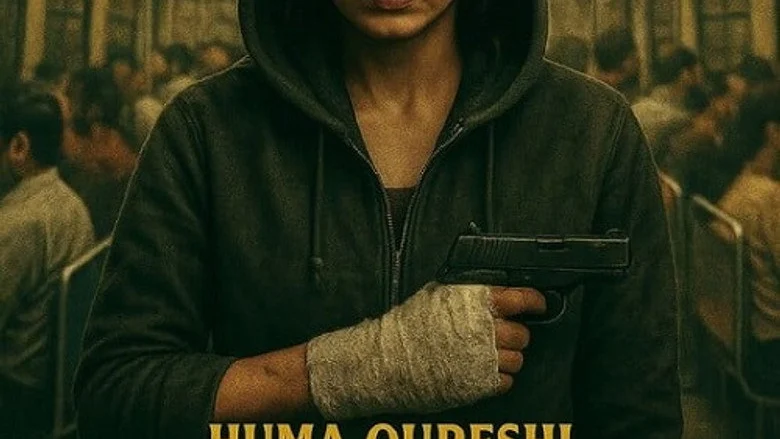
Baby KarMarKar (Huma Qureshi) cleans the blade slowly, her face carrying no satisfaction. Only her dead sister’s voice fills the Mumbai night, a spectral soundtrack for India’s first deaf-mute hitwoman. The first murder scene is tight, silent, and emotionally loaded. It announces a film that understands sensory portraiture more than narrative coherence.
Huma Qureshi’s Body Language Hit
Qureshi stretches into a role that demands every muscle to speak. Her face carries the weight of isolation, her hands sign with controlled fury. The first murder lands because she makes you feel the act through her compromised senses. She hears nothing but her sister, and you hear everything through her eyes. This is a performance built on physical intelligence.
Nachiket Samant’s Neo-Noir Vision
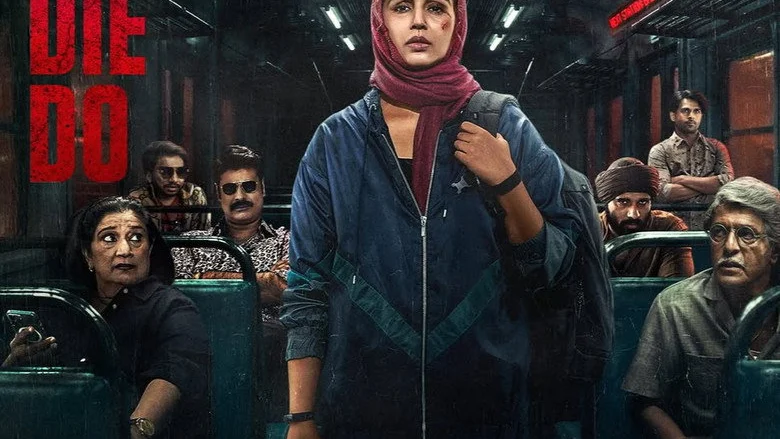
Samant crafts a Mumbai that feels perpetually wet and dirty, lit by flickering neon. The cinematography leans into deep shadows and rain-streaked windows, giving the film a tangible neo-noir texture. The background score stays restrained, enhancing tension rather than announcing it, a clear sign of directorial maturity in genre craft.
But the vision falters when clarity is needed most. The second half’s narrative becomes foggy, with plot threads left dangling. The antagonist, whoever pulls the strings, never gets a proper face or motivation. Samant is excellent at mood but lapses when that mood needs to serve a coherent story.
Critics have noted this split: the first half holds strong pacing and emotional beats, while the second half collapses into confusion. The climax confrontation is violent but narratively hollow, a loud finish to a quiet film’s middle. The craft is there, but the execution limps across the finish line.
Supporting Cast and Their Moments
Sikandar Kher appears with the right menace but vanishes into an underwritten role, his presence signals intrigue, but the script gives him no arc. Chunky Pandey brings his usual swagger but remains a prop; one wishes the screenplay had weaponized his energy. Seema Pahwa and Vidya Malvade appear briefly, suggesting layers that the film never peels back. The casting signals ambition, yet the writing doesn’t follow through.
Audience Reception and Missed Connections
Audience chatter focuses on Qureshi’s feat and the film’s unique premise. The sensory condition, hearing only her dead sister’s voice, is rightly praised as an innovative narrative hook. However, the underdeveloped antagonist and confusing second half have become repeat complaints. Those looking for a clean, tight thriller will leave frustrated. Those who value performance and atmosphere over plot will find something to admire.
If you’re tuning in for more such daring, yet uneven, Hindi cinema experiments, browse our Hindi Thriller reviews for deeper context.
Baby Do Die Do lives and dies on Qureshi’s shoulders, and she carries it far more than it deserves. For fans of neo-noir atmosphere and committed lead performances, it’s a watch in the right mood. But for anyone craving a crisp thriller with clear stakes and a developed villain, this is a pass. Catch it in a dark theater if you go, the lighting needs the big screen to work its spell. Gatta Kusthi review struggled similarly with a compelling lead trapped in a patchy screenplay, and this film shares that exact DNA.
I’d call this a 2.5 out of 5, a performance worth seeing, in a film that needed a sharper editorial hand and a clearer vision for its villain. Nagabandham Secret verdict ritual-heavy fantasy also relied on a single anchor to carry uneven craft.

Ankit Jaiswal is the Chief Author, covering Indian cinema and OTT releases with honest, no-filler criticism. An SEO strategist by background, he brings a research-driven approach to film writing, cutting through hype to tell you exactly what's worth your time.