Karakkam (2026): Sreenath Bhasi Anchors Horror-Comedy Hybrid With Uneven Genre Balance
Sreenath Bhasi finds himself trapped between comedic timing and supernatural dread, a balancing act that defines Karakkam’s ambitious but fractured identity. Subhash Lalitha Subrahmanian orchestrates a horror-comedy-fantasy cocktail where the tonal shifts feel less like deliberate rhythm and more like genre whiplash.
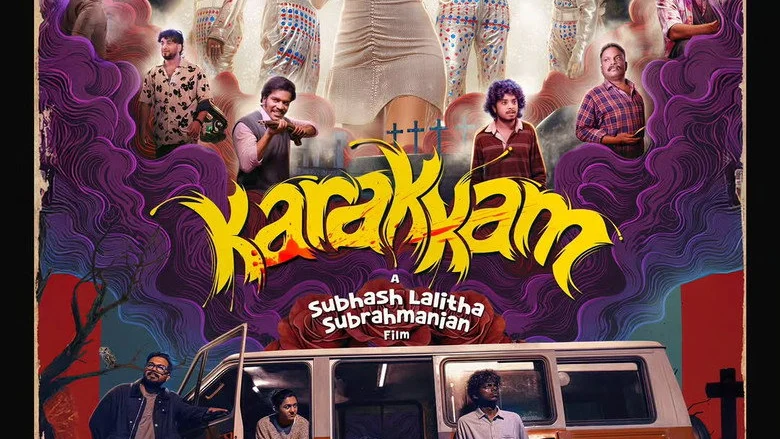
Sreenath Bhasi’s Performance Straddles Two Registers
Bhasi carries the weight of navigating tone shifts that the screenplay itself struggles to anchor. His ability to move between comic beats and horror-adjacent moments demonstrates range, though the material doesn’t always reward his commitment. He’s the film’s emotional anchor in a narrative that often works against him.

Subhash Lalitha Subrahmanian’s Direction Lacks Tonal Clarity
The director shows promise in conceptualizing a genre hybrid, horror and comedy can coexist beautifully when handled with precision. However, Karakkam lurches between registers without establishing when the audience should laugh versus when they should feel unease. The screenplay’s structure doesn’t support a coherent throughline.
Horror-Comedy Execution Remains Fundamentally Unstable
The horror elements never build credible stakes, which might work if the comedy landed consistently. Instead, jump scares and punchlines compete for attention without achieving the darkly comic resonance the premise suggests. The fantasy layer adds visual texture but doesn’t deepen either tone.
What the film attempts, blending supernatural dread with comedic relief, requires meticulous calibration of scene rhythm and audience expectation. Karakkam introduces elements that register as neither frightening nor funny in isolation, and the combination fails to create unexpected chemistry. The fantasy framework offers escape but no thematic weight.
Individual sequences hint at what sharper editing might have accomplished. Yet the collection of scenes reads as a series of tonal experiments rather than a unified vision. The horror-comedy space has room for ambitious work; this simply misses the narrow target it aims for.
Malayalam film reviews continue to explore boundary-pushing genre work, and Malayalam Horror reviews before investing time here.
Femina George and Supporting Players Deserve Better Material
George’s presence signals the film’s intent to balance its lead, though her character lacks the narrative architecture to matter dramatically. Abhiram Radhakrishnan and Manikandan R. Achari function as functional supporting presences, their scenes designed around plot mechanics rather than character revelation.
Genre Ambition Without Execution Clarity
Karakkam arrives as a film that wants to do more than its screenplay permits. The comedy-horror-fantasy trio suggests creative risk-taking, yet the research suggests fans only, a ceiling that reveals how narrowly the experiment lands. This is cinema reaching for something it doesn’t quite grasp.
For viewers predisposed to Malayalam genre cinema and Sreenath Bhasi’s career trajectory, curiosity may override caution. But Karakkam demands patience for inconsistent tone and unclear intent. Watch it if you’re tracking the Malayalam horror-comedy landscape; otherwise, your time is better spent elsewhere.
Blast review similarly struggles with tonal coherence in attempting genre synthesis.
Karakkam (2026) reaches for horror-comedy alchemy but settles for genre confusion, a 2.5/5 effort that favors ambition over precision.
Like Kattalan verdict, this film gambles on unconventional setup but fails to justify the high-wire act.

Ankit Jaiswal is the Chief Author, covering Indian cinema and OTT releases with honest, no-filler criticism. An SEO strategist by background, he brings a research-driven approach to film writing, cutting through hype to tell you exactly what's worth your time.