Hai Jawani Toh Ishq Hona Hai (2026): Dhawan’s Marriage Drama Buried Under Comedic Noise
A marriage implodes under the weight of competing ambitions, Jass demands family, Bani chases career, and neither sacrifice seems possible. What follows is a man’s fumbling attempt to escape through a new romance abroad, only to discover that emotional avoidance has consequences that no geographic distance can erase. David Dhawan’s latest positions itself as comedy-romance, but the central tension beneath the surface is purely dramatic, and that mismatch becomes the film’s undoing.
The premise itself carries weight. A couple locked in fundamental disagreement about life priorities isn’t fresh, but it’s honest. The problem is execution: Dhawan deploys his trademark comedic ornament around a story that demands restraint, and the film never settles into what it actually is.
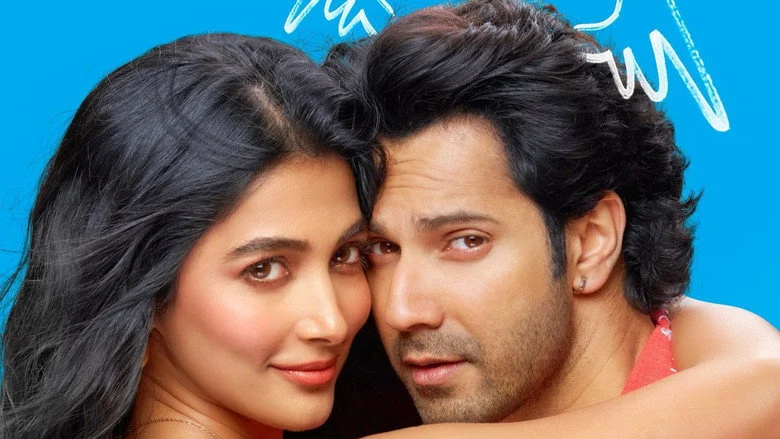
Varun Dhawan Trapped Between Romance Lead and Comic Relief
Varun plays Jass as a man caught between two emotional states, the earnest husband caught in marriage breakdown, then the distracted lover caught in a new romance abroad. The performance mechanics require tonal agility that the screenplay doesn’t quite give him. He moves through these spaces competently, carrying the weight of the central conflict, but never finds a register that feels entirely earned. The character’s journey from marriage to separation to new romance to revelation-driven reckoning should arc toward something profound; instead, it feels like functional plotting dressed in romantic comedy beats.
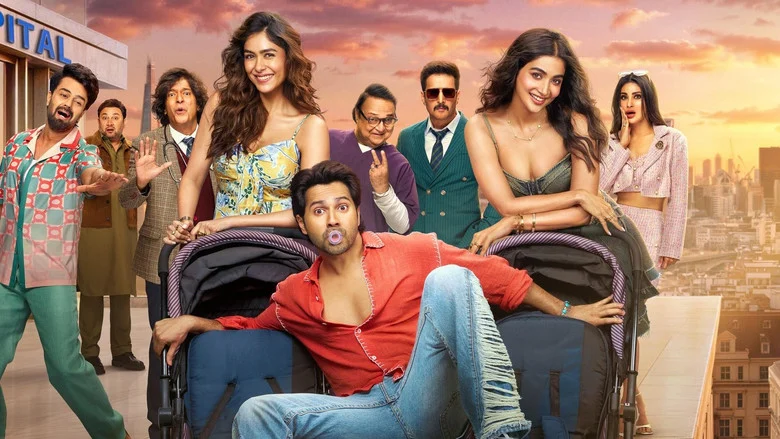
Mrunal Thakur as Bani: Career Ambition Reduced to Plot Device
Mrunal’s Bani introduces the marriage’s fault line, professional ambition that refuses to bend toward domestic expectation. Her character should be the thematic anchor, the one whose refusal to compromise drives the entire conflict. Instead, the screenplay treats her largely as a catalyst for Jass’s journey rather than a fully realized counterpoint. She appears in the marriage breakdown, then recedes as the story pivots toward Jass’s new romance. For a film that claims to examine commitment, Bani deserved more complexity.
Romantic Chemistry Built on Conflict Rather Than Connection
The marriage breakdown between Jass and Bani carries the film’s emotional weight. Two people fundamentally incompatible in their life visions, one wants children, one wants career, collide without resolution, and that friction is the story’s strongest asset. The screenplay uses this conflict as the engine of the romance: it’s not about falling in love; it’s about recognizing you’ve already fallen out.
The second romantic track, Jass’s new relationship abroad, functions as a complication rather than a genuine alternative. The overseas setting and the new connection are introduced as a reprieve from marital pain, but the screenplay doesn’t invest time in making that romance breathe. When shock revelations arrive to destabilize this track, they read more as plot mechanics than earned emotional consequences. The comedic tone fighting against the dramatic stakes undermines both.
The final act’s reckoning, forcing Jass to confront responsibility, loyalty, and the meaning of commitment, suggests thematic ambition. But by then, the tonal whiplash of comedy punctuating serious moments has trained the audience not to invest too deeply. The climactic revelations arrive as plot twists rather than inevitable tragic recognitions of a man who spent the entire film running from accountability.
David Dhawan’s filmography thrives in broad comedy, and his strength here is the structural instinct to keep the narrative moving. The trailer positions this as a mix of comedy, love, confusion, and family drama, and Dhawan assembles those pieces with professional efficiency. But his weakness is tonal discipline: he dilutes the marriage drama’s gravity by insisting on comedic lightness at every turn. A film about commitment crises demands occasional silence, occasional pain without a punchline waiting. This one rarely allows that space.
For fans of mainstream Hindi comedy-romance built around family drama, this is familiar territory, David Dhawan style, which means rapid-fire situations, broad humor, and relationship chaos played for laughs. For viewers seeking realistic relationship drama with restraint and earned emotion, the film’s refusal to commit to its own seriousness becomes exhausting.
The supporting ensemble, Pooja Hegde, Jimmy Sheirgill, Chunky Panday, Maniesh Paul, and Mouni Roy, are positioned to amplify the domestic and romantic confusion around Jass’s central dilemma. Their presence signals that this is a film about networks of relationship failure, not just one man’s crisis. Yet without specific scene work detailed in the available materials, it’s difficult to assess whether they deepen the thematic investigation or simply provide comic interruption. The casting itself suggests a film interested in showing how one marriage’s collapse ripples through a social ecosystem.
No verified controversy or censorship issue surrounds the production. The film arrives with a UA 16+ certificate, suggesting family-drama content suitable for broad audiences. The budget sits at ₹55 crore, a moderate-scale investment for a Varun Dhawan comedy-romance, which positions this as a film aimed at multiplex audiences expecting familiar genre comfort rather than formal risk.
Hindi film reviews across the romance category often grapple with tonal balance, and this film’s struggle between comedy and drama is precisely where many contemporary entries stumble. When a story about marriage breakdown tries to remain light, it often lands somewhere unsatisfying, too earnest for pure comedy, too interrupted by jokes for genuine drama.
A Verdict Built on Missed Thematic Opportunity
The verdict here turns on what the film could have been. Strip away the comedic noise, and there’s a sharp examination of two people whose visions of life simply cannot align. That’s real, that’s valuable, and it deserves seriousness. But Dhawan, working within his own directorial comfort zone, chooses entertainment over insight. The result is a film that entertains without quite moving, that amuses without quite convincing. It’s competent filmmaking in service of an underexplored idea.
If you enjoy Dhawan’s comedic rhythm and don’t mind relationship drama played for laughs, the theatrical format will deliver what it promises. If you’re looking for a film that actually grapples with marriage, commitment, and emotional accountability, you’ll find the machinery here but not the soul. Watch it as what it is, entertainment, rather than what it might have been.
Hai Jawani Toh Ishq Hona Hai is a well-assembled comedy-romance that mistakes volume for depth, landing somewhere around a 2.5 out of 5 for its refusal to choose a single emotional truth.
For deeper exploration of how Indian cinema handles relationship conflict, അവ ച review of marriage fracture offers sharper thematic focus.
Like other ensemble comedies that let supporting cast members dilute central drama, Great Grand verdict demonstrates how tonal inconsistency fragments narrative intent.

Ankit Jaiswal is the Chief Author, covering Indian cinema and OTT releases with honest, no-filler criticism. An SEO strategist by background, he brings a research-driven approach to film writing, cutting through hype to tell you exactly what's worth your time.