

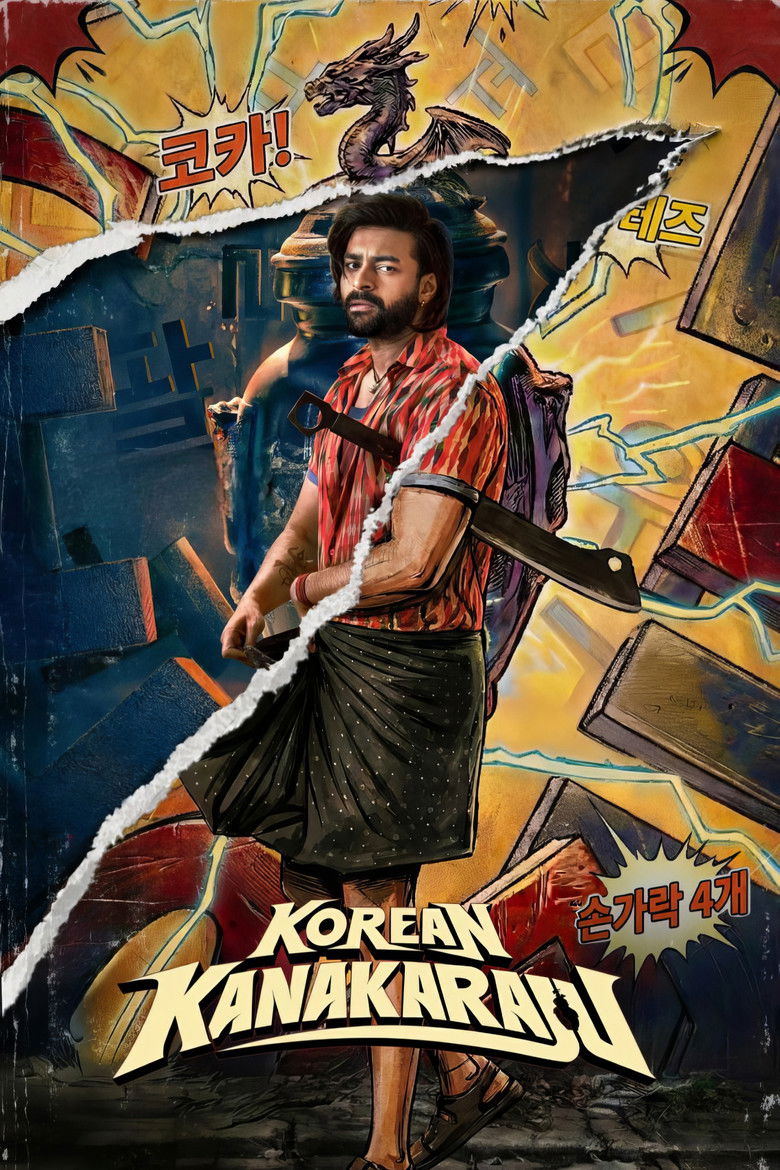
Varun Tej commits fully to the bifurcated nature of Kanakaraju, oscillating between a short-tempered village youth and a supernatural threat with unsettling ease. The blue-eye transformation is his visual cue, and he uses it to switch registers from comic frustration to dead-eyed menace without losing the physicality of the role.
The title glimpse shows him in violent action mode rather than conventional comic lead mode, which is a smart subversion of audience expectations. His strength here is in the abrupt shifts, making the possession feel less like a costume and more like a genuine loss of self.
Merlapaka Gandhi’s Direction Balances Chaos, But the Screenplay Shows Fault Lines
Gandhi’s control over tonal contrast is evident in the preview material, moving from the comic misunderstanding of a Korean interrogation to the graphic violence of a police-station massacre. The cross-cultural premise is a notable hook, and the director clearly has a vision for how village-rooted identity collides with a Korea-set supernatural conflict.
However, the screenplay’s structural weakness is the abrupt tonal shift from interrogation to graphic violence, which feels less like a natural progression and more like a gear-crunching jump. The linear structure, Penugonda to possession to Korea, works in synopsis, but whether it sustains across a 2h 45m runtime remains an open question.
The Horror-Comedy Genre Core Is a Fragile Balance of Laughs and Gore
The horror element is triggered through possession imagery, and the blue-eye transformation functions as a clear visual cue for supernatural change. The full-moon entrance at the station, where the possessed lead attacks with a samurai sword, is the film’s most striking escalation point, pushing the genre core firmly into violent territory.
The comedy, meanwhile, is built on the Korean interrogation setup and the language barrier, with Ritika Nayak’s interpreter translating police demands while the misunderstanding becomes clear. This creates a comic misunderstanding that is culturally specific and refreshingly different from typical Telugu horror-comedy tropes.
The India-to-Korea displacement supports a cross-cultural horror-comedy structure, but the balance is precarious. The film’s most likely criticism point, based on preview coverage, is that the shift from interrogation to graphic violence is too abrupt, risking audience whiplash rather than sustained tension.
Ritika Nayak and Satya Serve as Narrative Bridges in a Fragmented World
Ritika Nayak’s interpreter role is crucial, functioning as a narrative translator for both the characters and the audience. Her presence in the interrogation scene provides the film’s clearest comic beat, as she explains police demands while the detained photographer’s confusion mounts. The role is limited in scope but essential, and her casting signals the film’s intent to use language and cultural barriers as a primary source of humor and tension.
Satya appears in the cast listing and teaser coverage tied to the Korean interrogation setup, though his full character function remains unspecified. His casting signals a familiar comic presence in Telugu cinema, suggesting the film intends to ground its more surreal elements in recognizable humor. For a film this tonally ambitious, having a reliable comic anchor in the ensemble is a strategic choice that may pay off in the film’s lighter moments.
The Audience Hook Is the Premise, But the Verdict Rests on Execution
The Indo-Korean setup and language-confusion premise are the primary audience hooks, as is Varun Tej’s possessed-character reveal in the title glimpse. The action-horror contrast in the police-station sequence has generated significant social media chatter, with the “I’m back” dialogue and the bystanders’ realization, “This Kanakaraju isn’t our Kanakaraju”, becoming talking points.
There is no verified controversy or political reaction to the film, and no box office figures are available at this stage. The promotional emphasis on the song “Kamsahamnida, ” with a BTS video released in April 2026, indicates the makers are leaning into the Korean connection as a marketing angle. The film’s target audience, fans of Varun Tej, horror-comedy lovers, and those curious about a Korean setting, is clearly defined, but whether the tonal mix will alienate viewers who dislike genre blending remains to be seen. I suspect this is a film that will polarize audiences more than it unites them.
If you are willing to accept a horror-comedy that swings wildly between village comedy and samurai-sword carnage, this is a theatrical experience worth taking a chance on. The regular theatrical format is fine; there is no source-backed IMAX requirement here. Go in for the premise, stay for the full-moon sequence, and hope the tonal balance holds better than the preview suggests.
Korean Kanakaraju is a bold, uneven experiment that earns a 2.5 out of 5 for its sheer audacity, even if its execution remains a question mark until the full picture is revealed.
For more on this genre, check out Telugu Action reviews.
Fans of this film’s supernatural premise might also find Thudakkam review an interesting comparison in how it handles family legacy.
For a different take on rural Telugu storytelling, Ottam Thullal verdict offers familiar warmth.
Ankit Jaiswal is the Chief Author, covering Indian cinema and OTT releases with honest, no-filler criticism. An SEO strategist by background, he brings a research-driven approach to film writing, cutting through hype to tell you exactly what's worth your time.