


The first thirty minutes of Rao Bahadur are a deliberate, almost punishing immersion into the “Bhuvanalayam”, a fading aristocratic estate where the air is thick with a unique dialect and the weight of a bygone era. Satyadev Kancharana’s Rao Ramappa Rao Bahadur sits frozen in this space, a man whose psychological decay is the film’s central risk, and for a while, the pacing tests your patience.
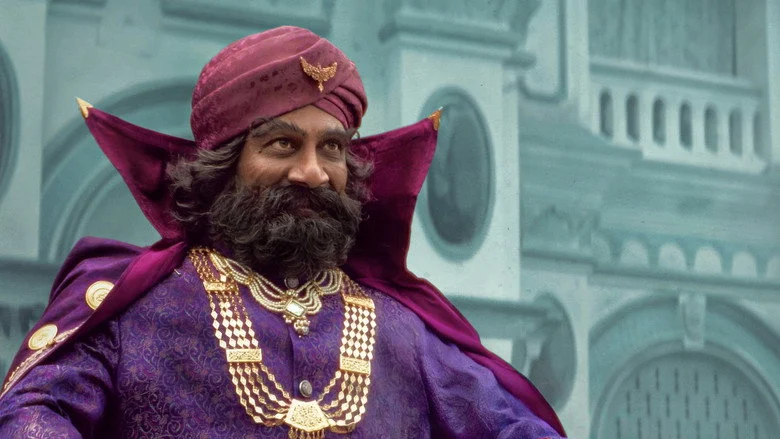
Satyadev’s Frozen King
Satyadev carries the film’s most difficult burden: making inertia compelling. He portrays the protagonist’s frozen state with a stillness that either reads as profound or frustrating, depending on your tolerance for slow cinema. It is in the second half, when the emotional resolution begins, that his performance finally earns its keep.
His delivery of the paraphrased line, “I am frozen in a time that no longer exists”, captures the entire film’s thesis in one breath. Yet, one can’t help but wish the first hour had given him more dramatic texture to work with.

Venkatesh Maha’s High-Wire Act
As writer-director, Venkatesh Maha takes a genuine risk by rejecting conventional mass masala. The magical realism is executed with conviction, and the world-building deserves respect for its singular vision. As Moviesda also noted, the screenplay’s non-linear structure feels disjointed in the opening act, where the slow immersion borders on self-indulgence.
The strength lies in treating the internal cracking of the aristocracy as the real antagonist, a bold choice. The flaw is that Maha trusts the audience too much, too early, without enough narrative traction to keep them anchored.

Psychological Drama as a Genre Gamble
This is not a mystery in the conventional sense; there is no detective, no crime to solve. Instead, the mystery is psychological: what happens to a man when the world he rules no longer exists? The genre execution relies on atmosphere over plot, with the “Bhuvanalayam” introduction serving as a key scene that establishes the surreal tone.
The second half is where the film earns its stripes, driving the emotional resolution that critics have noted “holds the movie up.” Here, the pacing accelerates, and the psychological stakes become tangible rather than abstract. The climax resolves the protagonist’s internal conflict with a quiet dignity that feels earned.
For audiences accustomed to Telugu cinema’s usual fan-service rhythms, this film will feel like a foreign language, literally and figuratively. The dialect immersion, while authentic, is a barrier that not everyone will cross willingly.
Supporting the Decaying Frame
Deepa Thomas and Anand Bharathi anchor the aristocratic setting with restrained performances that mirror the fading society. Their presence signals a film more interested in mood than in individual character arcs. Kunal Kaushik and Vikas Muppala fill out the ensemble, effectively portraying the decaying world around the protagonist.
Master Kiran and Pranay Vaka add subtle texture to the supporting cast, though the thin research data suggests their roles are functional rather than memorable. The casting choices collectively signal a director prioritizing thematic weight over star power.
The Audience-Reception Tightrope
With no box office data or critic ratings available in the research, the film’s commercial fate remains uncertain. However, the described audience complaints, slow opening, boring first thirty minutes, difficult dialect, suggest a divided response. The praise for psychological depth and magical realism points to a niche audience willing to sit through the friction.
This is the kind of film that will find passionate defenders among class audiences and be dismissed entirely by mass viewers. That polarizing quality may be its most honest achievement.
For more analysis of similarly ambitious films, explore our collection of Telugu Drama reviews.
If you can endure the glacial first act, Rao Bahadur offers a rewarding second half that makes the wait almost worth it. I found myself more impressed by its ambition than entertained by its execution, a trade-off that won’t work for everyone. Watch it in a regular cinema, ideally on a day when you have patience to spare.
Rao Bahadur is a risky, uneven film that demands forbearance before delivering its emotional payoff, a generous 2.5/5 for its courage, not its craft.
For a tighter crime-thriller anchored by strong character work, see our take on Baby Do review.
For another Telugu drama that struggles with pacing but lands its emotional beats, read about Gatta Kusthi verdict.
Ankit Jaiswal is the Chief Author, covering Indian cinema and OTT releases with honest, no-filler criticism. An SEO strategist by background, he brings a research-driven approach to film writing, cutting through hype to tell you exactly what's worth your time.